

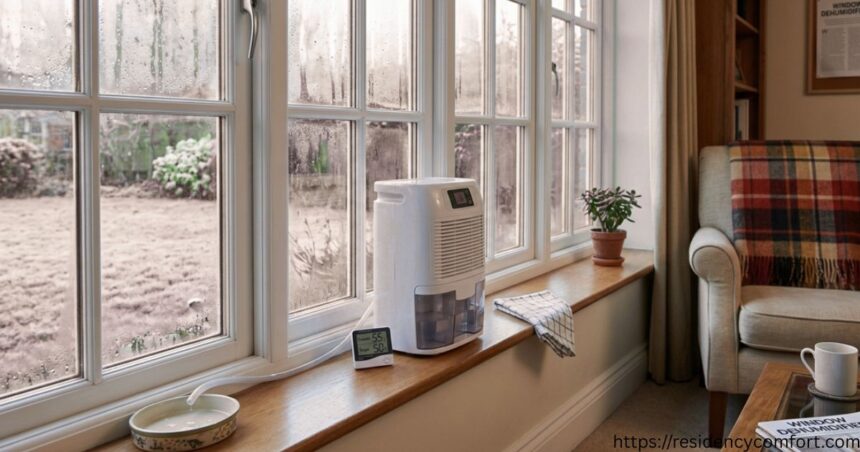
Living with condensation on your windows feels like a never-ending battle, especially when drips start sliding down your glass every single morning. I remember standing in my bedroom one winter, wiping the same windows for the tenth time that week, watching mould patches creep along the walls and ceiling corners, realizing that poor ventilation was silently destroying my home. That moment pushed me to seriously research window dehumidifiers, and honestly, it changed everything about how I manage air moisture levels indoors.
How Excess Humidity Travels Through Your Home
Most people underestimate how quickly excess humidity travels from the bathroom to the kitchen, conservatory, and even behind furniture, creating unpleasant odors and stubborn mould growth that no cleaning spray can permanently fix.
When you keep your windows and doors firmly closed during winter to stop heat escaping, you are essentially trapping moisture inside your home, and that trapped damp air builds up faster than you think.
Understanding this connection between cold air, warm air, relative humidity, and cold surface temperatures especially on glass panes is the first step toward solving the problem properly.
Why a Window Dehumidifier Is the Right Solution
A good window dehumidifier works by tackling humidity levels at the source, something that simply opening a window or cranking up the heating cannot consistently achieve. In the UK, where temperatures regularly drop to 5°C or below in early morning hours, homeowners find themselves trapped between condensation on windows and rising energy bills.
Once I understood the science behind double-glazed versus single-glazed windows and the role of insulated barriers in reducing condensation control problems, choosing the right solution became far less overwhelming, and I want to share that with you through this complete guide on window dehumidifiers, covering types, sizes, features, installation, top-rated picks, and alternative solutions.
Why Would You Need One?
The Health and Home Damage Risks of High Humidity
If you have ever walked into a room and immediately noticed musty smells, chances are that high humidity has already started encouraging would growth deep within your walls, and a window dehumidifier is one of the most effective tools to stop that cycle before it causes serious damage to your furniture, decor, and the structure of your home.
The NHS has clearly flagged that living with damp and mould directly worsens respiratory problems, particularly for people managing existing respiratory conditions, allergies, or asthma, which means this is not just a comfort issue but a genuine health concern for your family.
From peeling wallpaper to warped wooden furniture and warped floors, the long-term damage caused by ignoring excessive moisture in your home far outweighs the cost of investing in a reliable solution early.
Where Mould and Mildew Thrive Without Control
Mould, mildew, and dust mites all thrive in environments where humidity levels remain consistently high, and once they take hold, simply cleaning the surface does not address the underlying air quality problem that keeps feeding their growth.
Poor ventilation spaces like bathrooms, laundry rooms, and cellars are particularly vulnerable because moisture from daily activities like washing, drying, and cooking has nowhere to escape to.
A window dehumidifier in these areas acts as a constant guardian of your home protection, preserving your possessions and maintaining a healthier living environment that feels fresher, cleaner, and safer for everyone inside.
The Financial Case for Acting Early
Beyond health, there is also a strong financial reason to act a window dehumidifier is far more cost-effective than replacing warped floors, repainting mould-damaged walls, or dealing with structural repairs caused by long-term moisture neglect.
Compared to investing in a whole-house dehumidifier, targeting specific problem rooms with a compact, energy efficient unit that fits even in tight spaces makes much more practical and financial sense for most homeowners.
These units typically draw significantly less power than traditional dehumidifiers, making them an intelligent, low-cost addition to your daily routine without meaningfully impacting your electricity bills.
Which Dehumidifier for Window Condensation
Matching the Right Type to Your Condensation Problem
Choosing between an electric window dehumidifier and a silica gel window dehumidifier really comes down to the size of your space, the severity of your condensation issues, and your budget and getting this decision right makes a genuine difference to how effectively you manage indoor moisture.
For average-sized rooms dealing with moderate condensation, a 12 litre electric model hits the sweet spot between performance and portability, while anyone managing severe condensation in an open-plan home or large area should seriously consider stepping up to a 20 litre unit for more powerful and consistent results.
I personally made the mistake of buying the cheapest option first based on social media recommendations without checking the spec, and it simply was not fit for purpose for the level of condensation issues I was dealing with so always match the unit to your actual need.
Features That Make Electric Models Stand Out
Electric window dehumidifiers draw moist air over a cooled coil, converting it into water droplets collected in a removable tank, and many modern models now include smart extras like automatic shut-off, adjustable speed settings, and even built-in air purification systems that improve overall air quality as they work.
Silica gel units use a porous packet of moisture-absorbing material, and while they are more affordable and completely non-electric, they require regular recharging via microwave or full replacing gel sessions, making them better suited as a convenient supplementary tool rather than a primary solution.
A plug-in electric model is significantly more efficient for spaces up to 50 square meters, while silica gel options work best in smaller areas of 10-15 square meters, such as a single bedroom or small bathroom.
How to Use a Dehumidifier Room by Room
Building a Daily Routine That Actually Works
After a lot of trial and error, I settled into a routine of running my dehumidifier for 3-4 hours per day across different rooms, and the combination of targeted use with a few simple lifestyle changes like always putting lids on pots and pans, keeping the bathroom door shut during and after a shower, opening windows briefly each day, and drying washing downstairs rather than in bedrooms made a dramatic difference to our overall moisture levels indoors.
In the bathroom, I open the window for half an hour after a morning shower, then close it and run the dehumidifier for about an hour, repeating the same process after the kids’ baths in the evening and wiping down any condensation from the windows to stay on top of things. This simple bathroom routine completely eliminated the persistent condensation and early signs of mould that had been building up along the window frames and ceiling edges.
Managing Bedrooms, Washing, and Winter Weekends
For the bedroom, I run the dehumidifier for an hour before sleep, which removes that uncomfortable cold chill from the air and brings air moisture levels down to a comfortable range meaning we sleep better and wake up to windows that are clear rather than dripping
On weekends in the middle of winter when the whole family is home with cooking, breathing, and general activity from a full house all adding moisture to the air I often add an extra session in the middle of the day to compensate for the additional load, particularly when the heating has been off overnight and the rooms need recovering.
For drying washing indoors, I position the dehumidifier next to the heated airer or radiator and run it for an hour or so, which pulls the moisture from the drying clothes directly out of the air rather than letting it settle on windows and walls.

Tackling the Conservatory Challenge
Conservatory spaces present a unique challenge because they are essentially rooms made entirely of cold surface glass, and without consistent management of relative humidity, condensation builds up rapidly on every pane. Running a desiccant dehumidifier in a conservatory is my top recommendation because it simultaneously manages humidity and contributes gentle warmth to a space that typically has no dedicated heating. Combining opening windows briefly with scheduled dehumidifier sessions gives you the best of both approaches the fresh air exchange of natural ventilation with the consistent moisture removal that only a dedicated dehumidifier can deliver in the middle of winter.
Dehumidifier Settings & Tank
Choosing Between Modes for Maximum Efficiency
Modern window dehumidifiers give you genuine flexibility through multiple settings you can program, a target humidity percentage and let the unit manage itself, switching off automatically once the relative humidity percentage drops to your chosen level and restarting when humidity rises again, which delivers excellent energy saving without any manual intervention.
Alternatively, running on low power mode suits lighter daily maintenance while switching to full power mode makes sense after a long shower, heavy cooking session, or during the middle of winter when moisture levels spike across the whole home.
I tend to use full power mode when I move the unit from room to room and need quick results, then rely on target humidity programming when I leave it in one space for longer periods it is a flexible system that you adapt to your own routine rather than the other way around.
Managing the Tank and Drainage Without the Hassle
The tank on my unit holds 2.3l capacity, which sounds like plenty until you realise that under active use it can fill up in as little as 4 hours, at which point the dehumidifier turns off automatically until you empty it a smart automatic shut-off feature that protects the unit but does interrupt running continuously if you forget to check it.
Fitting a continuous drainage hose solves this completely, directing collected water straight into a sink, bath, container, or suitable bathroom drain so the unit keeps working without interruption even through the night.
Managing the control panel, understanding when to move the unit between rooms, and staying on top of emptying the tank are the three habits that turn a good window dehumidifiers into a genuinely convenient, hassle-free part of your daily home management routine.
FAQS
Will a window dehumidifier stop condensation?
Yes. By lowering indoor humidity to 35–45%, a window dehumidifier removes moisture from the air before it can hit cold glass and turn into water droplets.
Can a window dehumidifier fix fog between double glazing?
No. If moisture is trapped between the glass panes, the window’s seal is broken. A window dehumidifier can only clear surface moisture on the inside of the room.
Where should I place a window dehumidifier?
Place the window dehumidifier in the room with the most condensation, a few feet away from the glass. Keep it 6–12 inches away from walls so air can flow freely.
Which window dehumidifier type is best for winter?
-
Compressor: Best if the room with the window is regularly heated.
-
Desiccant: Best if the window is in a cold room, porch, or conservatory.
How fast does a window dehumidifier work?
You will typically see a major reduction in condensation within a few hours. For heavily saturated rooms, leave the window dehumidifier running for 24–48 hours to dry the space completely.