

Running a business means making big decisions, and signing a commercial lease is one of the biggest. Over the years, working with different clients across sectors like retail, healthcare, hotel, leisure, tourism, and industrial properties, I have seen how the right premises can push a business forward and how the wrong one can pull it back.
Getting Started With a Commercial Lease
Whether you are looking at an office space, a shop, a restaurant, a workshop, or a medical establishment, understanding what you are signing matters more than most people realize. Most people focus on the location and the cost, but the terms and conditions inside a lease carry just as much weight. The good news is that a commercial lease does not have to be confusing especially when you approach it with the right knowledge and the right legal expert by your side.
At firms like Bradley-Mason LLP, professionals handle everything from building consultancy and compliance to acquisition, occupancy, and disposal, offering specialist services that protect tenants at every stage.
Key Insights for Business Lease Negotiations
One thing I always tell people is this: lease agreements are written in the landlord’s interests by default, which means you must always negotiate terms before you sign a business lease. A verbal lease agreement carries limited weight in court, so always insist on everything in written form. Knowing your rights and obligations from the start gives you a much cleaner path through the whole process, and a proper overview of common terms helps you avoid costly mistakes down the road.
Understanding What a Commercial Lease Actually Is
What is a Commercial Lease?
A commercial lease is a legally binding contract between a business tenant your company and a landlord, granting you the right to use a property for commercial activity over a set period of time. In exchange for this right, you pay money to the landlord on agreed terms, and the contract clearly defines the rights and responsibilities of both sides throughout the lease period. Understanding this from day one helps you protect your business and avoid unnecessary disputes with your lessor or lessee down the line.
What makes a commercial lease different from a simple handshake deal is that it forces both the tenant and the landlord to commit their obligations to paper, which creates a fair and enforceable framework for both parties.
The moment you sign, the use of that property becomes tied to the activity you declared, and stepping outside those boundaries without permission can have serious consequences. Every business owner should read and understand every clause before committing to a lease, because the details inside that document define your entire tenancy.
How Commercial Leases Differ From Residential Ones
Commercial Lease vs Residential Lease
Many people assume that a commercial lease and a residential one work the same way, but the differences are significant and worth understanding before you commit. Unlike renting a flat, where strong governmental protection exists for tenants, commercial property tenants receive far less legal cover because the system assumes you are knowledgeable about business practices and capable of handling the responsibility yourself. This is why negotiation plays such a central role in the commercial lease process, and why both parties are expected to approach bargaining with realistic aims in mind.
Understanding the Shift: Commercial vs. Residential Leases
From personal experience, tenants who treat a commercial lease like a simple residential lease almost always run into trouble because they underestimate how much the exchange of property use for money differs in a business context. The differences between the two go beyond just price they extend into protection, knowledge, and the level of responsibility each party carries. Going in with a clear understanding of these differences gives you a stronger position at the negotiating table and helps you secure terms that genuinely suit your business.
Why Written Agreements Always Win
Oral Lease Agreements
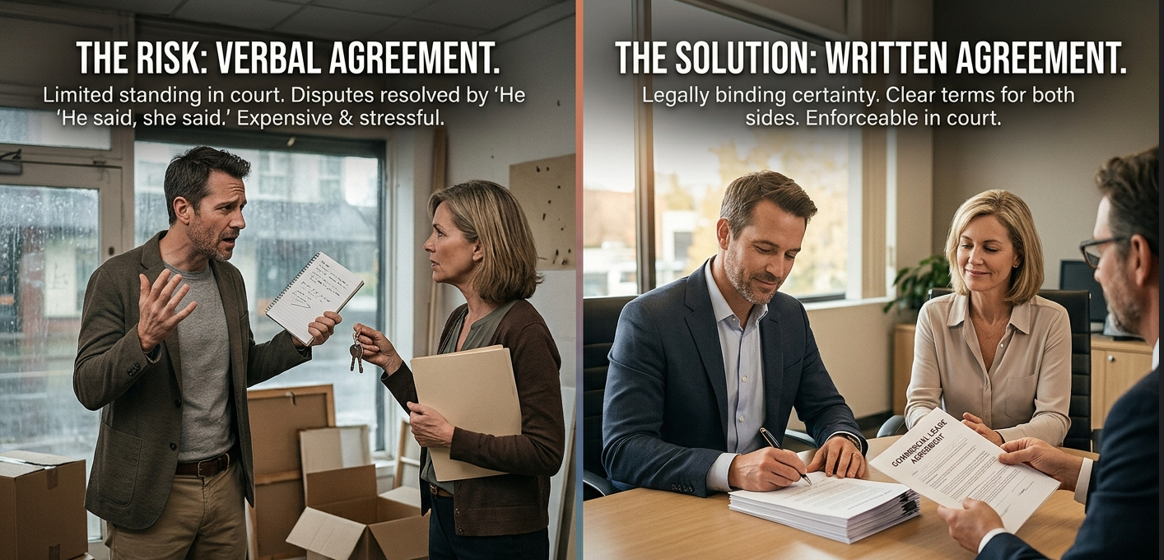
An oral lease agreement might seem convenient in the moment, but it creates serious problems the second a disagreement arises. Without a written contract, enforcing any terms or obligations becomes almost impossible, because resolving a dispute in a court hearing simply comes down to one person’s word against another’s and courts cannot reliably uphold that.
A verbal lease has limited standing under the force of law, which is why every serious commercial lease must be documented in a proper written agreement from the very beginning.
The Cost of Verbal Agreements vs. Written Certainty
I have seen situations where a verbal lease felt perfectly fine for months until it wasn’t. The moment a dispute appeared, there was nothing solid to take to the courts, and resolving the disagreement became expensive and stressful for both sides.
A written agreement removes all of that ambiguity, gives both the landlord and tenant clear legally binding ground to stand on, and ensures the courts can step in with authority if anything goes wrong.
Key Provisions Every Commercial Lease Should Cover
What Provisions Are Covered in a Commercial Lease?
A well-structured commercial lease covers far more than just the rent and the address of the property it sets out the full framework of the tenancy from start to finish. The document typically defines the type of property, the length of tenancy, whether it runs as a fixed term or is renewable, what business activity is permitted, who handles leasehold improvements, and what the provisions of the security deposit look like. Getting clarity on all of these provisions before signing protects both the landlord and the tenant from avoidable conflict.
The Cost of Verbal Agreements vs. Written Certainty
Beyond the basics, a thorough commercial lease also covers areas like lease renewal rights, whether subletting is permissible, what notice provisions apply at termination, and who carries responsibility for insurance and operating costs. Both landlord and tenant responsibilities around maintenance and repair should also appear clearly in the document, because vague language in these areas almost always leads to disputes later. Every single clause you negotiate today saves you from a much harder conversation further down the line.
Who Signs a Commercial Lease and What Their Roles Mean
Parties Involved in Signing the Lease
Every commercial lease involves two core parties: the landlord, legally referred to as the lessor, and the tenant, known as the lessee, and both carry defined obligations from the moment they commit to signing. The lessee takes on the payment of rent and the responsibility of upholding the tenancy agreement, while the lessor grants access to the property and manages their side of the commercial lease terms. Understanding the role each party plays makes the entire signing process cleaner and more transparent for everyone involved.
The Role of Guarantors and Personal Sureties in Commercial Leases
In some situations, a landlord may request a guarantor or surety a third party who agrees to cover any losses if the tenant fails to pay rent or breaches the tenancy agreement in any way. This is especially common when the tenant is a newer business without a long financial track record, and it gives the lessor an additional layer of security. If a guarantor is requested, make sure the obligations tied to that role are clearly outlined in the commercial lease before anyone signs.
Understanding the Physical Space You Are Leasing
The Premises
The commercial lease contains a full legal description of the premises, which is the same format used in purchase documents like a mortgage application or a land registry form, and it serves as the official identifier of the property in all real estate dealings.
Inside this description, you will find references to fixtures things like a built-in cabinet, a sink, a toilet, or a bath that are permanently attached and cannot be removed without causing damage to the property. You will also find references to chattels, which are personal property items like blinds, curtains, microwaves, desks, fridges, and washing machines that remain separate from the premises itself.
Navigating Commercial Lease Improvements and Property Alterations
Leasehold improvements sit in their own category under a commercial lease. These are permanent improvements made to the property that are classified as fixed assets and tend to depreciate in value over the course of the lease term.
The tenant must always seek written permission from the landlord before making any changes, particularly those that fall outside the scope of permitted use as defined in the commercial lease agreement. Keeping a clear record of what constitutes a fixture versus a chattel versus a leasehold improvement saves a great deal of confusion when the tenancy eventually ends.
FAQs
What does it mean to find a commercial lease for sale?
Acquiring an existing contract to accelerate business establishment, paving a fast path toward realizing an entrepreneurial vision.
How can commercial lease vehicles drive growth?
Securing fleet financing to ensure operational mobility, allowing a business to scale without draining its working capital.
Where can you find a simple commercial lease agreement UK PDF?
Accessing a straightforward, downloadable legal framework that strips away complexity to provide immediate contractual security.
How does Zoopla commercial rent help searchers?
Streamlining property procurement by filtering the local market to find the ideal location for a business to thrive.
Why choose a 5 year commercial lease agreement UK?
Committing to a half-decade term to secure operational stability, giving a team a predictable corporate sanctuary to grow.