
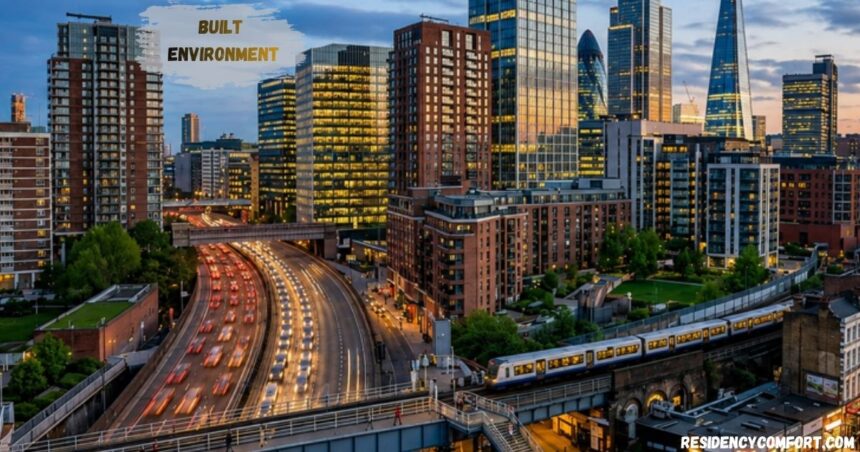
Every city stands on structures that shape how people live, work, and relax, and these man-made creations touch every corner of the aspects of life. From buildings and bridges to roads and transportation systems, the built environment gathers distribution systems that carry water and electricity into homes, along with modified structures that turn empty land into working spaces, living spaces, and recreational spaces.
Building all these systems and spaces demands huge quantities of materials, proving that nearly every corner of daily life depends on what humans put together around them.
Why the Built Environment Matters Globally
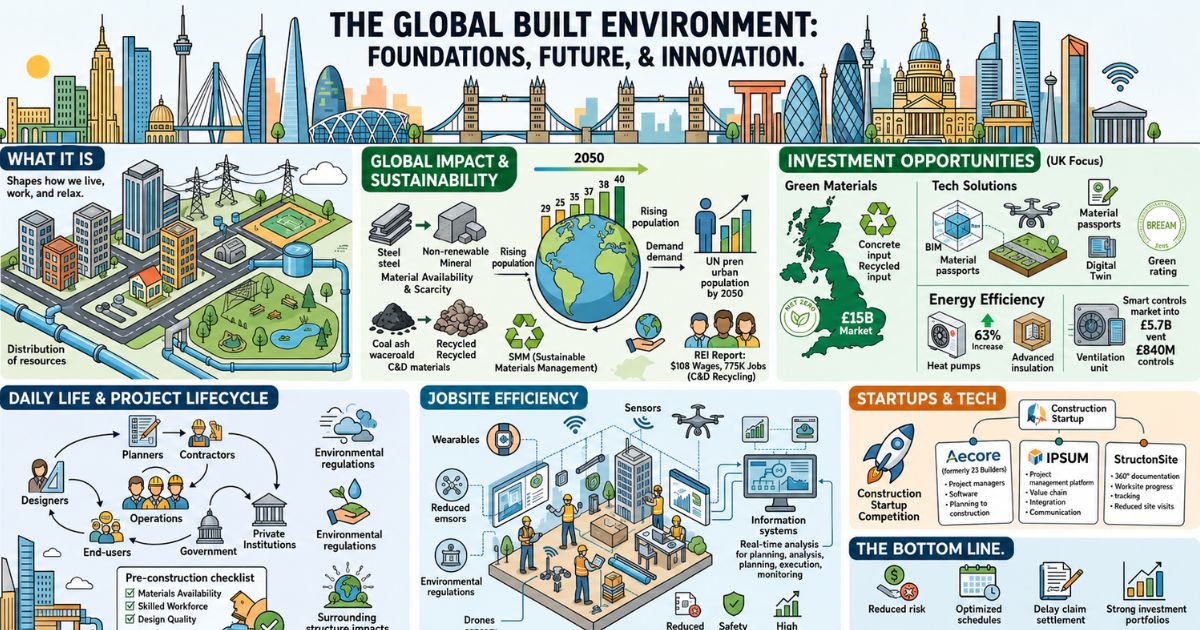
According to the International Resource Panel, global population growth keeps pushing demand for natural resources higher every year. As competition intensifies, the availability of materials becomes less certain for builders across the United States.
The nation alone needs enormous volumes of steel, wallboard, and concrete just to keep its built environment running. Every stage of construction from extraction and transportation to use and disposal adds environmental impacts that reach the air, water, and land.
Because non-renewable mineral resources are becoming harder to secure, many builders now choose secondary materials such as coal ash, foundry sand, and iron or steel slag instead of virgin materials. Sustainable Materials Management (SMM) guides how the industry can meet sustainable criteria while lowering economic costs tied to a shrinking pool of resources.
For instance, the Recycling Economic Information (REI) Report found that in 2012, recycling construction and demolition (C&D) materials generated close to $10 billion in wages and supported 175,000 jobs across the country.
Furthermore, population growth is turning urban areas into sprawling urban conglomerations. The United Nations projects that 68% of the global population will live in cities by 2050, so the design of infrastructure, affordable housing, and transportation within the built environment must keep pace with this shift.
Investment Opportunities in the Sustainable Built Environment
The UK is unlocking its full potential in the drive toward a smarter, greener future, opening the door to real investment opportunities. Innovation is reshaping how money moves into the sustainable built environment sector, turning long-term value into a shared goal for investors and builders alike.
Green Materials and Concrete Decarbonisation
The market for construction materials in the UK is worth £15 billion a year, driven by regulatory momentum toward net zero. Transitioning to a green built environment requires pioneering low-carbon processes that can turn out decarbonised cement and greener concrete at scale. Businesses innovating with circular, natural, or recycled materials are riding a wave of rising demand from developers.
Tech Solutions and AI Integration
Big projects like HS2 prove that greener construction is possible when adhering to strict carbon targets and BREEAM standards. Digital tools like Building Information Modelling (BIM), material passports, and Environmental Product Declarations (EPDs) give teams a clearer picture of their carbon impact. Combined with digital twins, augmented reality, and drones, these technologies provide the efficiencies needed to build a truly sustainable built environment.
Additionally, AI is changing the face of construction by cutting energy use in smart buildings, optimizing spatial development, and lowering costs through automation under programmes like the UK’s AI Opportunities Action Plan.
Energy Efficiency, Heat Pumps, and Ventilation
- Heat Pumps: Heat pump sales jumped 63% in 2024, backed by the Boiler Upgrade Scheme and a UK target of 600,000 installations annually by 2028.
- Energy Efficiency: Pushing for tighter energy security has opened market opportunities for advanced insulation and high-performance windows, transforming the modern built environment.
- Ventilation & Smart Controls: The UK’s ventilation sector is worth £5.7 billion, while the smart controls market is worth £840 million and growing at a 26.5% CAGR, making them premier investment hotspots.
How the Built Environment Affects Our Daily Lives
Every player in the built environment shapes the daily lives of construction professionals, since a single project pulls in stakeholders across the design, planning, construction, operations, and end-user phases. Government entities and private institutions sit at the table to push for sustainable developments that meet strict environmental regulations.
Before construction even begins, teams must carefully manage several factors:
- Materials Availability: Weighing whether imported materials will arrive on time to avoid unexpected delays and budget overruns.
- Skilled Workforce: Ensuring labor is ready to handle chosen modern construction methods.
- Design Quality: Focusing on high-quality designs to avoid structural flaws later on.
Every choice around materials and environmental impact touches the structure’s surroundings and future users, since the built environment only thrives when its people get the fundamentals right.
Improving the Built Environment Through Jobsite Efficiency
Built professionals can significantly improve the built environment by adopting new technologies that boost jobsite efficiency from the early stages of a project all the way to the maintenance phase.
Information flow systems support coordination and integration among workers, equipment, and stakeholders across the construction value chain. Data analytics uncover fresh insights, letting teams handle schedule management, execution, and progress monitoring seamlessly.
Furthermore, tools such as sensor-based solutions, wearable devices, and drones feed a connected jobsite with real-time information. Backed by strict HSEQ procedures, this optimization reduces errors, protects health, and encourages highly productive ways of working.
Startups Revolutionizing the Built Environment
The built environment is undergoing a massive digital transformation, driven by innovative startups focused on maximizing jobsite efficiency and refining the construction value chain.
Here are three standout companies from the Construction Startup Competition that showcase how technology is reshaping how we build:
- Aecore (formerly X3 Builders): Operating out of California, this integrated general contractor guides clients seamlessly through construction planning, procurement, and the active construction phase. Dedicated project managers leverage robust software to handle administrative burdens and optimize processes from start to finish.
- IPSUM: This Latin-American startup developed an innovative project management platform that drives construction value chain integration. According to CEO Franco Giaquinto, the technology tackles day-to-day challenges from the earliest stages of a project, significantly boosting communication channels and productivity for everyone involved.
- StructionSite: Founded by industry veterans in the US, this startup digitizes site documentation and worksite progress using 360º cameras and specialized software. By drastically cutting down the need for physical jobsite visits and walkthroughs, it streamlines progress tracking, scheduling, and field management.
The Bottom Line on Built Environment Industry Impact
Beyond simple convenience, these platform-driven technologies actively reduce rework and minimize risk across the built environment by maintaining bulletproof documentation. This keeps teams prepared to swiftly settle delay claims, trade damages, and warranty issues.
As investment portfolio backers look on, on-time delivery and smart design choices continue to strengthen the entire built environment. Across the construction industry, even small gains on the jobsite from tracking daily tasks to managing materials are proving that tech-driven efficiency adds up to monumental change.
FAQs
What is the built environment in geography?
A: It is the human-modified landscape such as urbanization and human settlement—that stands in contrast to the natural world. It is the physical expression of culture and society mapped onto a geographic space.
Q: What are the 7 components of the built environment?
A: The spaces we inhabit are woven together by seven fundamental elements:
- Earth – Foundational land use and modified terrain.
- Structures – Architectural design of buildings providing shelter.
- Infrastructure – Critical utility networks (water, electricity) sustaining life.
- Transportation – Mobility networks (roads, rails) connecting loved ones.
- Public Spaces – Civic spaces and plazas for community bonding.
- Landscapes – Urban green spaces bringing nature back to us.
- Products – Everyday material culture (benches, signs) filling our surroundings.
Q: What is the built environment in construction?
A: It refers to the practical execution of civil engineering, structural engineering, and real estate development the active process of turning blueprints into heavy infrastructure and habitable spaces.
Q: What are some natural vs. built environment examples?
A: The natural environment offers untouched peace, while the built environment provides a protective sanctuary to thrive.
- Natural Examples: Pristine wilderness, natural waterways, and native ecosystems.
- Built Examples: Metropolitan areas, artificial canals, and subterranean transit.
Q: What are some everyday built environment examples?
A: These are the spaces filled with human emotion: