

I have walked through dozens of flats with friends over the years, and the 1 Bedroom Apartment always wins as the popular choice for singles and couples who want real benefits and comfortable living without a big price tag. You start browsing property listings, and you quickly discover how many apartments now market a true self-contained living space, where the bedroom sits structurally separate behind its own door and wall in a 1-bedroom apartment. The key benefits stay simple: cost savings, easier maintenance, and an efficient living space that suits real lifestyles, not just glossy terms on a listing page.
Understanding the Modern Urban Living Shift and the 1 Bedroom Apartment
Ask anyone who has lived the ordinary day-to-day life of renting, and they will tell you the number of rooms matters less than how you plan to spend your evenings at home. This property type has grown into a true cornerstone of urban living, and that explains why the UK property market keeps building available suites around one clear main living area. Whether you rent now or plan to sell later, a decent 1-bedroom flat stays cozy, practical, and genuinely easy to love, and that is why UK first-time buyers and savvy investors keep choosing it, deal after deal, year after year.
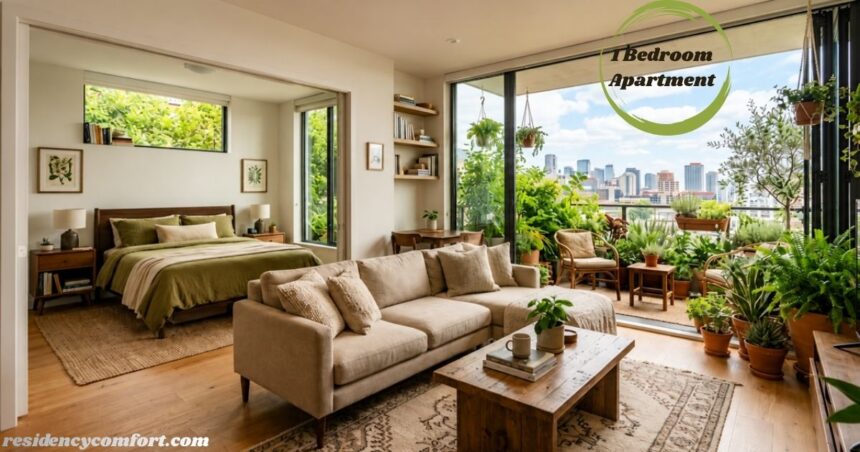
A standard 1-bedroom apartment layout highlighting structural division.
My clients often ask me to explain the distinct differences between a one-bedroom apartment and a studio apartment, so let me break it down the way I do on a viewing. A studio apartment puts you in open space: you sleep, cook, and relax in the same open-plan area, and only the bathroom stays a separate and enclosed bathroom. A studio apartment is not a bedsit; bedsits are single rooms in shared homes with shared bathrooms and shared kitchens, while a true studio always keeps a private bathroom and its own kitchen area, which is why good property marketing never mixes the two, since one is about smart design and self-containment, and the other is a legal and planning term for shared accommodation.
Layout, Size, and the NDSS Standard
In plain terms, size and layout decide everything: a studio gives you one kitchen, one open zone, and more privacy than none at all, though still less privacy than a real bedroom door offers. A tight studio can feel like a cramped space with an open-plan space doing double duty, and it usually costs less than the expensive, more affordable trade-off of a proper one-bed, though a one-bed asks you to accept an easier to maintain routine over a strict minimalist living habit. Modern studios make clever use of every inch, with built-in storage, fold-out beds, and partitions such as bookcases to add a sense of separation.
Size still swings a lot across city centres: an older conversion studio can sit near 20 m2, while older converted buildings run smaller than new builds, since England now expects most new builds to follow the Nationally Described Space Standard, known as NDSS, which sets a minimum size of 37 m2 for most one-person homes once the local council adopts it or a permit demands it, though smaller studios and older conversions stay exempt in many cases.
A typical studio layout gives you one multi-purpose room, a kitchenette or compact kitchen area, a separate bathroom with a shower or bath, and minimal internal walls throughout.
Structural Differences of a One-Bedroom Layout
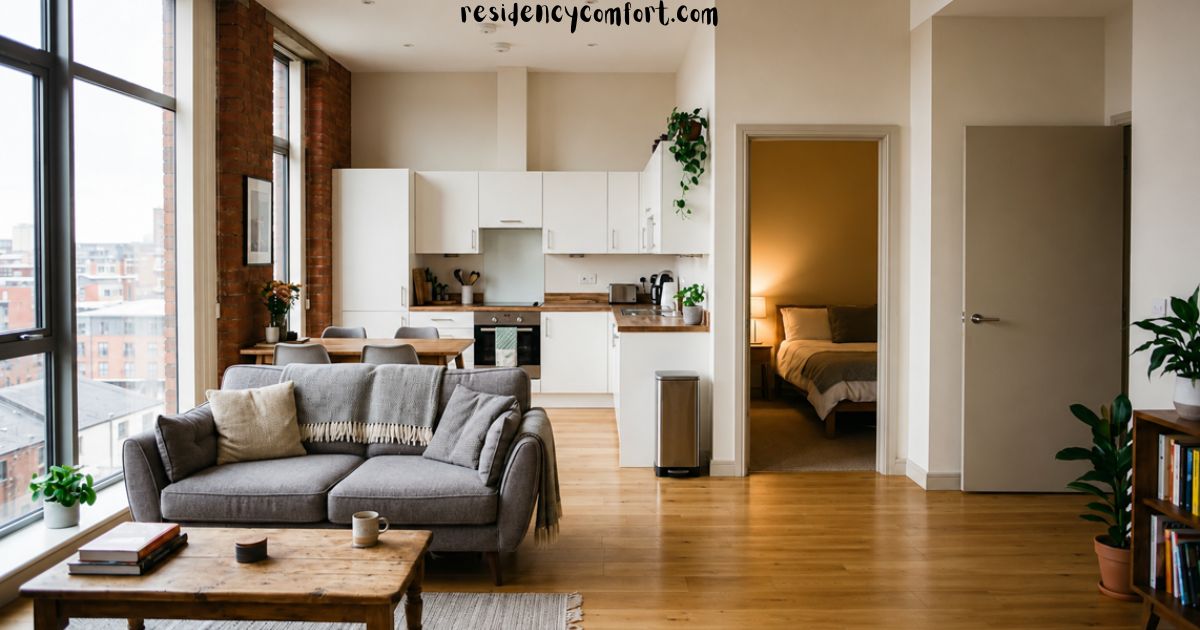
A 1 Bedroom Apartment, by contrast, gives you a distinct living area and a bedroom with its own door, which changes the whole feel of the home. In newer developments you will often find open-plan kitchens joined to the living room, while older buildings keep every divided rooms layout with its own door for that traditional feel buyers love. Typical features include a bedroom with its own space, a living room either separate or open to the kitchen, a full-sized kitchen or compact kitchen, a separate bathroom, and far more storage options than a studio ever offers.
Space, Floor Plans, and Work-Life Balance
Space tells its own story too. A studio can feel like a snug space, since most modern builds sit around 20–35 m2, while popular city locations sometimes squeeze micro-studios into even less room, though new-build studios must clear 37 m2 once NDSS applies. A typical 1 Bedroom Apartment usually spans 40–55 m2 in modern developments, and older properties can run larger still, and that extra space buys you real furniture options and a cleaner split between work-life balance, rest, and leisure. Close the bedroom door at night, and you get reducing noise and a distinct sleeping zone you simply cannot get in a studio.
Market Context and Floor Plan Transparency
Before you start your own property search, in the UK or anywhere else, set a realistic budget and get a genuine value sense of the market, since this foundational knowledge helps every buyer, from first-time buyers chasing their first investment to seasoned owners who already know their distinct lifestyle needs. This property type serves a specific market segment, which makes it a powerful asset for sellers running a targeted search campaign.
Cost Comparison and Financial Savings
Money talks, and this is where the 1-bedroom apartment proves its worth every single time. From what I have seen while helping friends budget, the significant benefits always start with cost savings, because one-bedroom units cost less than larger apartments, townhomes, or houses, both to rent and to run, which makes the utility costs friendlier on any wallet. This excellent option helps you save money even on a tighter budget, since lower rent and lighter utility bills free up cash that tenants can allocate toward other important areas of life, from savings to travel to a bit of entertainment.
Rent Differentials and Council Tax Dynamics
The price gap between a studio and a 1-bedroom flat can grow quite wide, which brings a significant price difference into play whenever high rental demand hits a neighbourhood. Studios cheaper to rent stay the norm in most cities, and it keeps the whole flat far more affordable, and I have seen buyers buy into that logic within the same building or neighbourhood, chasing lower utility bills since a smaller space needs less volume to heat.
Council tax bands usually match across both types, and if you live alone, either flat can bring the Single Person Discount worth 25% off. Still, treat studio bargains with care, because the price per square metre often runs at a higher price per metre, so you pay less overall while the space itself simply costs more than a larger flat.
Who Should Choose a 1 Bedroom Apartment?
For me, this always comes down to lifestyle, and it makes the 1-bedroom apartment an ideal choice for singles and couples who don’t want multiple bedrooms or large living areas eating their budget. A one-bed keeps things a cozy intimate living space, with enough room to relax without feeling overwhelmed by excessive space, and the privacy it offers still beats a studio any day, since guests staying over can settle in without stepping through your bedroom.
Comparing Layout Profiles
| Attribute | Studio Apartment | 1-Bedroom Apartment |
| Privacy Level | Low (Open-plan multi-use) | High (Separate closed bedroom) |
| Typical Size | 20–35 m2 | 40–55 m2 |
| Work-Life Balance | Moderate (Desk near bed) | High (Separated work/rest zones) |
| Best Suited For | Minimalists, single students | Couples, remote professionals |
In a studio, guests see everything, which suits you fine if you live alone and rarely host friends or family to stay, but a 1-bedroom feels far more comfortable once you can sleep in living space away from your personal things. Couples challenging in studios often struggle to find quiet time alone, especially during work-from-home video meetings when there is nowhere to escape calls.
Assessing Space Constraints and Growth Needs
When a one-bedroom might not be enough is worth asking honestly. A compact layout brings real drawbacks once remote working demands a productive office, since squeezing a desk into a single bedroom makes it hard to switch off at day’s end. If your smaller space feels tight, smart storage and a few small apartment organization ideas can reclaim every square foot, boosting your financial efficiency and keeping a simplified lifestyle intact.
Still, be honest about your space requirements: check your family needs and any work-from-home needs likely to expand, because a growing family will outgrow space fast, and if you love guests staying over, missing a spare room becomes a real problem. Weigh the practical pros and cons the same way you would judge a London studio flat before you sign anything.
Investment Potential of the 1 Bedroom Apartment
Landlords I know keep circling back to the same property type, because the resale value on a 1 Bedroom Apartment stays strong thanks to a broader buyer pool made up of singles, couples, and small households, while studios mostly attract single buyers, young professionals, and investors working a smaller pool. Rentals here enjoy a steady demand near city centres and universities, though tenant turnover and higher turnover run a bit hotter, since many renters outgrow space within one to two years.
Yields and regional differences
UK property investors chase reliable returns, and a one-bedroom apartment keeps landing at that sweet spot between an affordable price tag and strong rental demand, which is exactly why it works as a financial workhorse for landlords and homeowners alike, often as the most achievable first step onto the property ladder.
Yields, Returns, and the 1 Bedroom ApartmentInvestment Equation
The financial equation is simple: a lower entry cost plus huge tenant demand equals a strong rental yield. Buy a 1 Bedroom Apartment for significantly less than a two or three-bedroom house, and you still pull in a massive pool of tenants, from single professionals to young couples to students, especially near busy city centres, which builds a genuinely healthy rent-to-price ratio. Studios and one-beds post the highest average gross rental yields, often past 5-6%, outperforming larger family homes because their lower entry cost balances against high tenant demand.
FAQs
How much does a 1 bedroom apartment cost to rent in the UK?
Outside of London, a 1 bedroom apartment averages around £1,325 per month. Prices vary by region, with northern cities offering more budget-friendly options.
Can I rent a 1 bedroom apartment in London for £700 a month?
Finding an entire 1 bedroom apartment in London for £700 is extremely rare. At this price point, a room in a shared house or a commuter town flat is a more realistic option.
What is the average rent for a 1 Bedroom Apartmentt in London?
A typical 1 bedroom apartment in London costs between £1,750 and £1,789 per month, depending on how close you are to the city centre.
What extra costs come with a 1 Bedroom Apartment?
When renting a 1 bedroom apartment, you need to budget for a tenancy deposit, council tax (with a 25% single-person discount), and monthly utility bills.
Should I rent or look for a 1 Bedroom Apartment to buy?
Renting a 1 bedroom apartment gives you flexibility, while choosing to buy one offers long-term stability and builds personal equity for your future.