


A 2nd Charge on Property (also called a second charge loan or second charge mortgage) is a type of secured loan that sits behind your existing mortgage on the same property. People typically use it to raise extra money for home improvements, debt consolidation, business costs, or tax bills without disturbing a good mortgage rate they already have on their first mortgage.
2nd Charge on Property Understanding Second Charge Loans
Many people who already own a home want extra cash without touching their current mortgage. A second charge loan sits behind your main mortgage and works as a secured loan against your property, so you keep the deal you already have. Unlike a simple top-up, this is a brand new agreement with a different lender, not your existing lender.
Using a 2nd Charge on Property allows you to unlock cash without disturbing your primary mortgage terms. You do not have to be permanently living in the house to qualify, which means a rental property can also carry a second charge mortgage. Lenders call the original loan a first charge mortgage, and the new one sits as the second layer of debt on the same own property. Borrowers like this route because they avoid refinancing the whole deal just to raise a bit of money raised for a project.
How Does a Second Charge Loan/Mortgage Work?
Most homeowners build up equity over the years, either through steady capital repayment or simple house price growth. Borrowing against property lets you tap into that value without remortgaging or reselling the house. When you take out a second charge loan, your existing mortgage stays exactly where it is, and a new loan sits alongside it.
The borrower pays two separate bills each month: one to the original lender and one monthly repayment to the second charge lender. Every application goes through a strict affordability check that looks closely at your income and outgoings. This structure works well for a client whose current mortgage rate is good, since full refinancing would not be cost-effective.
For brokers, a separate loan like this can be a feasible answer when a first mortgage cannot stretch any further. A second-charge mortgage simply adds on top, and if the plan is to consolidate debt, the new debts fold into one monthly payments schedule instead of man
Eligibility / Who Can Get a Second Charge Loan/Mortgage?
To be eligible, you first need to own home, since the house acts as the security for loan. You don’t have to live in property full time, but you must show sufficient equity and a clear property type, whether that’s one of the usual standard construction properties or something more unusual. Lenders check your LTV limits across both loans combined, so the more equity you hold, the stronger your case looks.
Every application goes through detailed affordability assessments, and lenders dig into your income, whether that comes from being employed or self-employed, plus any other income streams you have. They also look at your existing mortgage commitments, household expenditure, and any unsecured debt already sitting on your file. A credit profile with defaults, CCJs, or missed payments doesn’t rule you out, since specialist lenders on this side of the market work regularly with non-standard income and messier files.
Good documentation and neat case packaging speed everything up, and lenders run their own underwriting on top of your affordability checks. Because of stricter rules, borrowers must give the same evidence for a second loan as they would for their main mortgage or first charge. Every decision still comes down to your personal circumstances, so no two cases look quite the same.
Costs of a Second Charge Loan/Mortgage
Cost is usually the first question clients ask, and rates here typically sit between 5% to 12%, shaped by your credit history, income, and loan-to-value ratio. Because the loan is secured to property , it tends to work out cheaper than personal loans, though interest rates and overall interest still run higher than on a normal first mortgage. That gap exists because a second lender carries higher risk: if the house faces repossessed status, the first lender gets paid before anyone else sees a penny.
Prime borrowers with excellent credit, stable income, and low combined LTVs usually land the best deals, often close to 5% to 7%. Subprime borrowers with weaker credit or higher LTVs tend to sit nearer 8% to 12%, and in tricky cases even that can climb higher. Your loan size matters too, since most specialist lenders set a minimum they’re willing to lend.
On top of the rate, expect valuation charges, legal costs, land registry fees, and often a broker fee for arranging the deal. Keep an eye on your overall LTV across both loans, because that single number shapes almost every price a lender offers you.
Key Scenarios for Consideration
Timing matters a lot here, and a full remortgage isn’t always the smart move. If you’re locked into a competitive fixed rate with steep ERCs, breaking that deal just to find additional funds rarely makes sense, since early repayment charges can wipe out any saving. Many people also sit on low existing interest rates from a few years back, and swapping those for new fixed rates just to raise cash would push their monthly repayments up sharply.
Sometimes the block isn’t the rate but the paperwork: high street lenders have tightened their criteria issues and stricter affordability assessments, so a further advance or standard remortgage declined outcome is common. This hits self-employed people hardest, since a complex income structure or complex income in general doesn’t always fit neat bank boxes. Clients with adverse credit or self-employed status often face rejection from the first lender, even when they can clearly afford to repay.
That’s where specialist second charge lenders step in, offering the flexibility that bigger banks can’t. Even a slightly higher rate is worth it for someone who would otherwise have no route to fresh refinancing at all.
Advantages of Second Charge Loans for Brokers
For brokers, this kind of lending is a genuinely valuable tool when structuring cases that don’t fit the usual mould. Adding secured loans next to traditional mortgage solutions widens your advice proposition and gives your clients more paths to choose from. It also grows your wider service proposition, since you’re no longer stuck offering just one type of deal.
Second charge lenders often use a manual underwriting approach rather than leaning only on automated systems, which means they can make common sense decisions where a computer would simply decline. This flexibility helps cases that a strict algorithm might reject outright but a human underwriter can clearly approve. Because of this, applications often get processed quickly, giving clients faster access to funds than they’d get elsewhere.
In some situations, this route offers quick solutions without the wait and cost of a full remortgage. That speed and flexibility together make it one of the most useful products a broker can offer.
The Growing Role of Second Charges
This product has moved a long way from being a niche product kept only for adverse credit scenarios. Today it stands as a fully regulated, mainstream funding solution that can protect existing mortgage rates while still giving clients room to breathe. Flexible underwriting means it copes well with complex income structures that traditional banks often turn away.
As affordability pressures grow and stricter criteria spread across high street banks, more brokers are learning when second charge lending is the right fit. The real question clients ask is no longer whether to remortgage, but which appropriate option actually suits them, since a full remortgage isn’t always necessary. Good advice means offering tailored client solutions, not a one-size-fits-all answer.
At Crystal Specialist Finance, our team works closely with brokers to structure right solution for every case that lands on our desk. If you want help finding the right path for your clients, we’re always ready to talk it through.
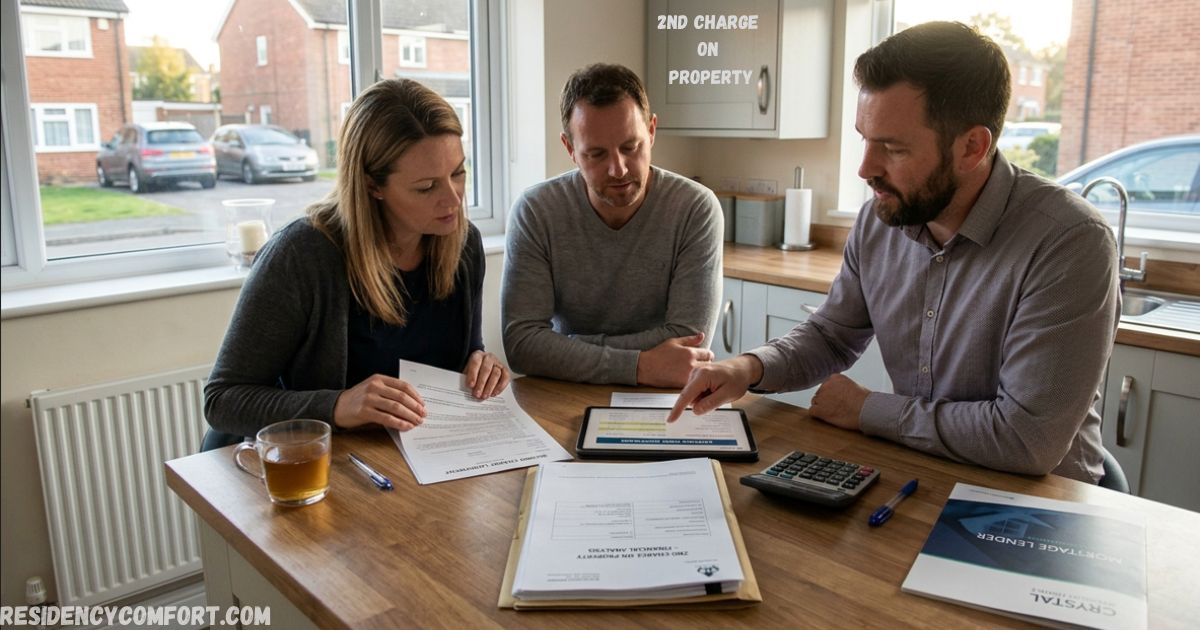
2nd Charge on Property Can You Move House With a Second-Charge Mortgage?
Moving house doesn’t mean you have to walk away from either loan. You can usually port mortgages across to your new home, keeping the same deal with your current lenders, or you can repay loans in full when you sell and start fresh. If your mortgages count as portable mortgages, you simply switch lenders paperwork over rather than starting from zero.
Alternatively, you can repay both loans when you sell property and take out one single mortgage on your next property or new house. Which path makes more sense depends entirely on the conditions of loans you already hold, including any early exit fees. Working out feasible switching takes a proper look at both sets of terms side by side.
A good mortgage broker can walk you through your options, including whether you’ll face early repayment charges and whether a fresh mortgage would actually save you money. Getting advice early saves a lot of stress once the moving van is already booked.
What Are the Pros and Cons of a Second-Charge Mortgage?
Like any financial product, this one comes with real pros and cons worth weighing carefully. On the plus side, you keep your existing first mortgage untouched, which matters if breaking it would trigger an early repayment charge. It also helps anyone whose credit rating slipped since they first bought, since alternative borrowing methods can turn out far more expensive in comparison, and you only pay the higher rate on the additional amount you borrow, not the full value of both loans combined.
On the other side sit some genuine disadvantages worth naming plainly. Your home at risk stands as the biggest one, since missed payments or late payments can hurt your credit rating and make it harder to borrow future funds. If you use it to consolidate debt, your monthly repayments might feel more affordable repayments, but you could still pay more interest overall across the life of the deal.
There are also fees and extra costs to factor in from day one, plus some deals run with long repayment periods stretching well into retirement. Weigh all of this before signing anything, since the right choice depends entirely on your own numbers.
2nd Charge on Property How Do You Apply for a Second-Charge Mortgage?
Applying for a 2nd Charge on Property is more straightforward than most people expect once you know the steps. You’ll usually go through a specialist lender or a broker, and you’ll need to hand over proof of income, proof of identity, and proof of address as basic ID. Gathering financial information early, including payslips, recent statements, and your latest mortgage statement, speeds the whole thing along.
Before anything can proceed, your first-charge lender must give written consent, known formally as a deed of consent, so they know a 2nd Charge on Property is joining theirs. You may also need a valuation on the property and a conveyancing solicitor to handle the legal side. This route can prove genuinely cost-effective whether you’re planning home improvements, need to settle major bill payments, or want to consolidate debt into one place.
FAQs
1. What is a 2nd charge on property?
It is a second loan secured against your home that sits alongside your existing primary mortgage, leaving your main mortgage completely untouched.
2. How much can I borrow?
It depends on your home’s available equity (market value minus existing mortgage balance), your income, and your overall credit profile.
3. What can the loan be used for?
Common uses include home renovations, consolidating high-interest debts, or funding major capital expenses.
4. Does it change my current mortgage rate?
No. It operates as a separate loan, keeping your original mortgage terms and interest rate intact.
5. Who qualifies for a 2nd charge on property?
Homeowners with an active mortgage, sufficient equity in their property, and proof that they can afford the extra monthly repayments.