

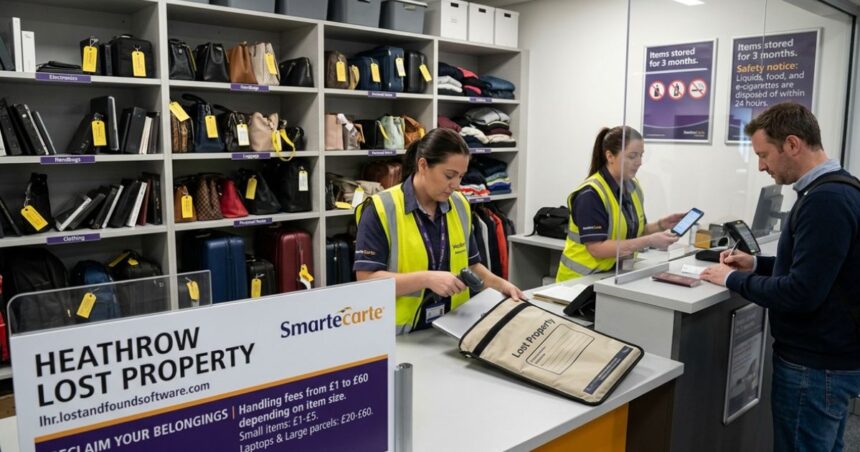
Heathrow Lost Property refers to the service operated at Heathrow Airport (London) for handling items that passengers or visitors have lost or left behind while at the airport whether in terminals, security areas, shops, restaurants, or on the airport grounds itself (it’s separate from property left on an actual flight, which is normally handled by the airline).
Heathrow Lost Property The Complete Recovery Guide
Losing something at London Heathrow Airport can happen to anyone, and this guide walks you through the entire recovery process, step by step, from the first report to the final collection. Heathrow (LHR) sits just outside Central London as the busiest and largest airport hub in the UK, moving millions of passengers every year across four passenger terminals and a separate cargo facility. Because the airport stretches over many miles, the chances of misplacing a suitcase, laptop, passport, or smaller personal item rise the moment you step through the doors. Fortunately, the official Heathrow Lost Property service works as your reliable partner for locating lost items in 2025, whether you are flying toward one of 80 international destinations or boarding with one of 14 major carriers worldwide.
Travellers who leave belongings behind on the Heathrow Express, at a gate, or anywhere inside the terminals can claim their property back though a few cases carry handling fees of roughly £60, with smaller parcels starting from just £1. Whether a batch of laptops gets left in a lounge or a single item slips under a seat, recovering your belongings is realistic once you report the loss quickly and follow the correct procedures.
Who Manages Lost Property at Heathrow?
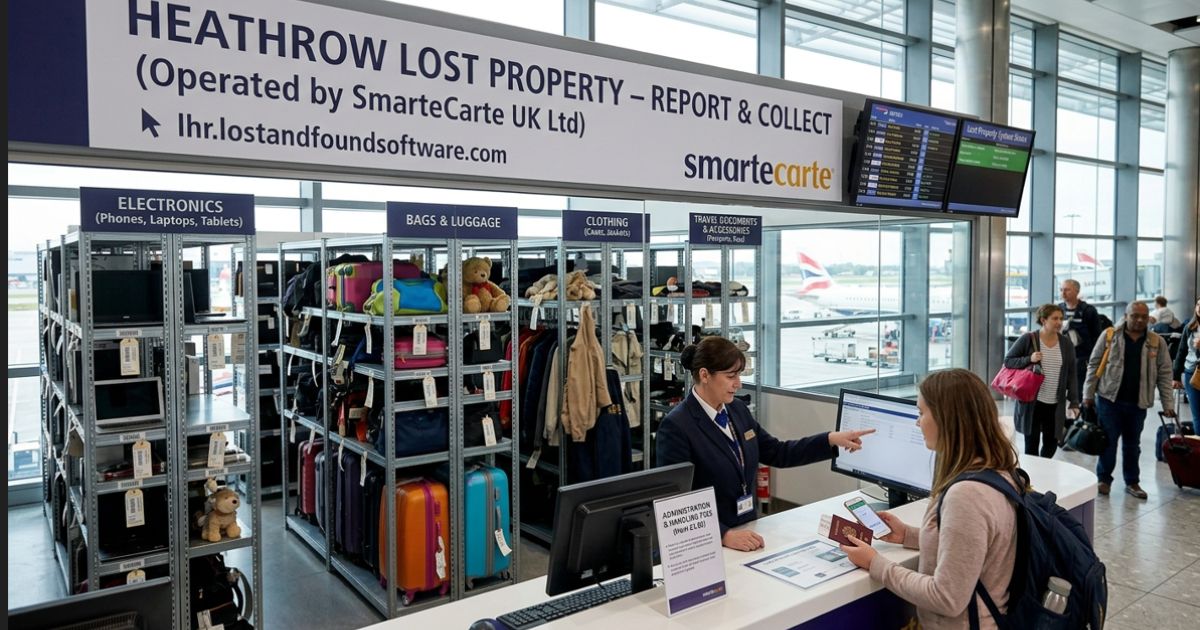
Heathrow does not run its own in-house desk for missing bags and gadgets; instead, an outside lost and found operator called Smarte Carte UK Ltd handles the job for every terminal across the airport. This company keeps the Heathrow Lost Property system running 24/7, and it operates the online database found at lhr.lostandfoundsoftware.com, which is the official search tool recognised around the world for tracing missing items.
Anyone who wants to report or claim a missing item can log the date it went missing and check listings from the terminals, the car parks, the buses, and even the security areas. The system, built on Lost and Found Software, stores records for three months, giving passengers plenty of time to search for their items before they are removed from the list.
How to Report or Recover a Lost Item at Heathrow
The process begins with the online form, officially called the Lost Item Report Form, which every terminal encourages passengers to fill out as soon as they notice something missing. You will need the item description, including colour, brand, model, and any unique features or distinctive marks, plus the item category whether it falls under electronics, checked luggage, or something smaller. Add your journey date, flight number, travel details, and contact information, since the London Heathrow Lost and Found team, working through the Heathrow Lost Property portal at lhr.lostandfoundsoftware.com, matches these details for match accuracy against everything the customer service team has logged from security checkpoints, baggage reclaim, the gate, or even the plane.
For ID verification, keep your passport, driving licence, national ID card, or other photo ID ready, along with proof of ownership and, where relevant, customs paperwork or tags showing serial numbers. Once the Smarte Carte system finds a match, you receive a confirmation email and an email confirmation with your email address on file, and the platform lets you choose courier delivery through Saatkary Courier, pick-up at the Smarte Carte office, or a visit to the lost property office in the Central Terminal Area.
Collection carries a small cost: a packaging fee, a postage charge for shipping, or an administration fee covering service fees, and international parcels sent to an international address may add a further handling fee. British Airways and other carriers list their own airline’s baggage services desk and airline’s website for items lost on board, so always double check whether LHR or the airline holds your belongings before contacting the lost property section. Every enquiry benefits from real-time tracking, so you can follow your case by location, date/time, and status through the online platform until the team confirms collection remember that unclaimed reports close after three months, so act on inquiries and security checks without delay across the whole of the UK.
Storage Policy, Time Limits & Fees
London Heathrow Lost and Found, run through Smarte Carte, holds onto recovered belongings for 3 months before the condition of storage changes what happens next. Items in good condition stay safe at the LHR airport facility, ready for reclaiming lost items at any point during that window, and the team applies service fees plus a packaging fee for anyone arranging postage rather than an in-person pickup.
Certain categories never make it to the shelf for long: liquids, food, and e-cigarettes fall under strict safety regulations, so staff must have them disposed of within 24 hours for health reasons. Once the 3 months deadline passes and nobody has come forward, unclaimed items are either donated to charity or recycled responsibly, so it truly pays to act fast when chasing lost items.
About Heathrow Airport (LHR)
Heathrow Airport, often simply called LHR, ranks as the busiest international aviation hub in London and one of the largest by passenger volume in all of Europe. Every month, it welcomes travelers connecting to more than 200 destinations across roughly 80 countries, using airlines organised into major global alliances.
The site spans four active terminals Terminal 2, Terminal 3, Terminal 4, and Terminal 5 — each packed with duty-free shops, lounges, boarding gates, and security checkpoints that keep the UK’s busiest gateway moving. With this much ground covered by travelers carrying personal belongings, it is no surprise that items misplaced throughout the terminals feed directly into the Lost Property system that keeps the whole international aviation hub organised.
Understanding Heathrow’s Four-Terminal Layout
Each terminal at Heathrow has its own character and its own loss points, so understanding the layout helps narrow down a search fast. Terminal 2 mainly serves Star Alliance members, Terminal 3 handles a mix of independent carriers and long-haul routes, and Terminal 4 is home to SkyTeam alliance partners, with shops, restaurants, and lounges scattered through each search area.
Terminal 5, nicknamed the Queen’s Terminal, is the largest terminal and the main British Airways hub, split into satellite buildings 5A, 5B, and 5C, all part of the wider Oneworld alliance network and linked by internal trains. Moving between them usually means a bus transfer or a ride on the Heathrow Express, and whether you are booked on domestic flights or international flights, knowing which carriers use which satellite building can save real time when you retrace your steps.
What Should You Do If You’ve Lost Something at Heathrow Airport?
Realising you have lost personal items somewhere inside London Heathrow Airport feels stressful, especially given the sheer complexity and size of a site with four terminals to search. The good news is that the Lost Property service exists exactly for this situation, and the first sensible move for any travelers is simply to report lost property as soon as the loss is noticed, rather than wandering the large area hoping to stumble across a lost item by chance.
Items Lost in the Airport vs. Items Lost on Aircraft
Where you lost something changes who deals with it, because Heathrow Lost Property only covers terminal areas such as shops, restaurants, lounges, restrooms, security checkpoints, immigration, and customs areas. Anything left inside a terminal facilities zone, including ground transportation zones, gets logged through the standard Heathrow system.
Anything left onboard the aircraft itself think seat pockets, overhead bins, galley areas, or gate seating areas right before boarding falls to the airline, since each airline-specific lost-and-found process is run independently from the terminal one.
Most Common Items Lost at Heathrow
Across airports worldwide, certain categories turn up again and again, and Heathrow is no different: electronics top the list, with mobile phones, tablets, laptops, chargers, and cables frequently left at charging points or charging stations near seating areas and gates. Travel documents rank close behind, including passports, wallets, purses, and keys, often dropped during security screening or left in security bins at airline check-in counters.
Personal accessories account for a large share too jewelry, watches, sunglasses, glasses, jackets, and coats all slip out of pockets near boarding, immigration, or the lounges, along with reading materials and books left in shops. Industry statistics suggest around 70% of everything reported does eventually get returned, out of roughly 2 million items logged each year across major terminals.
What Happens After Reporting? (Heathrow Express)
Once you report a loss, whether from a seat on the Heathrow Express or elsewhere in the airport, the team begins the work of locating it, and the timeline depends heavily on the item’s nature, its size, and where it turns up. A straightforward collection of items might take only a few days, while a harder case can stretch into a couple of weeks given the sheer volume of reports the designated lost property office processes.
During this waiting period, staff usually reach out through your chosen contact method with instructions on next steps, including the location for pickup, so it helps to check messages regularly and respond within a reasonable amount of time.
Tips for Preventing Heathrow Lost Property (Heathrow Express)
Prevention beats recovery every time, so relying on the official Heathrow Lost Property guidelines and practicing a little proactive care goes a long way toward keeping your belongings by your side. Attach luggage tags with your name and contact information to every bag, store electronics and passports in a secure travel pouch rather than a loose pocket, and always check the seating area including the seat in front and the overhead compartments before you leave.
A crossbody bag or another secure option for valuables keeps essentials close during busy moments at security or boarding, and a quick habit of double-checking labels and pockets one last time before disembarking makes a real difference in avoiding a trip to Heathrow Lost Property in the first place.
FAQs
1. How do I report an item to Heathrow lost property?
Submit a detailed report online through the official Heathrow lost property database managed by Smarte Carte, specifying the terminal, date, and item details.
2. What if I lost an item on the plane?
Contact your airline directly. Items left onboard aircraft are handled by airline ground staff, not airport lost property.
3. How long are lost items kept?
Unclaimed items are held for up to 90 days before being donated, recycled, or disposed of.
4. Is there a fee to retrieve items?
Yes, a handling fee applies based on the item type. Courier delivery options are available for an extra charge.
5. How do I collect an item from Heathrow lost property in person?
Visit the Heathrow lost property collection point with a valid photo ID, your reference number, and payment for handling fees.