

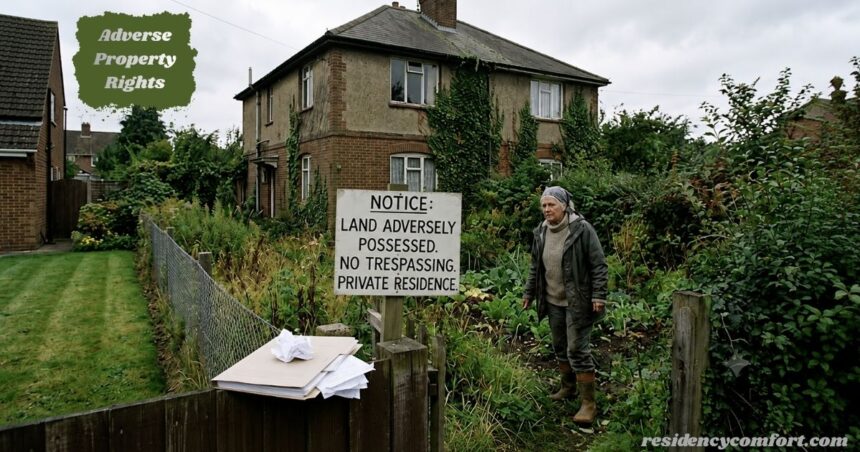
I have sat across the table from landowners and occupiers who never expected to end up in a boundary dispute, yet here we are, because land in England and Wales carries rules that most buyers and property owners never read until trouble knocks. Adverse possession, still known on the street as squatter’s rights, sits quietly inside UK land law and lets a person build legal ownership over ground they never bought, establishing adverse property rights provided they meet certain conditions over a sufficient period of time.
Understanding Adverse Property Rights and UK Land Law
A third party who lives on another’s property without permission can, in time, turn simple use into a real claim, and that single fact should push every owner to start inspecting and managing land before an issue can escalate.
Unused areas, forgotten driveways, overgrown gardens, and loose fences are exactly where longstanding occupants quietly settle in, and once they do, the risk of losing ground grows every single year. I write this blog as a guide for property investors, developers, and ordinary neighbours who want clarity, not complex law wrapped in jargon, because this area is genuinely strictly regulated and built to balance interests between rightful property owners and people who have quietly used unregistered land for years.
Key Warning Signs When Adverse Property Rights Typically Surface
Disputes over access, shared paths, and garden edges often surface right when a house is sold or redeveloped, and that timing alone can reduce property value or delay transactions for everyone involved. Some occupiers genuinely believe they hold legal certainty and have successfully established adverse property rights after decades of use, while some owners face unresolved issues that drag on because nobody checked the paperwork sooner, and both sides usually reach for legal advice far too late.
The good news is that protecting land and learning how to protect or defend a title against unexpected claims of adverse property rights does not require a law degree, only a working grasp of the legal principles involved and the practical insights shared by experts who deal with this daily.
Securing Your Title Against Adverse Property Rights
In my own practice, I have watched a single fixed fee session save a family from years of significant consequences, and I have watched potential claimants walk away once they understood the steps required for a successful claim. Whether you manage a large property portfolio or one modest home, this guide gives you clear advice, clear next steps, and enough confidence to act rather than worry, because adverse possession claims rarely resolve themselves.
If you are unsure about your position, an expert commercial property solicitor or a Dispute and Litigation Solicitors team can walk you through a dispute advice hour, explain registered land and unregistered land rules side by side, and help you resolve disputes before an individual who occupies your ground can apply to gain ownership through the courts.
This is not abstract theory for UK readers; it is a living practice that decides who keeps what, and every owner deserves the chance to secure their original titles against unexpected adverse property rights with real clarity rather than guesswork.
Legal Requirements for Claims on Adverse Property Rights
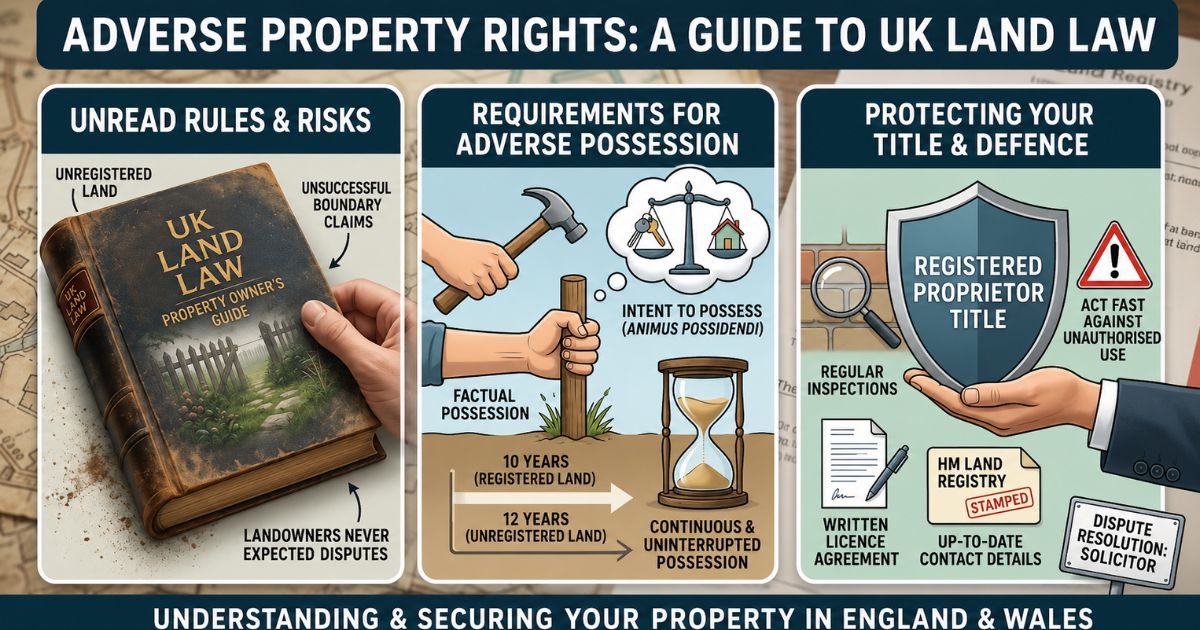
Anyone who wants to understand this topic properly needs to start with factual possession, which simply means treating the ground the way a true owner would, through fencing the plot. Alongside that physical act sits intent to possess, or what lawyers still call animus possidendi, and courts look for exclusive possession where the person clearly meant to shut out the rightful owner and everyone else.
A claim also needs hostile possession, meaning the person moved in without a lease or informal agreement, attempting to secure adverse property rights since any license or authorisation from the true landowner removes the adverse element entirely and kills the case outright. Court decisions have repeatedly confirmed that the use must sit in the open, without concealment, so neighbours and passers-by can see the exclusive use taking place rather than something hidden.
Statutory Timeframes for Claiming Adverse Property Rights
Time then becomes the deciding factor, because continuous possession and uninterrupted possession must run for 10 years on registered land or a full 12 years on unregistered land to establish these adverse property rights, and this statutory period cannot skip about with gaps. Once that statutory minimum period closes, the person can approach the Land Registry, formally HM Land Registry, and a paper owner on registered ground gets notified and typically has 65 business days to object before title extinguished language applies automatically under the Limitation Act 1980 for older, unregistered land cases.
A successful application can shift into a possessory title, and the person named becomes the registered proprietor, though the claimant should expect the rightful landowner to push back hard if they still care about the ground.
The Three Exceptions and Evidential Rules for Adverse Property Rights
Three narrower doors also exist within this same area: estoppel, where it would be plainly unconscionable to strip the person of what they built; a genuine boundary mistake, where adjacent land was reasonably believed to belong to them; and other entitlement, perhaps through an old contract nobody enforced, all impacting how adverse property rights materialize.
Small gaps do not always break the chain, since minor absences and temporary absences rarely undo years of consistent acts, and use by a predecessor can still count toward the same exclusive occupation, though any legal action taken by the true owner to reclaim property resets the whole timeline.
Every serious claimant should gather evidence such as bills, photographs, and witness statements, because documentation proving genuine physical control and an ongoing presence is what actually wins these cases in front of a judge, not verbal assurance.
I always remind clients that occupation alone means nothing without intention, and intention alone means nothing without the correct statutory duration, so clear intent, an absence of permission, and proper continuous occupancy must all line up together under the Land Registration Act before anyone in England and Wales can rely on these requirements to balance interests fairly between property owners and potential claimants.
How to Apply for These Adverse Property Rights
The first practical move is running an Index Map Search through HM Land Registry to confirm whether the land counts as registered land or unregistered land, since that single answer decides which legal regime, which application process, and which qualifying time period applies to your case.
Next comes confirming the minimum period of possession, which means ten years of continuous adverse possession ending exactly on the date of the application to formalise these adverse property rights, or a full 12 years where the paper owner’s title becomes extinguished by law without any warning letter at all.
From there, someone must honestly check the legal tests: has factual possession genuinely occurred, does intention to possess show through daily habits, has possession without consent stayed true throughout, and has continuous possession run without a real break in the chain. Gathering supporting evidence matters enormously at this stage, and I always tell clients to prepare a clear statement of truth setting out exactly when possession began, how the land used changed over the years, and confirmation that it happened without permission from anyone.
Evidential Requirements and Application Forms for Adverse Property Rights
Strong supporting material usually includes dated photos of fencing and boundaries showing exclusive use, site plans marking the exact land claimed, plus maintenance records, receipts, invoices, home improvements, and honest witness statements from neighbours who watched the whole thing unfold.
Once everything sits ready, the claimant must submit an application using Form ADV1 for registered land, attaching a compliant plan, and HM Land Registry will then notify the registered proprietor, who usually receives 65 business days to respond before the process moves forward. For unregistered land, the path runs differently since the possessory title arrives once the twelve years pass, allowing the claimant to secure adverse property rights before they file Form FR1 for first registration alongside Form ST1, the dedicated statement of truth for adverse possession, together with the full evidence collected earlier.
Defence Against Claims Minimising Adverse Property Rights Risks
Most claims I have seen succeed simply because a patch of land sat overlooked and unmanaged, quietly informally occupied by someone who noticed nobody was watching, so proactive steps genuinely matter here. Start with regular inspections, meaning physically inspecting every boundary, every access way, and every one of your unused areas for early signs of occupation such as new fencing.
Securing Boundaries and Consenting to Use Against Adverse Property Rights
Keeping maintained boundaries matters just as much, so repair broken fences, walls, or hedges promptly, keep gates and access points solid, and never leave damage sitting for months, since gaps invite exactly the trouble you are trying to avoid.
If someone genuinely does use your ground with your blessing, put it in writing through written agreements or licences, covering garden use, parking, storage, or access, because a properly formally documented written licence or a set of temporary agreements gives you proof of consent that shuts an application for adverse property rights down instantly.
Proactive Steps to Defeat Adverse Property Rights
It also pays to register property and keep an eye on Land Registry activity, since accurate title plans and up-to-date contact details mean HM Land Registry can actually reach you the moment something changes. Finally, act fast: actively contest possession the moment you spot unauthorised use, avoid delays, challenge anyone occupying land without permission through clear objecting to prevent them from establishing adverse property rights over your estate, arrange removal of fencing or unwanted structures, serve a proper notice, and start possession proceedings where the situation demands it.
FAQs
What are Adverse Property Rights?
Commonly known as squatter’s rights, they allow someone to claim lawful title to land by occupying it without consent. Scotland handles Adverse Property Rights differently under positive prescription.
How long must I occupy unregistered land to establish these rights?
You must demonstrate 12 years of continuous, uninterrupted possession. The original owner’s rights are extinguished by operation of law once this timeframe and physical evidence of exclusion (like fencing) are proven.
What forms do I submit to HM Land Registry?
To formalize Adverse Property Rights, registered land requires Form ADV1, while unregistered land requires Form FR1.
How much does it cost to register Adverse Property Rights?
The Land Registry fee for a registered estate is a fixed £130 per title. For unregistered plots, the fee scales dynamically between £70 and £130, depending on the land’s valuation.
Do I need a solicitor to protect my Adverse Property Rights?
It is highly recommended to instruct a property dispute solicitor or conveyancing expert. They ensure criteria like animus possidendi (intent to possess) are met and defend you against an owner’s counter-notice.