
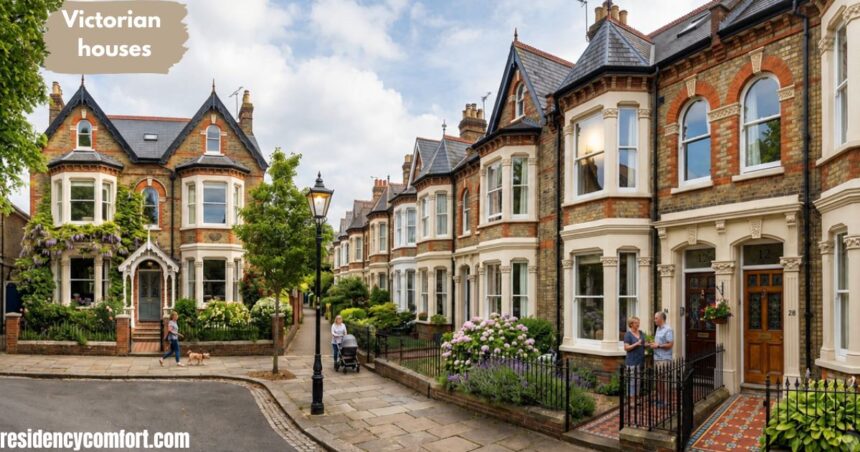
These period homes remain a favourite style across the UK, and once you understand why, the appeal makes total sense. The Victorian period, stretching from 1837 to 1900, brought massive change to Britain, and this was one of the wealthiest periods in our history, with a sharp population surge that pushed builders to put up far more Victorian houses than ever before.
The Rise of Victorian Houses
Between 1801 and 1911, the population jumped from roughly 9 million to 36 million, and housing climbed from 1.6 million to 7.6 million.Walk down any street scene in towns and cities across the country today, and you will still spot these terraces and villas standing proudly.
Buyers searching for a versatile home that suits modern family life often gravitate toward them, since they remain so treasured for their decorative features. As iconic symbols of the United Kingdom, these residential buildings reflect a slice of our historical tapestry, carrying social, cultural, and technological change within their brickwork.
What makes a Victorian houses instantly recognizable isn’t just its date of construction; it’s the recognizable features that emerged during Queen Victoria’s reign, which ran until 1901. This particular architectural style is known for its ornate detailing, its eclectic influences, and innovative designs that broke away from the plainer Georgian forms that came before it.
Why Are Victorian Houses So Popular
Ask anyone who owns one of these homes why they love it, and space comes up almost every time. The proportions feel generous, the light pours in, and the rooms stay bright, since the Victorians weren’t far behind the Georgians in their love of big windows running from ceiling to floor.
Because so many of the wealthiest Brits lived during this era, plenty of homes went up with no expense spared, and the features found inside reflect just how much money flowed through the Empire at the time.
Built to Last: The Enduring Strength of Victorian Houses
Skilled revered experts and tradesmen built these properties to last, and you will still find original roofs and beams sitting exactly where they were first placed. Compared with much older Tudor homes, these Victorian houses are still fairly young and have plenty of life left in them.
Keep an eye out for Indian influences and Asian influences too, since the Empire shaped design in unmistakable ways, leaving behind charming international design touches.
Location, Legacy, and Architectural Freedom
Back then, there was no such thing as planning permission, so people simply picked the best view and built there, which is why you’ll find homes scattered across valleys and tucked into villages. Many a rectory and vicarage sit beside old churches, often because a generous philanthropist wanted to give workers access to quality living accommodation, not just grand country manors. Even the smaller homes from this period were built to a genuinely high standard.
The Historical Context of the Building Boom
This boom links straight back to Queen Victoria’s reign, spanning 1837 to 1901, a time bursting with new ideas and innovation, from the arrival of the railway to the rise of the Christmas tree as a household must-have. A dramatic population increase ran alongside all this growth, and census data shows that over 70 years, England and Wales saw their numbers grow by 134%, climbing from 14 million to 32 million people.
That kind of demand explains why so many homes from this era still line our streets, and if browsing old property pages sparks your curiosity, you might just find your own dream home among them.
How to Spot a Victorian House
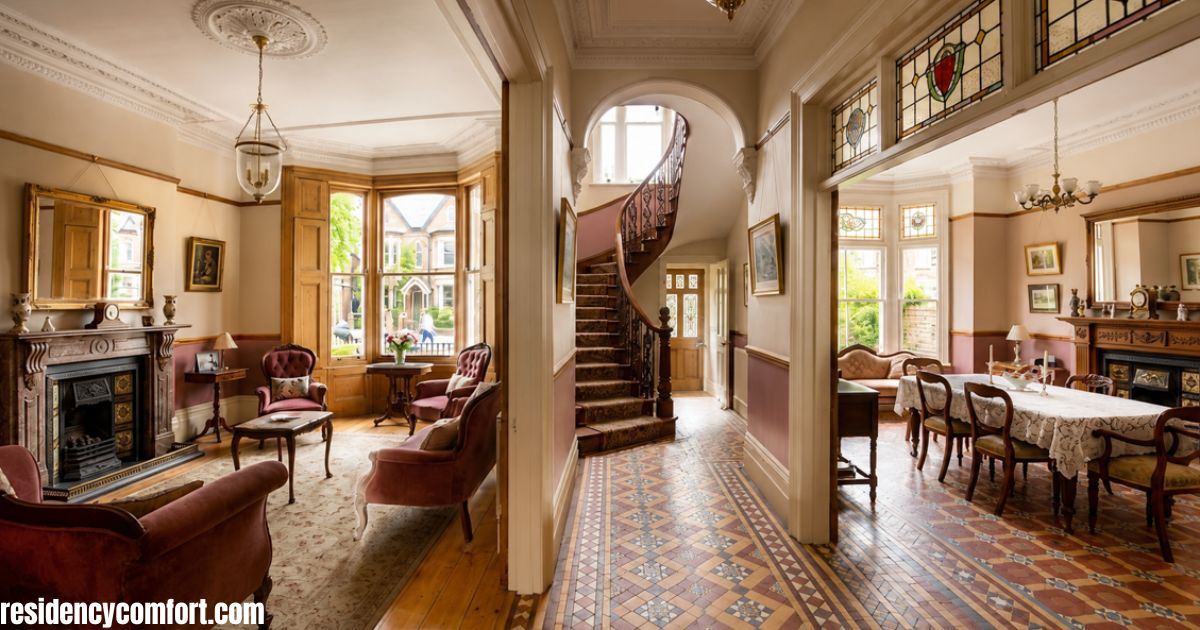
Some of these properties show up as large manor homes, while others took the shape of the now-classic modern terrace, built with a kitchen to the rear and living spaces facing the street. Inside, design features like ornate fireplaces, grand staircases, decorative panelling, pretty ceiling roses, and detailed cornicing sit comfortably alongside picture rails and dado rails.
Many original fireplaces have since been restored, either kept in working condition or simply left as a striking design feature.
Intricate Internal and External Features of Victorian Houses
Look down, and you’ll often spot tiled floors running through the hallway, along with stained glass windows glowing above external doors. Outside, patterned bricks decorate the walls, while barge boards and decorative slate roofs finish the roofline, sometimes with a small carved ornament sitting right at the point. The shift from small panes to plate glass also meant these Victorian houses could finally fit single-paned windows and double-paned windows that let in far more light.
Grand Entrances and Classic Bay Windows
These period features start the moment you approach the door. First impressions offer a real decorative feast, since entrances often show off pretty tiles, ornate mouldings, and sturdy wrought iron railings. Bay windows, whether round bay windows or square bay windows, sit at the front of countless homes, and while many have been upgraded with double glazing, original glass still gives off that lovely dappled effect. Double-fronted villas with twin bay windows flanking the front entrance show off a real sense of balance and grandeur.
High Ceilings and Decorative Interior Finishes
Step inside, and a geometric display of floor tiles often greets you, arranged in a tight mosaic pattern using shades of mustard yellow, terracotta, and pale blue, even if a carpeted hallway is hiding them for now. High ceilings add to the sense of space, while intricate cornicing, decorative picture rails, and elaborate ceiling roses dress up the formal living rooms and dining rooms, often paired with lovely pendant lighting.
Character Features, Layouts, and Modern Adaptations
A cast iron fireplace usually served as the central feature of a room, sometimes finished with tiled sides running along the edges. Reception rooms typically sit at the front of the house, with the kitchen at the back, and older layouts often included a side passage, though many owners have since built across the side return, adding skylights for extra brightness.
Larger villas sometimes featured twin reception rooms linked by a service hatch to the formal dining room, though today many families merge that into one open family hub built around a single kitchen/dining/living space that suits modern families perfectly.
Attic Conversions and the Shift to Sloping Slate Roofs
Up top, attics offered generous attic spaces, many now converted into extra bedrooms and bathrooms, while slate roofs with their sloping roofs stand in contrast to the flatter rooftops typical of the Georgian era, which had flat tops instead. All these details combine to give Victorian houses their lasting character and charm.
Where to Find Them
If you want to see this style firsthand, head to London, where both West London and East London offer wonderful examples. Winchester has its own charm too, especially around Fulflood, known for its lovely cottage-style homes. In Liverpool, the famous Albert Docks show how old industrial architecture has been turned into striking modern homes.
Weston-Super-Mare built its name on spa towns and seaside resorts, drawing the Victorian elite during their heyday. Bristol holds plenty of fine examples too, particularly around Clifton Downs, while Portsmouth and nearby Plymouth grew rapidly thanks to a booming shipping industry.
What to Watch Out For
Many properties from this era were built to genuinely high standards, and most that reach the market today have already picked up modern features along the way. Homes that kept their original features tend to be sought-after, especially if they also carry traces of that Empire influence.
That said, always check carefully for damp, since early Victorian builders weren’t particularly skilled with damp proof coursing. Builders later in the era began using slate to solve this issue, so if you’re buying one of these homes today, it’s worth checking whether it already has proper damp proof course installed.
How to Design a Victorian Houses
In cities, you’ll mostly come across terraced houses lining a single residential street, a design built to handle growing populations where plot sizes stayed tight. Building upwards rather than outwards, with shared walls between neighbours, helped save space and stay efficient, and many of these became separate dwellings over time. This style took off fast, and urban areas grew by 25% between 1841 and 1851 alone.
Rural Adaptations From Picturesque Cottages to Gothic Manors
Out in rural areas, a different look took shape entirely. Victorian cottages became known for their picturesque appeal and charming gable roofs, while grander Victorian manors rose up as proper country houses, built from solid brick with plenty of room and light.
Many carry a gothic reference outside, sometimes featuring pointed windows or spires, while indoors you’ll typically find ornate fireplaces, wooden panelling, decorative cornicing, and ceiling roses. Tiled floors were popular too, especially in dark red tones and black tones through the entranceways and hallways, while plate glass allowed for far large windows than before.
Decorating Victorian Houses Expert Insights from Oliver Gerrish
Oliver Gerrish, a respected architectural historian, once told me his view on decorating these homes well. He explained that this era shaped much of our urban historic built environment, describing the style of Victorian houses as Georgian proportion dressed up with extra flair, thanks to the mass production of architectural elements for both interior and exterior spaces.
He pointed out that furniture from the period suits an eclectic mix, since Victorian furniture stays durable and well-made, and encouraged homeowners to experiment with colourful fabrics like silk and velvet.
FAQs
What makes a Victorian houses so unique?
These homes are celebrated architectural masterpieces known for their distinct historical character. Key defining features include grand gabled roofs, detailed brickwork facades, and elegant bay windows that fill the rooms with natural light.
What should I look for in a Victorian houses interior?
A classic interior is all about beautifully preserved original features. When viewing a property, look for high-quality heritage preservation elements such as intricate decorative coving, soaring high ceilings, a stately period fireplace, and historic tiled hallways.
Can you blend a historic property with modern living?
Absolutely. Creating a modern Victorian houses is all about balancing the charm of well-proportioned rooms with contemporary updates. Many homeowners achieve this by adding a light-filled extension, transforming a historic building into a highly functional, contemporary sanctuary.
Why are Victorian houses in the UK and London so popular?
Purchasing a period property in these areas is about buying a piece of history. Whether it is a classic urban terrace or a detached suburban home, these properties offer an emotional connection to the past, standing as an enduring sanctuary in the modern world.
How do Edwardian houses differ from Victorian ones?
While built just after the Victorian era, Edwardian architecture shifted away from dark, ornate spaces toward lighter, airier designs. Heavily influenced by the Arts and Crafts movement, these homes prioritize wider layouts, larger windows, and a deep appreciation for handcrafted, rustic details over industrial mass production.