

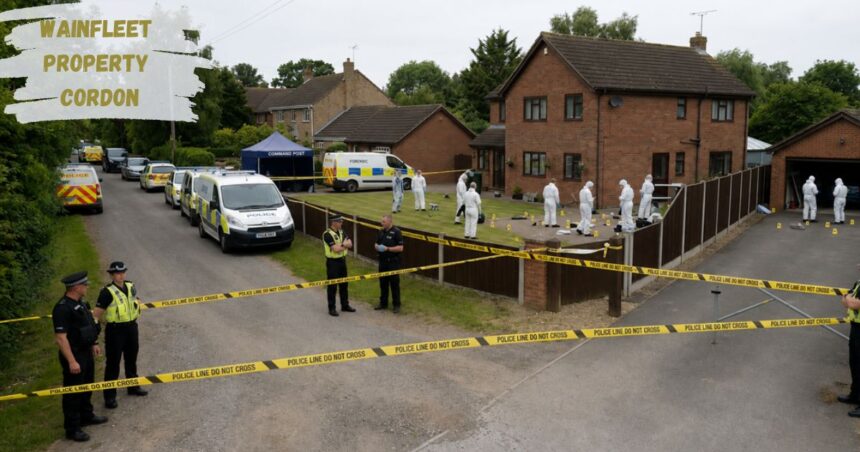
A property cordon takes shape as soon as police move to secure the area surrounding a location connected to a crime, and it can remain standing for hours, days, or in some cases several weeks. Within a policing operation, officers erect physical barriers fencing, tape, and controlled checkpoints across every entry and access point, keeping unauthorized people out and preventing evidence from being disturbed or contaminated. The Wainfleet Property Cordon showed clearly that the scale of this kind of work hinges on how complex the search is and how large the property in question happens to be. A modest backyard requires far less coverage than a stretch of rural or semi-rural acreage.
Exploring the Wainfleet Property Cordon Operations
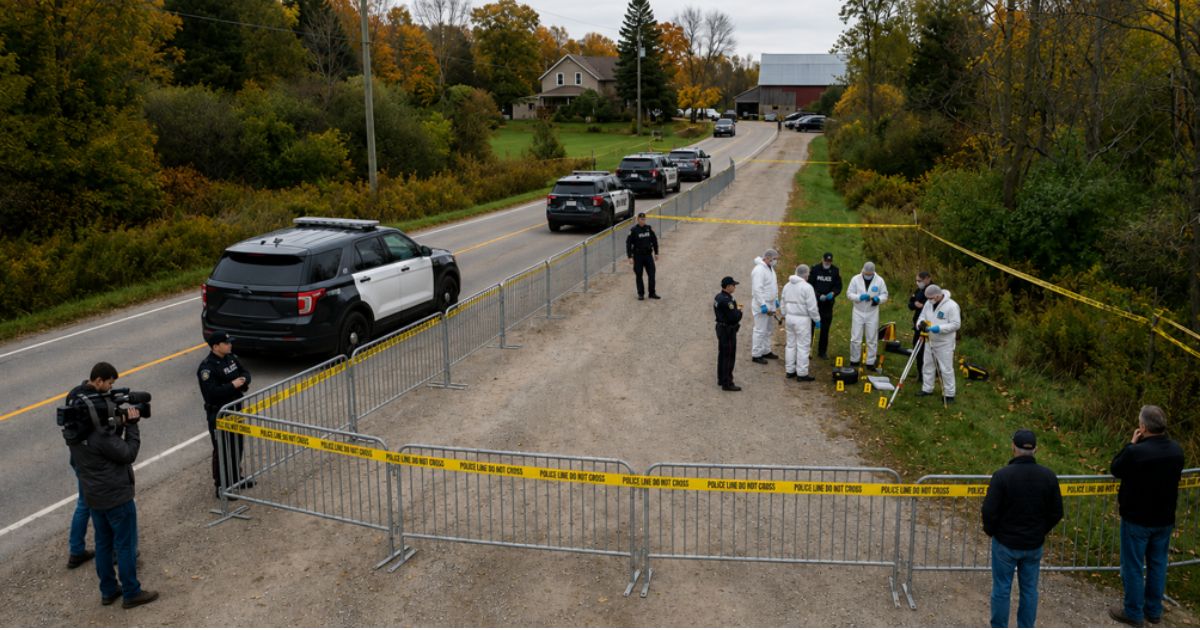
Uniformed officers hold their positions alongside private security personnel, while technicians in protective suits move methodically through the site, dropping evidence markers at each spot where physical evidence is found. Marked vans park along the street, vehicles crowd nearby driveways, and the combined presence creates an unmistakable forensic footprint that neighbors and passersby notice immediately.
Investigators overseeing the Wainfleet Property Cordon kept movement tightly restricted until every relevant detail had been documented and safely collected, with adjoining properties monitored throughout to keep the search uncontaminated.
Inside the Wainfleet Property Cordon Operations
The investigation took root on O’Reilly’s Road, in a quiet township where no one anticipated a search operation of this magnitude. What started as a missing persons case connected to a man from Toronto escalated into a homicide investigation, with Toronto police stepping in to lead rather than the local Niagara force. Forensic personnel spent multiple days working through the house, the yard, and the surrounding land, shifting focus from the backyard to the rear of the property as a forensic van sat nearby and camera flashes lit up the garage. Throughout this period, the Wainfleet Property Cordon marked the outer limit for every forensic recovery team on site.
By day four, attention had shifted closer to the residence itself, and both local and visiting investigators held to a strict policy of withholding information, declining to reveal the nature of any items recovered, since early disclosure risked compromising the integrity of the evidence in an investigation still very much active.
The search stretched on for a full week, sometimes closer to two, guided by careful adherence to investigative protocol, and the case took on added weight once it was linked to other homicides in the city. Police offered no direct comment on the operation, yet the focal point of activity never moved from that same property, and every stage of the process was recorded.
Impact of the Wainfleet Property Cordon on the Community
Residents near the property experienced a mix of genuine curiosity and unease as the scope of the investigation became apparent. Wainfleet’s neighbors are accustomed to a slower pace of life, so a search stretching across multiple days upended every expectation they held about their quiet corner of town. Watching forensic crews, tape, and vehicles take over the street is a reaction common to smaller communities unaccustomed to crime scenes playing out so close to home.
Setting up the Wainfleet Property Cordon disrupted everyday routines and stirred considerable conversation among locals. Some wondered why an outside police unit specifically one based in Toronto was running an active case here rather than the local department, and that detail alone fueled a steady exchange of speculation among residents. The visible movement of personnel around the property left people with a lingering sense of unease, even though few believed any danger extended to their own homes. Official updates stayed sparse for the duration of the event, leaving residents to assemble the story largely from what they could observe firsthand.
Managing Information Around the Wainfleet Property Cordon
Why Investigators Restrict Information During a Search
Police withholding details is a deliberate choice, not an oversight. Releasing specifics prematurely can trigger confusion, panic, or unfounded speculation, and early statements often create legal complications once a case eventually goes to trial. Keeping the cordon’s findings confidential allowed investigators to avoid disclosing information about items found on the property, since forensic evidence remains fragile and can be compromised if mishandled.
Preserving the integrity of evidence takes priority over satisfying public curiosity, so officers keep findings under wraps until everything on-site has been fully recovered and processed. Families of the missing person including relatives waiting for word at home — deserve accurate information rather than rumor, and that consideration shapes how much police are willing to share. Public safety protocols also factor into what gets released, since untimely media attention or public interference could disrupt a sensitive operation still unfolding for legitimate investigative reasons.
What Happens After a Cordon Is Lifted
Once the physical search wraps up and the perimeter comes down, the real work of processing evidence is only getting started. Every item recovered on-site is catalogued, analyzed, and cross-referenced against other elements of the case, and detectives keep working long after the tape and markers are gone. Lifting the Wainfleet Property Cordon signaled the shift from field recovery into laboratory analysis.
Toronto police and local departments coordinate across jurisdictional lines, since a forensic search of this kind touches more than one region. Investigators typically hold a press briefing or release a statement once they’re able to share confirmed details without jeopardizing the case, giving the public verified updates rather than speculation. Timely, accurate communication helps keep everyone informed. In smaller communities, that follow-up carries real weight, and residents keep an eye out for developments long after the leads move forward. Police departments remain engaged well past those first days on the property, tracking every lead that emerged from the initial search.
Final Thoughts on Scene Management
The security perimeter on O’Reilly’s Road stood out precisely because it broke from the normal rhythm of a peaceful community. A prolonged forensic search, days of visible activity, and a tight-lipped approach from an outside police force left residents with more questions than answers about the homicide investigation. In the end, the Wainfleet Property Cordon illustrated standard investigative practice, demonstrating how these procedures function for clear, practical reasons tied to how a case moves forward. Even without full access to every detail, the way this active search unfolded shows how a real crime scene progresses from start to finish.
Understanding the Perimeter and Leadership Roles
A central question in any major investigation involves the exact scope of the security boundary itself. A property cordon is a tightly restricted zone that police establish around a location to protect evidence and potential evidence from being disturbed or degraded. By controlling access, officers shield the entire investigation from outside interference or accidental cross-contamination.
In this case, the Wainfleet Property Cordon effectively separated the crime scene from public foot traffic and preserved crucial forensic clues. The involvement of an outside agency often raises eyebrows, but Toronto police assumed the lead role here because the case tied directly back to a missing person from Toronto. Local officers provided support, but overall direction came from the city where the case originated.
Timeline and Forensic Processing Protocols
How long a scene stays secured can vary enormously depending on conditions on the ground. Property cordons can run anywhere from a single day to several weeks, with the length largely determined by the size of the property and the complexity of the search required to cover it thoroughly.
While the Wainfleet Property Cordon remained in place, police withheld specifics to protect the integrity of the evidence and keep the eventual legal case on firm footing. This deliberate silence also shields families connected to the case until confirmed, accurate details are fully ready for release. Once forensic teams finish collecting every piece of evidence, it’s catalogued and analyzed properly, generating new leads that push the investigation forward and, ultimately, support formal charges.
Supplemental Analysis of Forensic Perimeters
Modern criminal investigations increasingly cross regional lines, demanding close coordination between municipal and provincial law enforcement agencies. When the Wainfleet Property Cordon was set up, local Niagara officers handled regional logistics and geographic know-how while Toronto detectives managed the primary case file. This division of labor lets specialized homicide units deploy quickly without draining local rural communities of their everyday policing resources. Managing these jurisdictional boundaries carefully also helps prevent procedural missteps that defense attorneys might later seize on during trial.
Environmental Challenges in Rural Searches
Securing an outdoor perimeter in a semi-rural setting brings challenges that urban crime scenes rarely encounter. Conditions like heavy rain, wind, or extreme heat can degrade exposed physical evidence quickly if it isn’t sheltered right away. Within the Wainfleet Property Cordon, teams had to balance speed against precision, relying on specialized tents and ground coverings to protect footprints and microscopic fibers from the elements. The open geography also demands a larger personnel deployment just to maintain clear sightlines across the acreage and keep out unauthorized visitors.
Restoring Safety Past the Wainfleet Property Cordon
After a high-profile investigation wraps up, its psychological weight on a quiet township can linger for months or even years. The removal of police tape marks the end of the collection phase, but the community often needs deliberate outreach from local leadership to rebuild a sense of safety once the Wainfleet Property Cordon comes down. Public meetings, transparent updates whenever legally possible, and visible neighborhood policing all help move a town from a state of heightened alertness back to its usual rhythm turning a site of intense scrutiny back into an ordinary neighborhood space.
Frequently Asked Questions
Q1: What is a Wainfleet Property Cordon, and why is it established?
A Wainfleet Property Cordon is a restricted perimeter set up by local authorities or emergency services to secure an area, protect the public, and facilitate ongoing investigations or emergency responses near impacted properties in Wainfleet.
Q2: Who is authorized to cross a safety cordon?
Only authorized personnelsuch as emergency responders, law enforcement officers, and designated local support teamsare permitted inside the secure zone to ensure public safety.
Q3: What support is available for residents required to evacuate the cordoned area?
When evacuations occur, local authorities and emergency response teams establish designated safe hubs, such as local community centers, to provide emergency shelter, guidance, and assistance.
Q4: How will residents know when it is safe to return to their homes?
Official updates are communicated directly by emergency services or local council representatives once safety assessments are completed and the area is declared secure.
Q5: Where can residents find official updates regarding a Wainfleet Property Cordon?
Real-time information and official updates regarding a Wainfleet Property Cordon can be found through official Lincolnshire Police statements, local resilience forums, and emergency service announcements.