

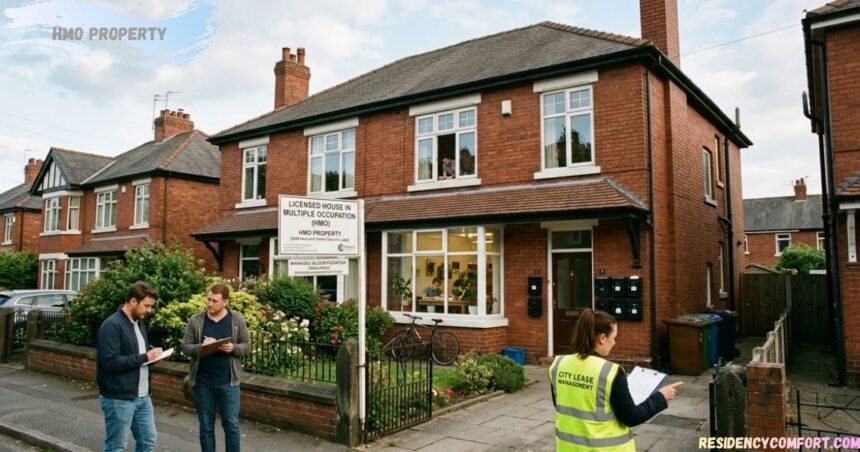
An HMO property (House in Multiple Occupation) is a home rented out to three or more unrelated tenants who don’t form a single household but share common facilities like the kitchen, bathroom, or toilet. Each tenant usually has their own private room and pays rent for it, while the rest of the property is shared. If there are five or more tenants forming more than one household, the property becomes a “large HMO” and legally requires a licence from the local council.
HMO Property A Complete Guide for Landlords and Tenants
Renting out a house in multiple occupation has become one of the smartest ways to build rental income in the UK, and I’ve watched this shift happen firsthand while helping landlords set up HMO tenancy agreements across busy cities and quiet town centres alike.
A house share used to mean room rentals aimed at people on low incomes, but the market moved on through the 2000s as buy to let investors spotted real demand from young working adults who wanted good quality accommodation without the hassle of running a whole property on their own. Today’s room-rent HMOs let tenants pay for a private bedroom while enjoying amenities the landlord maintains, and because bills are usually folded into the rent, it’s easier for people to budget.
Plenty of the people who choose this lifestyle are students, professionals, and seasonal workers who like the idea of a sociable house share, especially those moving away from home for the first time or starting a job in a new city.
It also suits anyone who has to relocate often, work long hours in healthcare, or work as cabin crew, along with a wide range of people who simply don’t want the responsibilities of looking after an individual property. As lettings legislation tightened over the past 15 years, particularly the fire safety requirements and other health and safety rules, the standard of HMOs rose sharply, and some professional houseshares now feel closer to a boutique hotel than the tired flats and bungalows of the past.
HMO Rental Yields and Market Performance
Running an HMO property costs more than a single-let property because it is more time-consuming to manage and carries higher operating costs, yet the rental profits are usually why landlords stick with it. The cost of living has pushed up utilities and maintenance, and staying legally compliant with HMO requirements costs more than it did 20 years ago, but yields for HMO property still lead the private rental market.
A PRS report from Paragon Banking Group covering Q1 2023 in England found that houses in multiple occupation generated the best rental yields at 6%, against 5.3% for standard houses and 5% for flats and bungalows, and by mid-2023 the same research showed HMO yields across the UK ranging from 6% to 9%.Greater profit brings greater risk, though, and letting any rented property demands a good level of knowledge, which only grows once you’re dealing with unrelated tenants who shared use common rooms. Because HMO yields can look tempting, some landlords jump into this property investment without checking supply and demand in their area, and that has left certain towns oversaturated even while shortage of affordable accommodation persists elsewhere.
This guide walks through everything from HMO licensing and council tax rules to HMO insurance, converting an existing property, the pros and cons of investing, and the FAQs landlords ask most about HMO landlords, HMO accommodation, multiple occupants, fewer vacancies, rent defaults, taxes, rates, properties, flexibility, benefits, and the joint and several basis many tenancy agreements rely on, alongside the Renters Reform Bill and how it touches Student HMOs, rental accommodation, convenient housing, and HMO landlord obligations more broadly, plus what run HMOs actually looks like day to day and why make friends so often comes up when tenants describe shared accommodation, HMOs, and HMO property life as profitable investment territory worth exploring.
What is an HMO / What is an HMO Property?
A House in Multiple Occupation exists whenever three or more occupiers who don’t share family ties live together and rely on shared bathroom, kitchen, or toilet facilities, and this rule holds true across England and Wales. Once you hit five occupiers, the property counts as a large HMO and needs to be licensed, so I always tell first-time landlords to count heads carefully before assuming a converted houses setup falls outside the rules.
Each tenant in this kind of household usually rents their own room or bedsit and shares the living room and common parts, and because most of them are unrelated, live as a single person, or aren’t married or living together, everyone signs a separate tenancy agreement.
HMO stands for House of Multiple Occupation, a term you’ll see used interchangeably with house in multiple occupation across guidance from local authorities, and it applies to a huge range of flats, student houses, and young professional house-shares with three or more bedrooms. Local regulations and planning permission rules vary from one region to the next, so anyone investing in this property type should check the rules that apply in their specific patch before signing anything.
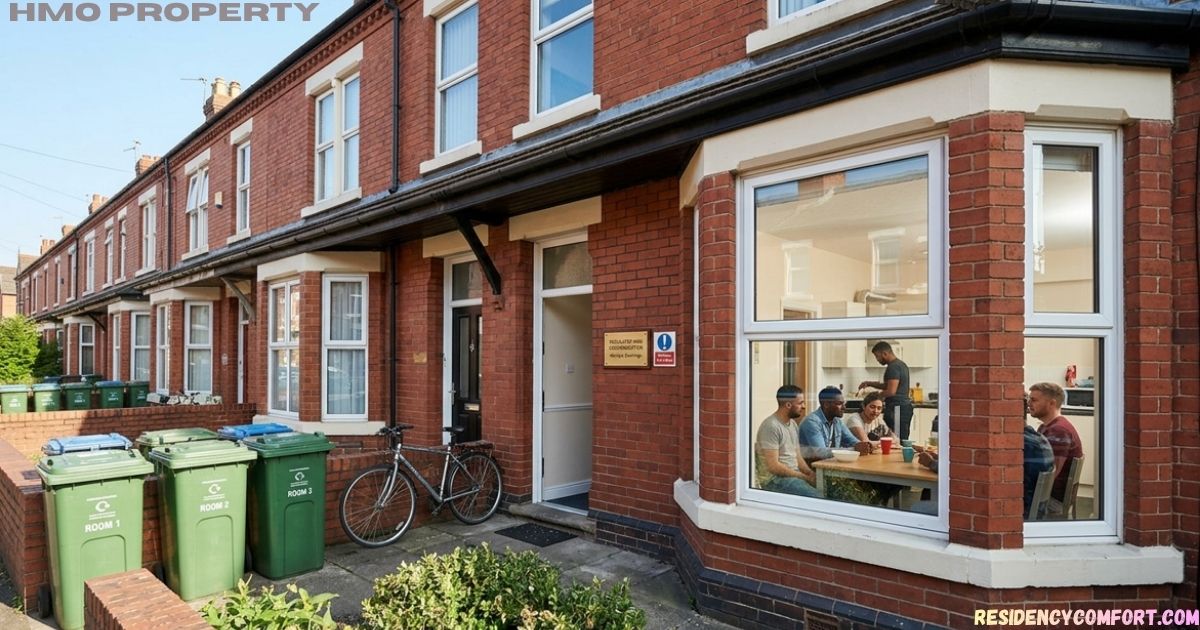
A shared kitchen facilities setup with three or more toilets and bathrooms is the clearest sign you’re looking at an HMO rather than a standard family home.
Impact of Renters (Reform) Bill / Renters’ Rights Act on HMO landlords
The proposed end of fixed-term ASTs and the removal of the section 21 notice sparked real worry among landlords running a student HMO market, since students who can leave whenever they like might walk away at the end of the summer term and leave a property empty until the next academic year begins. Without a working Section 21 notice, landlords lose the option of offering a short-term tenant a deal for just the summer holidays, and a three-month void on rent could make the whole investment unviable, which is why so many people watched the Renters Reform Bill debates in Parliament closely.
The Renters Rights Act, which came into force from 1 May 2026 in England, brought several changes that HMO landlords now have to plan around. Vacancies are a bigger risk since tenants can leave with just two months’ notice instead of sticking to a 12-month tenancy, though landlords can still regain possession of a student HMO to match the academic term if they give four months’ notice; a landlord also can no longer collect rents in advance beyond one month’s rent, can only apply rent increases once per year even against increased costs, and must now act on hazards like damp and mould within a specified time period, a rule that used to apply only to social housing but now covers all private rentals, backed up by the First-tier Tribunal for market rate disputes and court action for anyone who ignores the new eviction rules.
Should I invest in HMOs?
Renting bedrooms on a per-room basis almost always beats the combined rent a landlord would get from a single let properties approach, since several tenants paying separately for a shared house adds up to more than one family paying for the whole property.
There’s less exposure to void periods too, because if one tenant leaves you still collect rental income from the others while you look for a replacement, and in areas where demand for housing runs high, an HMO appeals to students, young professionals, and anyone chasing shared living arrangements. I’ve seen landlords double their returns simply by converting a spare three- or four-bedroom home into a proper multiple occupation homes setup rather than letting it as one investment property.
The greater rental yields on offer explain why so many people take the leap, and it’s common for HMO owners to see roughly three times greater yields compared with standard properties let as a single let. Fewer rent arrears show up too, since tenants find this kind of accommodation more affordable and can usually keep up with rent, and even when someone does fall behind, the rest of the household keeps the cash flow moving. Fewer void periods follow the same logic: if a family moves out of a normal letting, four or five people leave at once and you’re left chasing new tenants, but with an HMO that scenario rarely happens because only one room empties at a time.
High demand for this kind of living arrangement is strongest in large cities with universities, though it pays to run proper due diligence on local market conditions before committing, since a small dip in rental income in an oversupplied area can catch out anyone who skips the research. There are tax benefits too, since communal areas generate more tax-deductible costs than a typical single let, and any landlord serious about the numbers should get professional advice on what qualifies under Plant & Machinery Capital Allowances before assuming every cost counts; a quick word with a Professional Services team usually clears this up and helps unlock higher revenues across the whole portfolio.
Student tenants and HMOs
Most student houses count as HMOs because they usually hold three or more unrelated people sharing facilities, but the big difference from other HMO properties is that students tend to move in as a group and leave together too. That’s why landlords often ask for one joint tenancy agreement covering the house share, with rent still worked out on a per room basis, which makes everyone jointly and severally liable for rent, bills, and any damage if someone leaves or fails to pay their share.
Because the academic year only runs for around nine months, landlords generally insist on a 12-month tenancy agreement so the property doesn’t sit vacant over the summer holidays, unlike other student lets where a fixed minimum period might not apply at all. This corner of the student HMO market remains a genuinely reliable source of income, with rental yields that beat much of what UK landlords see elsewhere, so it’s well worth reading our dedicated Ultimate landlord guide to student properties for a deeper look.
How an HMO Property Differs from a Single-Let Rental
With an HMO property, each tenant gets their own bedroom and their own individual tenancy agreement, whereas a single-let setup places all occupants under one joint agreement covering the entire dwelling. This fundamental difference means landlords operating an HMO property must adhere to stricter management regulations and higher fire safety standards than standard non-HMO lets, making it crucial to allocate extra time and budget for ongoing legal compliance.
FAQs
What is an HMO property?
An HMO property (House in Multiple Occupation) is a home rented to at least three tenants from different households who share facilities like kitchens or bathrooms.
When is an HMO license required?
A mandatory license is needed when five or more tenants from at least two separate households live in the property.
What is the main benefit of multi-let properties?
They offer higher rental yields and reduce the financial risk of tenant vacancies compared to single-let properties.
What are the key safety requirements?
Landlords must provide fire doors, mains-powered smoke alarms, and annual gas and electrical safety certificates.
How do you finance an HMO property?
Financing requires a specialist HMO or commercial mortgage rather than a standard buy-to-let mortgage.