

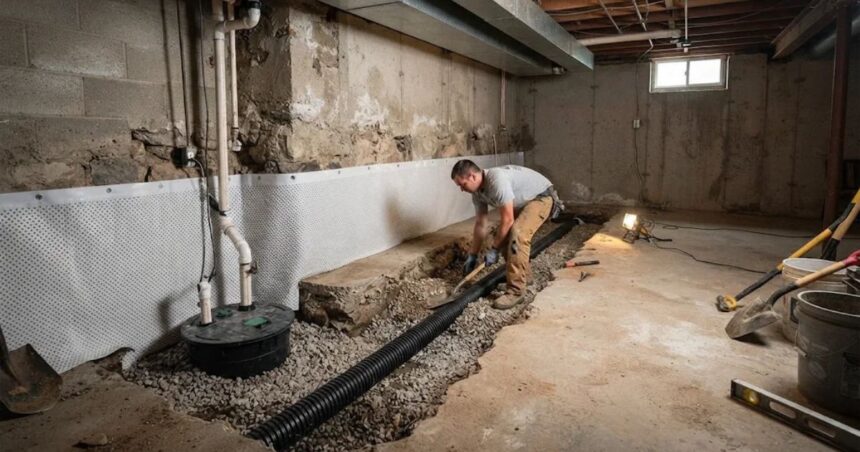
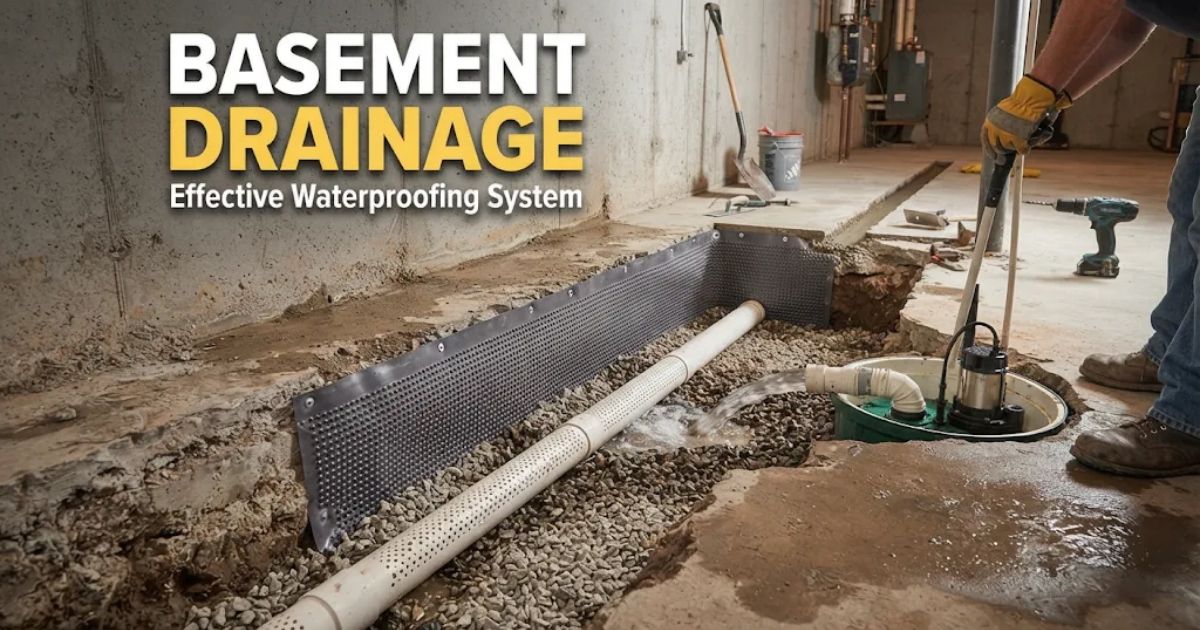
An interior basement drainage system collects water at the base of your walls and sends it to a pump. Installers lay an interior perimeter drain along the wall-floor joint, where seepage usually appears first. That layout lets you capture water at the perimeter before it spreads across the floor.
The drainage channel carries water through a drainage pipe, giving it a controlled path to the sump pump. The pump then sends it outside and keeps a dry basement. Think of interior waterproofing as managing water that already entered, not blocking it at the soil.
Why Do Basement Drainage in Portland, OR Take On Water?
Pacific Northwest rainfall keeps the soil around foundations wet for much of the year in Portland, OR. TerraFirma blames the long rainy season for many seepage complaints from local homeowners. Saturated soil then presses on walls and floors with groundwater pressure.
Basement Drainage Systems calls that force hydrostatic pressure, and it also describes a clay bowl effect where backfill traps water against the house. Portland requests on its page mention century-old homes, a daylight basement, snow and rain, and water after heavy rain. Each one involves groundwater.
What Are the Early Signs of a Wet Basement?
A wet basement often shows itself through water stains, damp walls, standing water, and recurring puddles after storms. Water seepage along the floor edge marks where water intrusion begins. Photograph each patch with the date, so you can compare it after the next storm.
Efflorescence appears as white mineral deposits or chalky deposits on concrete where moisture dries, especially in an unfinished basement. In a finished basement, peeling paint, paint bubbles, damaged drywall, and softening walls hint at hidden moisture. Basement Systems also publishes a page on signs of water damage.
How Can You Tell Condensation From a Leak?
Condensation forms when high humidity meets cool concrete, so it leaves beads of water instead of a trickle. Basement leaks from outside usually leave stained basement walls after rain. Tape a foil square to the wall overnight, and see which side turns wet.
Excess moisture also brings musty odors and rust on metal shelving. When water in the basement reaches the stairs, flooded stairways signal serious water infiltration. Severe cases mean basement flooding and call for a professional.
What Causes Water to Enter Through Foundation Walls and Floors?
Wall and floor leaks begin where water finds an opening, such as foundation cracks or porous concrete. A thin foundation crack can admit seepage during changing groundwater conditions. A cracked basement floor lets water rise through the concrete slab as well.
Poor exterior drainage feeds the problem. Clean gutters and downspouts each autumn, because clogged gutters and improper grading send roof runoff toward the house. A clogged drain pipe and leaking window wells add more water, and Basement Systems lists downspout extensions.
How Does a Sump Pump Fit Into the System?
A sump pump sits in a pit and pushes collected water outside through a discharge line. Basement Systems lists sump pump installation and replacement, and its pump products include cast-iron sump pump units and a WaterWatch Alarm, a high water level alarm. Its Portland project pages also mention a super sump and the UltraSump model.
A battery backup sump pump keeps running during a power outage, which storms often cause. A sump pump running constantly may signal heavy inflow or a failing unit, so book sump pump repair and maintenance quickly. Both Basement Systems and TerraFirma list battery backup options.
What Wall and Foundation Work Can Accompany Basement Drainage?
A basement wall vapor barrier guides moisture down the wall and into the drain. TerraFirma lists that barrier, while Basement Systems lists basement wall systems, wall panels, basement flooring, and ThermalDry, which also supports basement insulation. Both brands publish foundation repair pages.
The Basement Systems menu links to crack repair under the name FlexiSpan crack repair, and TerraFirma says the fix for leaking basement cracks depends on location, material, and signs of structural movement. Bowing walls, a settling foundation, and crumbling basement walls signal structural damage that drains cannot fix, so request a foundation evaluation. TerraFirma lists foundation piers, wall stabilization, and earthquake retrofitting.
How Does Humidity Control Help a Basement?
Humidity control handles moisture that drains cannot reach, namely vapor in the air. A basement dehumidifier pulls that vapor out, and Basement Systems lists basement dehumidifier installation alongside its SaniDry line. TerraFirma describes a high-performance dehumidifier for the same job.
Dry air matters because mold spores, dust mites, and similar particles aggravate allergies and asthma. An air purifier supports indoor air quality, and Basement Systems lists it next to mold and odor control. Your moisture conditions decide whether you need one, both, or neither.
Which Health and Safety Risks Come With a Wet Basement?
Mold growth and mildew take hold where mold-friendly conditions last for several days in a damp room. Water damage also ruins stored belongings and weakens wood framing over time. Lift cardboard boxes onto higher shelves while you wait for repairs.
Drainage does not remove radon, so test for that gas separately. One Portland request on the Basement Systems page mentions suspected radon alongside leaks. A hardware-store kit gives a first reading, and a certified tester gives a firmer one.
How Do Contractors Find Where the Water Comes From?
A thorough basement evaluation traces every route water takes, from roof to footing. TerraFirma follows an inspect, diagnose, design, and install process, and Basement Systems states that a design specialist offers a free inspection and measures the basement. The inspector marks water entry points and names the source of moisture.
Next, the crew reviews drainage conditions and builds a customized waterproofing plan. Basement Systems says its dealers handle system design for each home before interior drainage system installation begins. Ask for that plan in writing, so you can compare it against other quotes.
Is Interior Basement Drainage Better Than Exterior Waterproofing?
Not always, because the answer depends on your site and the water’s source. Exterior waterproofing requires exterior excavation around the foundation, which causes more disruption than interior work. Interior drainage works from inside, so it suits homes where digging outside is impractical.
Basement Drainage Systems lists a French drain, which it also calls an interior footing drain, plus WaterGuard, DryTrak, and a trench drain. Its learning center also covers the exterior footing drain, which sits outside at the foundation base. Each choice falls under foundation waterproofing and broader basement waterproofing.
How Do Window Wells and Basement Windows Affect Drainage?
A window well collects rain, so a blocked one can leak into the room. Basement Systems lists an egress window well and a window well drain that connects to the interior system. A project page from John’s Waterproofing describes upgrading one Portland well to a WellDuct system.
Inspectors also check below-grade windows, and John’s Waterproofing states that its inspections start with the basement windows. Basement Systems also lists replacement basement windows. TerraFirma includes window wells and egresses among its solutions.
What Should You Look for in a Service Provider?
Choose a licensed contractor who names the source of moisture, explains the system design, and puts the plan in writing. Oregon’s Construction Contractors Board lets you look up any license online. TerraFirma lists CCB# 173547 on its page, so you can verify that number the same way.
Ask whether the provider offers annual service and maintenance, and read any warranty terms before you sign. Portland Oregon homeowners also gain from a local office, because a nearby crew shortens travel after storms. TerraFirma lists a Portland, OR office at 13110 SW Wall St and service pages for Beaverton, Lake Oswego, and West Linn.
Which Brands Serve Portland, OR, and What Do Their Websites Confirm?
Each brand offers the services listed on its own website, so read those pages before you call. Basement Systems, in business since 1987, names John’s Waterproofing as its Portland, OR dealer. Its Portland page lists foundation waterproofing, interior drainage system installation, sump pump installation and replacement, basement dehumidifier installation, and basement leak repair.
TerraFirma lists crawl space encapsulation, while Basement Systems also lists basement finishing and a crawl space vapor barrier. Better Basements and Waterproofing also writes about this topic for the area, so read its website for a current service list. Compare each list with the problems you found at home.
Why Should You Use This Website to Find a Provider?
This website gathers what each brand publishes, so you can compare interior basement drainage system options in one sitting. You read the same details for every company instead of decoding separate pages. That saves time when a wet basement demands a decision.
We list only services that a brand’s own website confirms, so you avoid guesswork. You can then call two or three providers with specific questions about your Portland basement. Bring your photos and notes to those calls.
What Do Portland Homeowners Ask Most About Basement Drainage?
Does Interior Drainage Stop Water From Entering the Walls?
No, it manages water that has already entered the basement walls. The system gives that water a path to the pump instead of letting it cross the floor. Clean gutters and sound grading still lower the load on the pump.
Will a Sump Pump Work During a Blackout?
Only with a backup source, since a standard pump stops when the grid fails. A battery backup sump pump keeps running, and both brands above list battery options. Test the battery twice a year, because it wears down with age.
How Do You Compare Quotes From Different Providers?
Compare the written diagnosis, the parts list, and the maintenance terms from each provider. Ask each contractor to name the source of moisture and the water entry points it found. Verify the license number before you sign anything at all.
Where Can You Find the Right Provider for Basement Drainage?
Start with the signs, the likely cause, and the services each brand’s own website confirms. Then visit this website for Basement Drainage guidance, compare Basement Systems, TerraFirma, and Better Basements and Waterproofing side by side, and call the providers that match your needs. Return here whenever new questions arise later.