


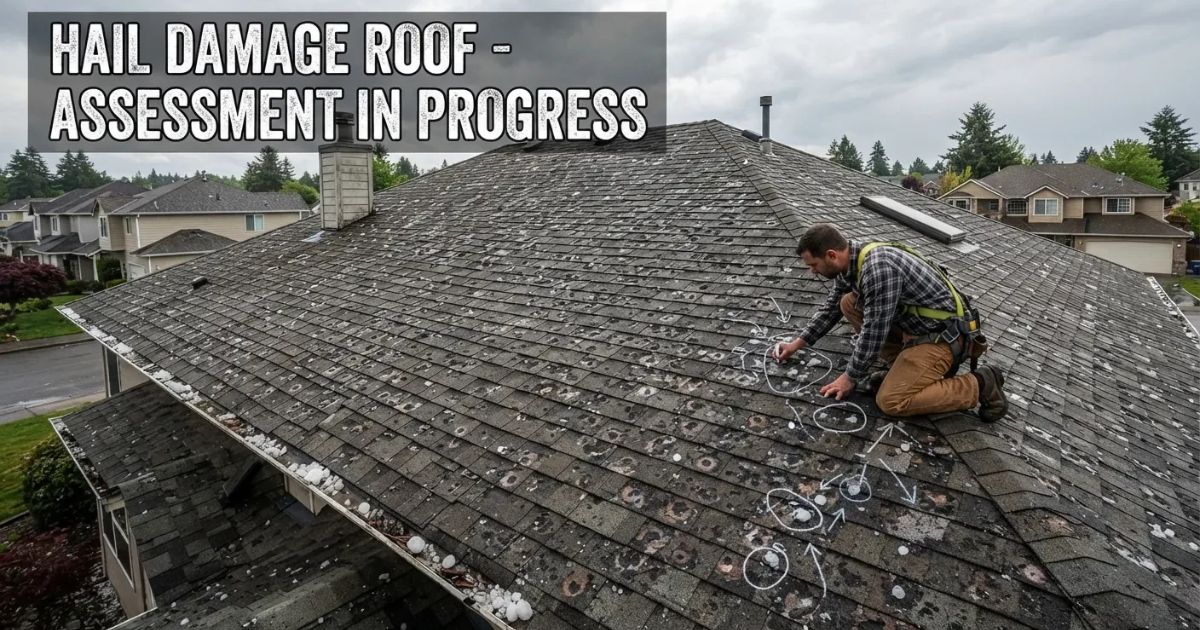
Hail leaves circular shingle dents, bruised shingles, and granule loss where each stone landed, which are classic indicators of a hail damage roof. You often spot granules in gutters first, then notice exposed asphalt mat or exposed fiberglass mat on the surface. Impact zones also show cracked shingles, split shingles, and lifted shingles.
Careful footing on a roof may reveal soft spots underfoot, though we tell homeowners to skip steep climbs. Metal tells the same story, because dented vents, dented flashing, and dented gutters and downspouts confirm a real strike. Indoors, water stains on ceilings and interior water intrusion prove that moisture reached the layers below.
Why does Hail Damage Roof stay hidden from the ground?
A sloped roof tilts away from your eyes, so hidden hail damage survives long after the storm passes. Each bruise breaks the protective surface and starts accelerated shingle deterioration. A brittle fiberglass mat then cracks sooner, and weakened shingle seals let wind lift the tabs.
Serenity Roofing & Construction describes this problem on its site and lists a post-storm inspection of shingles, flashing, gutters and downspouts, window screens, siding, and HVAC equipment. That list stood out because hail rarely stops at the shingles. Dents on soft metal and screens show how large the stones were.
How does a Houston hailstorm differ from a Hail Alley storm?
Hail Alley reaches into north Texas, and Texas Roof Authority names Dallas-Fort Worth, San Antonio, and the Hill Country as the top hail-claim zones. The page never mentions Houston. Treat Houston as Gulf Coast hail, wind, and storm exposure instead.
Gulf moisture feeds supercell thunderstorms, and those storms drop the largest stones. The National Weather Service defines severe hail as one inch across, and golf ball-size hail measures about 1.75 inches. Hailstone diameter controls terminal velocity, so bigger stones hit harder during high winds or a hurricane.
Which roof slopes take the hardest hits?
Wind-driven hail strikes at a slant, so impact angle decides which side suffers most. Texas storms often arrive from the west or north, so north and west-facing slopes frequently show the worst bruising. Check NOAA storm reports and hail tracking services to confirm the date and stone size near your address.
Roof slope and exposure shape the damage, and material age and condition decide how a surface reacts. Weathered shingles crack where new ones only dent. Photograph each slope first.
Which roof components should an inspector check?
An inspector checks asphalt shingles and architectural shingles first, because the granule layer shields the asphalt from sunlight. Next come ridge caps, roof vents, chimney flashing, and skylights. Every one of the roof penetrations can turn a small dent into a leak.
Beneath the surface, underlayment, roof decking, and OSB decking show whether water found a path. Ice-and-water shield works as a secondary water barrier near valleys and edges, while roof ventilation keeps the attic dry. Other roofs behave differently: metal roofing panels and a standing seam metal roof dent, exposed fasteners back out, and clay tile roofing or concrete tile roofing cracks.
What happens during a professional hail inspection?
A post-storm roof inspection starts at ground level and then moves up by ladder or drone. Texas Roofing & Siding states that it completes a free hail inspection within 24 hours, using a drone roof inspection and a ground-level inspection, with photos and a written report. Some homeowners need a same-day inspection for an active leak, so ask each company about timing and about its free roof inspection terms.
Good inspectors deliver high-resolution photo documentation and a written inspection report, and they check the attic for attic water damage. They also collect material samples and storm documentation such as dates and weather data. The ballpoint pen cap test gives homeowners a rough check on a mark, but it never replaces a certified roof inspector.
How does a Hail Damage Roof insurance claim work in Texas?
You start a hail damage insurance claim by notifying your insurance carrier under your wind and hail policy. The claim filing deadline typically follows a one-year claim window in Texas, but some policies require notice within 30 to 60 days, so check yours. An independent roof inspection gives you evidence before the adjuster arrives.
The insurance adjuster completes an adjuster inspection, sets the scope of loss, and usually writes a Xactimate estimate. Your deductible comes off the total, and actual cash value (ACV) pays first, while replacement cost follows after repairs if your policy includes it. A depreciation schedule explains the gap between the two.
What can I do when the adjuster misses damage?
File an adjuster re-inspection request and bring your photos and report. Claim supplementation adds missed or overlooked damage, such as code upgrades, decking, ventilation, and flashing. Texas Roofing & Siding states that it handles supplements for those items, and Serenity Roofing & Construction states that it attends follow-up inspections when the adjuster finds no damage.
If talks stall, you can use the appraisal process, hire a public adjuster, or open a claim dispute with the Texas Department of Insurance (TDI). The Texas Insurance Code sets claim-handling rules that insurers must follow. Read any assignment of benefits (AOB) form carefully, because it transfers claim rights to the contractor.
Does insurance cover cosmetic Hail Damage Roof?
Many policies pay for functional damage, which shortens roof life or lets water in. Many also carry a cosmetic damage exclusion for dents that do not affect performance. Read your policy, because cosmetic damage on metal often falls under that clause.
Policies differ on matching requirements, so read that clause before you accept a partial repair. Direct insurance billing lets a contractor bill the carrier, and Texas Roofing & Siding lists it on its site. Both contractors describe insurance claim assistance, including meeting the adjuster at the property.
Should I repair or replace a hail damage roof?
Repair fits a few damaged spots, and replacement fits widespread functional damage. The repair vs. replacement choice depends on how many slopes show damage and how old the roof is. Hail damage roof repair can restore a small area, but a repair-only claim pays only for that scope.
In some jurisdictions, the 25% rule requires full replacement when repairs exceed a quarter of the roof, and the authority having jurisdiction (AHJ) decides how to apply it. The International Residential Code (IRC) and International Building Code (IBC) set the baseline for homes and commercial buildings. Pull a building permit before work starts.
Do impact-resistant shingles help?
Class 4 impact-resistant shingles carry the highest rating under UL 2218, a test that drops steel balls onto roofing samples. That rating means the shingle survives the largest ball in the test, two inches wide, without cracking. Check NRCA guidance and ask your carrier about discounts for these shingles.
What does a Hail Damage Roof replacement involve from start to finish?
Texas Roofing & Siding states that its full roof replacement uses a full tear-off and GAF, CertainTeed, or Owens Corning materials. The page adds deck repair, modern underlayment installation, and ventilation upgrades within code-compliant installation. A good plan lists each of these steps in writing.
The same page lists permit closeout, a three-point QA inspection, and manufacturer warranty registration, and it offers a lifetime workmanship warranty. Ask any contractor to schedule a final inspection with you before the last payment. Active leaks need emergency roof repair first, then storm damage repair after the adjuster inspects.
What does each brand offer on its own website?
Each brand offers the services listed on its own website, so confirm details there before you hire anyone. Texas Roofing & Siding lists 24/7 emergency response, including emergency tarping and temporary leak containment. Its footer also names residential roofing, commercial roofing, siding installation, gutter systems, and remediation.
Serenity Roofing & Construction lists a free post-storm inspection, claim help, follow-up inspection attendance, and emergency tarp repairs for active leaks, plus roof repair, roof replacement, storm and hail work, and commercial roofing. Texas Roof Authority offers no repair services, but it explains how hail affects roofs and how claims, permits, and disputes work. Use it to learn the vocabulary before you call a contractor.
What should I look for in a Hail Damage Roof contractor?
Look for a company that is licensed and insured, with general liability and workers’ compensation coverage you can verify. Storm chasers arrive after a storm and leave soon after, so check a local address and years in business. Ask whether the company holds BBB accredited status or belongs to the Roofing Contractors Association of Texas (RCAT).
Manufacturer programs matter too: GAF Master Elite, CertainTeed SELECT ShingleMaster, Owens Corning Platinum Preferred, and Malarkey Emerald Pro are certifications you can verify on each manufacturer’s website. Request a written estimate that matches the adjuster’s scope of loss. Compare two estimates line by line before you sign.
Which Gulf Coast communities does this guide cover?
This guide covers Houston and the surrounding Gulf Coast, including Katy, Cypress, Sugar Land, Conroe, Pearland, League City, The Woodlands, and Galveston. Hail and storm exposure differ by neighborhood, so photograph your own roof. Check each company’s service area on its website.
What do homeowners ask most about a hail damage roof?
Homeowners mostly ask about deadlines and inspection costs. These answers cover both. Each one stands on its own.
How long do I have to file a claim in Texas?
Most policies allow about one year, but some require notice within 30 to 60 days. Read your policy and call your carrier soon after the storm. Photograph the roof before any repair.
Is a free roof inspection really free?
The pages we reviewed describe free inspections, and Texas Roofing & Siding promises one within 24 hours. Ask each company whether the photos and report cost anything. Compare reports from two companies before you decide.
Where can I find the right hail damage roof contractor?
A good Hail Damage Roof contractor inspects thoroughly, documents clearly, supports your claim, and installs to code. Our site puts that checklist, the services each Houston and Gulf Coast company states, and the key claim terms in one place. Visit our site to build your shortlist, then confirm each company’s services on its own website.