

I’ve spent enough time around building sites and planning offices to know that Dev Property projects sound far more complicated than they need to be. Strip away the jargon, and it’s really just people spotting an opportunity in bricks, land, or an old building, and turning it into something more useful and more valuable. Here’s how I’d explain Dev Property to a friend, heading by heading, using nothing but plain language.
What Are the Main Areas of Dev Property Focus?
When I first got curious about developers and how they choose their area of focus, I noticed something interesting: very few stick to just one lane. Some property developers lean into residential projects, others chase commercial deals, and a good number let their focus overlap between the two rather than picking a strict side. That mix isn’t a mistake it’s often how a firm builds an extensive range of Dev Property services that keeps clients coming back for more than one type of job.
Mixed-Use Developments in Local Neighbourh
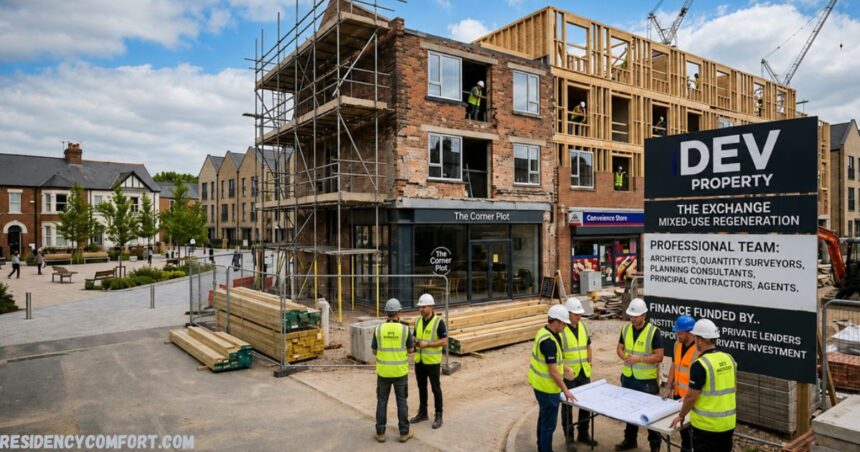
Take a residential building full of flats, for example — nothing unusual there, until you notice a small shop tucked into the ground floor. That single aspect turns an ordinary block of residential developments into something closer to a mixed-use project, blending commercial aspects right into a residential area without anyone batting an eye.
So when people ask me for an example of how flexible the areas of focus can be within this industry, I always point to mixed developments like this one. I’ve watched this play out on my own street, and honestly, a corner shop or a set of commercial security systems installed for extra peace of mind can shift the whole feel of a neighbourhood for the better. Partaking in such projects can help accommodate the wider community in more than one aspect of daily life.
What Are the Core Benefits of Dev Property Projects?
The clearest benefits of this work show up as profit, and I won’t pretend otherwise most people join the property development industry because turning land or an existing property into something bigger pays well, and those profits are a genuine direct incentive for anyone starting out.
Delivering Social and Community Value
But money isn’t the only driving force behind the industry. Good developments often carry real social value too, adding housing, places of work, and even educational facilities that end up improving daily life for the surrounding community long after the builders have gone home.
How Do You Fund a Dev Property Deal?
Funding a project usually starts close to home. If it’s your own home, you might simply fund it from your savings, or from cash freed up after selling a previous property.
Stepping Up to Commercial Financing
Step up to a business level, though, and the picture changes. Whether it’s a straight buy-to-let purchase or a project built purely for development purposes, most people turn to a mortgage from the bank, a real estate finance company, or private investors willing to back the deal.
Using Buy-To-Let Mortgages for Steady Cash Flow
A buy-to-let mortgage remains popular for a good reason: it suits landlords who rent the property out to tenants and collect a steady income month after month, which in turn helps secure further funding down the line.
Who is Involved in a Dev Property Team?
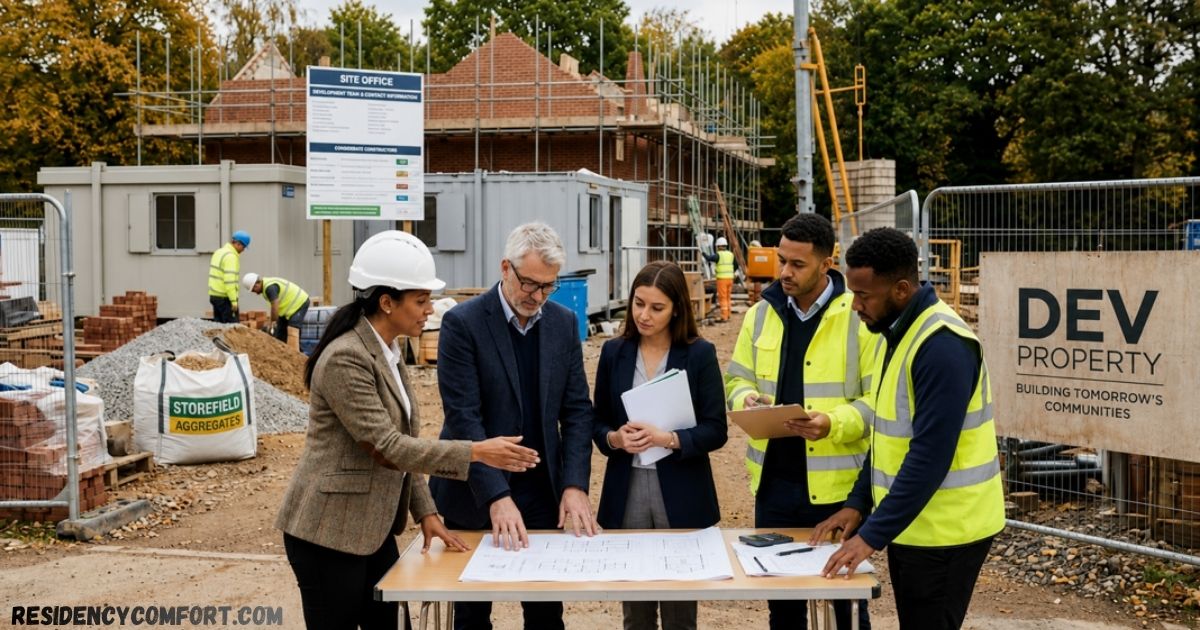
No single person carries a project alone, and that’s the first thing I tell anyone new to property development. Real success depends on a whole development team, built from people with different skills and expertise, all pulling in the same direction through the property development process. Even a modest development needs several hands on deck from day one.
Technical Expertise and On-Site Construction
Some of that expertise is deeply technical. Someone needs to understand the policies that shape planning permission, know how a physical house actually goes together, handle the bricklaying and the plastering walls, and choose the right types of materials before work even starts on development projects.
Assembling the Core Professional Team
A typical team brings together a planning consultant, a quantity surveyor, an accountant, a solicitor, an architect, and an interior designer, alongside the house builders and contractors who do the physical work on site, with a manager keeping the whole project on track.
The Role of Behind-the-Scenes Support
Behind the scenes, property development also leans on welfare units for the crew, offices for the paperwork, and construction materials sourced from suppliers such as Storefield Aggregates. These are the quiet professionals that rarely get named in the final story, yet a site finder, an agent, and a marketing department all carry real roles in getting the finished developments sold.
Coordinating the Moving Parts
The developer themselves rarely lays a single brick. Their real job is to organise and coordinate every moving part, from construction and finances to valuation, planning, and the legalities that govern the whole area, since these integral factors decide whether the tasks ahead run smoothly or fall apart.
Defining the Scope of Dev Property Work
At its heart, property development is simply the process of creating properties and turning raw sites into usable or sellable buildings that someone actually wants. Every property developer I’ve met is chasing the same basic goal: add value to whatever they touch, and turn that into profit.
Ground-Up Builds vs. Refurbishments
There isn’t just one way in. The forms of property development stretch from buying a plot of land and starting a ground-up development from nothing, right through to picking up a housing estate, a retail park, a block of city centre flats, or a full mixed-use development.
Generating Income Through Conversions
You might instead renovate or refurbish an existing place and either sell it for a profit or rent it out for a regular income a well-worn entry point that turns a part-time business into a full-time enterprise for plenty of people I know. Converting a building works just as well; you can convert a retail unit into flats, turn a closed pub into a hotel, or reshape a residential property into a commercial unit entirely.
Scaling Up the Business Model
Most property developers are individual entrepreneurs at first, though the model easily grows into a business model built around partners, staying genuinely scalable whatever size of projects you take on. With enough experience, knowledge, and resources, a small deal can grow into a multi-million-pound development. Some jobs wrap up in six months and hand back a tidy £20,000 profit; others stretch across years before they finally accomplish their goal. How well you manage each stage of the job, start to finish, is really the whole art of property development.
What Do Property Developers Actually Do?
Ask any property developer what their key objective really is, and the honest answer is simple: add value to the site, hit the budget, and stay on schedule. The bigger aim, of course, is turning a solid profit, though plenty of projects also chase softer incentives, like restoring social value to a struggling area.
Balancing Profits with Community Regeneration
Sometimes that means regenerating communities with fresh housing, new shops, decent jobs, and even proper healthcare facilities nearby. In plainer terms, most developers try to buy land as cheaply as they can, then build or develop it and sell at a profit.
Managing Risks and Navigating the Market
That plan sounds easy on paper, but real projects get complex fast. Returns from active property development can beat simply investing and waiting for slow capital growth, yet a shifting market, a finance shortfall, or a stretch of poor errors of judgement can quietly wipe out profit just as fast as it built up.
At its core, a developer adds value by improving property, building on land to make it more marketable, or changing use so the site suits a fresh purpose — and doing that well takes a genuinely broad set of skills.
Key Aspects of Executing a Dev Property Project
No property developer builds anything worthwhile without help, and that’s the single biggest factor I’d flag to anyone starting out. You need a real network of trusted contacts, because an inexperienced approach to the many areas of property development almost always causes problems somewhere down the line. Even a modest development needs several hands on deck from day one.
Essential Professional Services and Construction
Start by lining up a legal advisor, a financial advisor, an accountant, an architect, and a quantity surveyor, plus an agent for buying or letting, and reliable contractors who know their trades inside out. These key elements fall into three areas you can’t skip: construction, land, and experience with the local skills market. Getting construction right means knowing the legal and planning aspects cold, reading the market, and picking the right location before a single brick goes down.
Accounting for Repairs and Upgrades
If you’re planning to refurbish or convert a place instead of building fresh, work out what will make the project viable and where your improvements actually add value think a new kitchen, new bathroom, extension, conservatory, or decking in the garden. Sometimes, before any of that starts, you’re stuck paying for essential repairs like re-wiring, a new boiler, or external repairs to the fascias, soffits, and driveway, which is common on properties bought cheaply and needs to sit in your costs from the start.
Securing Smart Development Financing
Money matters just as much as bricks. A smart funding vehicle can make or break a job, and beyond an ordinary mortgage, you’ll find bridging finance or mezzanine finance — short bursts of short-term finance designed to protect your cash flow while you wait to repay once the property is developed and sold.
Managing Risk, Cash Flow, and Reserves
Having capital tied up in a property is completely normal, but it puts real pressure on your finances, and things can get complex and restrictive fast without professional advice on hand. It also helps to keep spare capital in reserve for the unexpected. Steady rental income often becomes your vital lifeline for keeping progress moving, or you simply sell the property and cash out.
Dev Property Project Management and Final Delivery
Once building starts, management becomes its own key element, since Dev Property project management is really the day-to-day controlling of construction and money together. A good manager needs the knowledge to select the right site, work out likely rental yield, and do proper research into local property prices before committing.
Managing an active Dev Property project is a different job altogether, full of budgets, deadlines, and constant decision-making that can test anyone’s ability to manage stress. You still need one eye on the next stage, whether that means chasing potential tenants, buyers, or future occupiers. Financing such a deal is often a balancing act where you need to hold your nerve and make big decisions under pressure, but sound finance habits carry every job home safely.
FAQs
1. What services are included under Dev Property in London?
Dev Property services cover the full development cycle: site acquisition, planning approvals, architectural design, and high-end residential construction.
2. Why invest in a Dev Property project in London?
Investing in a modern Dev Property project ensures premium build quality, high energy efficiency, strong capital appreciation, and excellent access to London transport hubs.
3. How do custom builders work alongside Dev Property specialists?
Custom builders partner with Dev Property management to execute tailored interior layouts, high-end architectural finishes, and bespoke home specifications.
4. Can Dev Property projects assist with local planning constraints?
Yes, expert Dev Property teams navigate local council regulations, green belt policies, and conservation guidelines to secure construction permissions.
5. Who manages the timeline and budget for a Dev Property project?
A dedicated Dev Property project manager handles the end-to-end delivery controlling budgets, schedules, contractor workflows, and quality checks up to the final handover.