

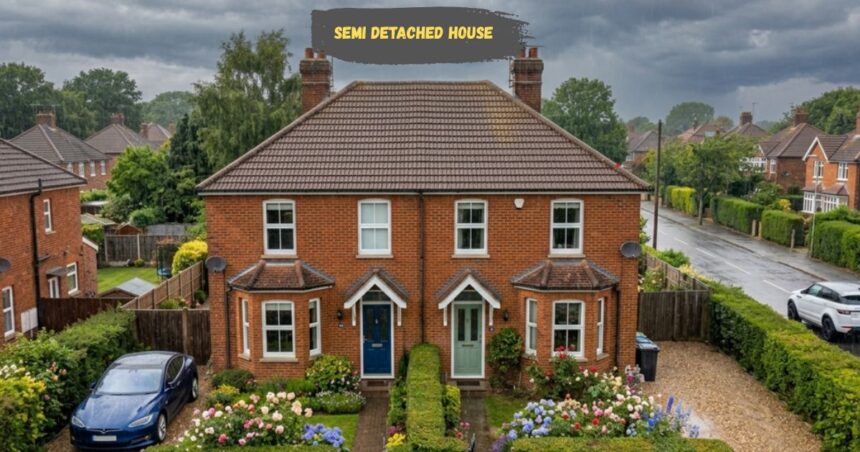
A semi detached house is a single-family dwelling built as one of a pair, sharing one common wall known as the party wall. The semi-detached house meaning centers on two independently owned homes joined by one shared wall, each with its own private entrance, garden, and utilities.
Often called a semi-d, this property type sits between a terraced house and a fully detached house in terms of privacy, cost, and land use. The two halves are typically symmetrical in exterior design, though interior layout can differ between the two households.
Semi-detached housesfirst appeared in the 19th century, originally designed to reduce building costs while optimizing urban space. Today, they remain one of the most popular residential property types across suburban and urban areas, valued for their community feel, affordability, and practical layouts.
Each unit features independent electricity, plumbing, and heating systems, ensuring one household does not affect the adjoining property. The party wall is built to fire-resistant and soundproofing standards, running from foundation to roof for structural separation.
Structure Of A Semi-Detached House
The structure of a semi detached house includes timber or steel framing, concrete slab, crawlspace, or basement foundations, exterior walls of brick, stone, or render, and a roofing system of roof tiles, shingles, or metal roofing. These construction materials ensure both foundational stability and long-term durability.
From semi-detached house photos, you can clearly see the symmetrical facades, wraparound gardens, side-by-side positioning, and the architectural style that defines this beloved UK property type.
Buying and Real Estate Market
Semi Detached Houses For Sale
Semi-detached homes represent some of the best value on the property market, typically priced 15–30% cheaper than equivalent detached houses in the same area. For first-time buyers and growing families, semi detached houses for sale offer an ideal balance of space, privacy, and affordability.
Each semi detached home comes with its own garden, outdoor space, private entrance, and fully independent utilities, making it a true single-family dwelling rather than a shared residential unit. Strong and steady demand across the market ensures reliable resale prospects and long-term investment value.
Investors often purchase both sides of semi-detached homes, occupying one unit while renting the other, a practical strategy for multi-generational living or generating rental income. Whether you are a buyer, builder, or investor, semi-detached homes for sale deliver consistent returns in both urban and suburban markets.
Location Specific: United Kingdom
Semi-Detached House UK Market Overview
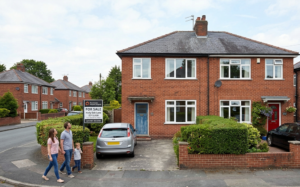
The semi-detached house UK market is one of the most active segments in British property. Across England, Wales, Scotland, and Northern Ireland, semi-detached houses in the UK account for a major share of suburban residential housing stock, particularly popular among families seeking family homes with garden space.
A semi-detached house price varies significantly by region. In major cities and commuter belts, prices reflect strong demand, while semi-detached house prices in regional towns remain far more accessible for first-time buyers. On average, semi detached houses are 15–30% cheaper than comparable detached houses in the same postcode.
In England and Wales, semi detached houses are governed by the Party Wall Etc Act 1996, which regulates all building work near the party wall. In Scotland and Northern Ireland, homeowners are advised to seek legal advice before undertaking construction near a shared wall or boundary.
A party wall surveyor is recommended when planning any renovation, extension, or construction that may affect the adjoining owners. The semi-detached house UK market rewards well-maintained and modernized properties, with resale prospects remaining strong across all regions.
Property Comparisons and Design
Semi Detached House vs Terraced
A semi-detached house vs terraced comparison reveals key differences in privacy, plot size, and outdoor space. A terraced house shares party walls on both sides, connecting three or more households in a continuous row, while a semi-detached house shares only one common wall, offering moderate privacy and a typically larger plot.
Semi detached houses usually have wraparound gardens and greater design freedom on the unattached side, whereas terraced houses offer smaller outdoor areas and stricter community rules regarding maintenance and upgrades.
Semi-Detached House vs Attached
In a semi-detached house vs attached comparison, the term attached house broadly refers to any home sharing a wall with another, including terraced houses and semi-detached houses.
The key distinction is that a semi-detached house is attached on only one side, preserving greater privacy, more land use flexibility, and easier access for side extensions or rear extensions.
An attached house in a terrace is flanked on both sides, limiting renovation options and exterior design changes without affecting neighboring properties.
Semi Detached House vs Duplex
A semi detached house vs duplex comparison highlights clear differences across layout, ownership, privacy, purchase price, plot size, and design freedom.
A duplex stacks one unit above the other, sharing a horizontal wall in the form of a ceiling or floor, whereas a semi-detached house places two units side-by-side, sharing only one vertical party wall.
A duplex may also share a main entrance and is often under shared ownership, with one owner renting out one or both units, while each half of a semi-detached house typically holds separate ownership with its own private entrance.
In terms of privacy, a semi-detached house offers moderate levels higher than both a duplex and a terraced house. Since there is no shared ceiling or shared floor between units, significantly reducing noise transfer and improving sound insulation between households.
A detached house remains the highest for privacy but comes at a greater purchase price, while terraced houses are the most affordable yet the most restricted in design freedom and plot size. Overall, a semi-detached house strikes the best balance between affordability, space, privacy, and individual ownership, making it a stronger long-term choice than a duplex for most buyers and families.
Home Layouts and Architectural Plans
Bedroom Semi-Detached House Plans
A 2 bedroom semi-detached house plan is one of the most practical and widely built residential layouts in the UK. Typically arranged across two floors ground floor and a first floor these plans maximize space within a compact footprint while maintaining all essential living areas.
On the ground floor, a standard 2 bedroom semi-detached house plan includes a living room, kitchen, dining area, and a bathroom or WC. The first floor accommodates two bedrooms and a family bathroom, with well-proportioned rooms designed for family life.
The symmetrical nature of semi-detached house plans means both units share the same structural framing, party wall, and roofing system, while each side retains a unique interior layout. Many 2 bedroom semi-detached house plans include scope for loft conversions, rear extensions, or side return extensions to add a third bedroom or home office.
Architectural design for semi detached houses must account for the party wall agreement, building regulations approval, and planning permission where applicable.
Two-story extensions, conservatories, and sunrooms are all viable options that can significantly increase living space and property value while working within the permitted development rights framework.
FAQs
What is a semi-detached house and how does it differ from a detached house?
A semi-detached house shares one party wall with a neighboring property, while a detached house stands completely alone with no shared walls, offering more privacy but at a higher price.
Are semi-detached houses a good investment in the UK?
Yes, semi-detached homes are a smart investment, typically 15-30% cheaper than detached properties while maintaining strong resale prospects and steady buyer demand across the UK property market.
Can I extend my semi-detached house without planning permission?
Smaller extensions may fall under permitted development rights, but larger projects like two-storey extensions require planning permission and a party wall agreement from your local council.
How much does a semi-detached house cost in the UK?
Semi-detached house prices vary by region but are generally 15-30% more affordable than equivalent detached homes, making them ideal for first-time buyers and families seeking value in the UK property market.
How can I reduce noise in my semi-detached house?
Installing acoustic insulation within the party wall, adding thick curtains, carpets, and constructing a secondary false wall are highly effective ways to improve soundproofing and sound insulation between households.