

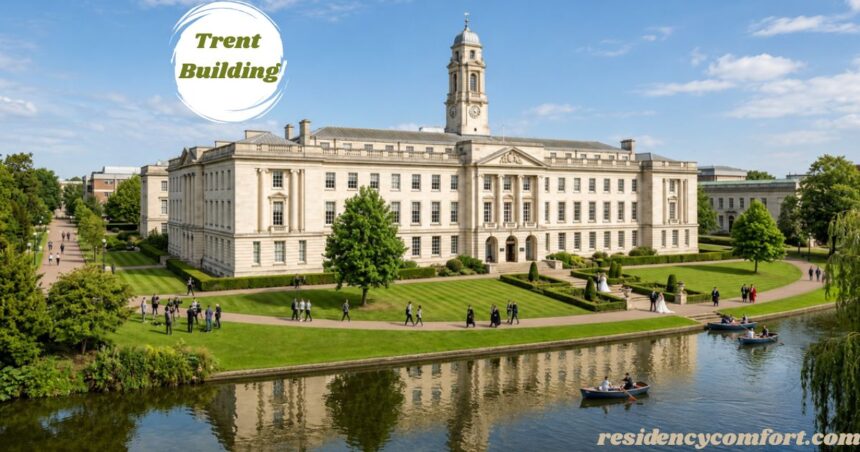
Anyone who walks toward the Trent Building notices the stone façade first. This part of the campus honours Lord Haldane, whose vision helped shape the university more than 100 years ago.
A True Architectural Gem The Trent Building
Even today, students cross the courtyard every morning on their way to lectures, passing rooms such as the Council Room and the Great Hall, both prized for their architectural charm. Every year the campus takes part in the Nottingham Ambition Giving Day, when former students gather near the boating lake to support new arrivals. Staff still speak about the historic laying of the first stone, a moment that set the tone for everything built after it.
The breathtaking setting of the university makes this spot one of the most photographed corners of the East Midlands. Couples often choose the building for their weddings, drawn to its wild, open lawns and grand halls. Inside, the Senate Chamber feels like a masterpiece on its own, with carved wood and painted ceilings that reward close detail. Local media teams often arrive for a filming event, and each visit reminds staff how significant this building remains to the city’s story.
Event Hosting and Cinematic Appeal at the Trent Building
Alongside weddings, the venue hosts elegant dinners and has become a popular choice for private parties. Its expansive rooms allow for a large wedding reception, filled with music, dancing and laughter long into the night.
Outside, the manicured gardens frame the building beautifully, which is why film crews often pick it as a backdrop, and businesses book it for a conference too. Inside, the original walls still stand strong. On 14 June 2022, the university marked its centenary with a formal ceremony that brought old graduates back to campus.
The grand and listed building creates a striking scene against the open lawn in front of it. As one of the oldest parts of the building, it has appeared in several film productions over the years, giving it a small taste of fame beyond Highfield’s own grounds.
Local Newspapers love writing about its history, and visitors often stop simply to take in the views across the wider campus spaces. Everyone agrees the building looks impressive at any time of year, and on graduation day the shrieks of joy from new graduates echo across the lawns.
Built in a classical period style, the Trent Building carries a long history that stretches back generations. It remains an iconic, elegant part of student life, hosting countless events each year. The story began in 1928, when the site earned its Grade II status, tying it forever to the city of Nottingham and the foundation stone laid by those who built it.
Exploring the Trent Building History
Early Foundations and Generous Benefactors
The story of the Trent Building starts with Sir Jesse Boot, a generous man whose name is tied to the city forever. He gave both money and belief to a small college that badly needed a new home. Built from pale Portland stone, the building was designed to last, and its exterior still gleams today the way it did when workers first finished the main entrance.
A formal luncheon followed the early planning meetings, where a delegation of local leaders discussed how the college could grow. Some records even mention a figure known as Uriah See Enn, a name tucked away in the old archives of the institution. Sunlight still penetrates the tall entrance windows each morning, lighting the hall the same way it did on opening day, long before the screech of early motor cars and the sound of Klaxon horns became part of everyday campus life.
The Historic Land Allocation for the Trent Building
Before the Trent Building existed, learners studied in cramped rooms in the city centre, far from the open land that would soon become their campus. The land itself, 35 acres in size, sat near High fields Park, and its land donation came from the Duke of Portland, who gave the ground evocatively described as a gift for the whole city.
The First World War slowed progress and left the college short of both money and staff, but a community spirit kept the plan alive. Once the war ended, a motley crew of builders, clerks and volunteers returned to finish the job, and the site slowly changed from empty grass to a proper learning hub. At the time, the school had grown from a mysterious small beginning into an exponent of serious study, welcoming close to 800 students, drawn from every social class, some from as near as Beeston and others from far away.
A Grand Royal Opening
On the day the building was finally revealed, a great mass of people arrived early, hoping for a good view. The cost of the entire project reached £100,000, a figure that seemed almost unbelievable at the time, yet the finished hall was worth every penny. King George V himself attended, and the whole event was treated with real pomp, complete with blowing of trumpets and cheerful roars of laughter from the watching crowd. Bells rang, flags waved, and the moment was dramatically revealed to the public for the first time.
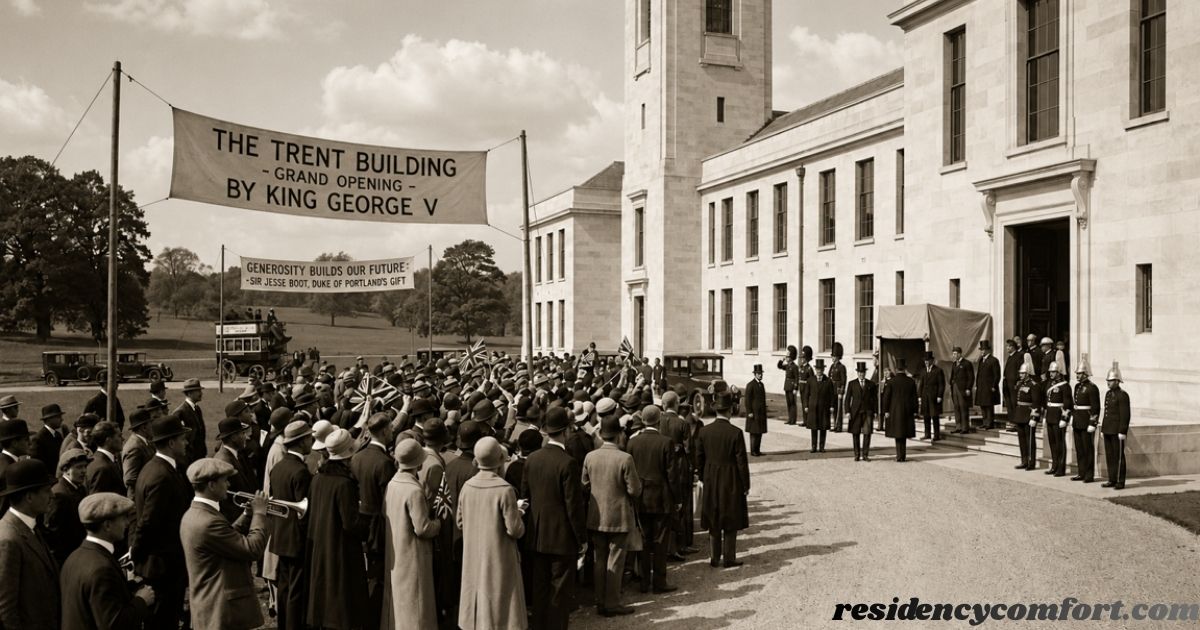
The Laying of the Foundation Stone and Growth of the Trent Building
The building’s foundation stone had been set earlier, back in 1921, in a ceremonial act performed with great care. Lord Trent, working closely with the college, made sure the laying of that stone became a poignant part of local history. The stone still sits in situ today, near the main courtyard, a quiet symbol of everything the college hoped to become. People walking past can pause for more than a passing glance, since the stone carries a rich history most visitors never expect to find on a simple walk through Highfields.
By 1928, the college had grown enough to be renamed the University College, and its story became part of a wider movement across British universities. Great thinkers of the age, including W E Gladstone and later even Mahatma Gandhi, were linked in spirit to the kind of learning the college promoted, since both men believed strongly in education for ordinary people. The total value of gifts and pledges toward the college eventually passed £15m in today’s terms, a mark of just how much super-abundant generosity shaped its creation.
The Evolution of the Trent Building
An invitation to the opening ceremony was sent from an office near Old Market Square, giving the source of the event a proper city address. Guests travelled from London and beyond, some staying to enjoy a pint of ale once the formal parts were finished. The whole affair was striking, and many guests agreed the present college looked like a true gem, built with real ambition and a genuine hope for the future of the region.
The University of Nottingham did not appear overnight; it grew step by step from the Nottingham University College founded years earlier. Long after the pandemic era changed how people study, the building still stands as the heart of the campus, its name forever tied to the story of the school. When the doors first opened to the public, few realised how officially important the day would become in the record books of the college.
Student Life and Historic Legends
Every college has its legends, and one of the strangest belongs to a student society called the Most Antique and Irreverant Order of Bacchus. Members were inducted with playful ceremony, sometimes carrying a corpse-like dummy through the streets in a mock funeral procession, complete with a borrowed stretcher and a noisy party atmosphere, all pushed along by an enthusiastic, driven group of undergraduates.
A rival society, the Most Noble Order of the Boot, held its own traditions too, and both groups added colour to student life for staff and undergraduates alike. The mock rite even included a pretend cremation, staged purely for laughs, and the whole event carried a light-hearted expression of college spirit that a mass of people still remember fondly today.
Royal Ceremonies and Historical Artifacts at the Trent Building
The ceremony of laying the foundation stone was handled with more seriousness than the student pranks that followed decades later. Officers of the college and members of the College Students’ Union stood in respectful rows as the stone was laid, using a small silver trowel kept safe in the archives ever since. A pewter pot filled with old coins and newspaper cuttings was placed beneath the stone, later revealed during restoration work, giving historians a small donation of their own to study.
The travelling party that brought King George V to Nottingham was met by a large crowd near the gates, and the whole street felt the shock of excitement as the royal car arrived. A vice-president of the college gave a short welcome, while the Secretary of State for War sent formal greetings by letter, since war-time links between government and university life remained close. The event needed real money, and the college was proud that its historic gem had been built without leaving lasting debt.
Student Stunts and the Community Spirit of the Trent Building
Even a fire engine was once used in a playful student stunt, parked near the courtyard as part of a fire engine-type contraption built for a rag-week parade, much to the delight of the raucous crowd gathered nearby on Shakespeare Street. Long before the college moved to the wider University Park Campus, these small dramas gave the site its community spirit, and locals still tell the story with a smile whenever the topic of the Trent Building comes up.
FAQs
Where can I find a general Trent Building Nottingham floor plan?
The multi-level architectural layout spans across several floors, transitioning from ground-level community spaces up to quiet academic wings.
What facilities are located on Trent building floor plan C?
The C Floor corridor houses several intimate language teaching facilities and seminar rooms (such as C5, C13, and C15) overlooking the campus green.
What type of space is Trent building b46?
Located on the B Floor layout, B46 is a dedicated seminar room used as an engaging breakout space for sharing ideas.
Can the Council Room in the Trent Building be booked for private events?
Yes. Situated in the A Floor area, this space of quiet dignity hosts executive board meetings, formal dinners, and drinks receptions for up to 60 guests.