

Every family reaches a point where the question of housing for later life stops being theoretical. Having spent time talking to families, developers, and housing researchers about this exact issue, I’ve noticed the same gaps and the same opportunities coming up again and again. Below is a full look at the choices, the market gaps, and the numbers behind why Over-55s Housing Alternatives UK needs a rethink.
Is Over-55s Housing Alternatives UK the Right Step, or Can Your Relative Stay at Home Safely?
I have sat with enough families to know this conversation never feels easy. When older people begin to slow down, families quietly start asking the same question: is home still working, or is it time to think again? Exploring Over-55s Housing Alternatives UK options early helps families avoid reactive choices. Timing matters here more than people admit, because a rushed decision under pressure rarely ends well. An honest look at day-to-day life checking mobility, hygiene, medication routines, and even simple meals gives a realistic picture rather than a hopeful guess. Skipping that check is often what turns a manageable situation into a full-blown crisis.
How Dementia and Frailty Alter Later-Life Housing Decisions
Dementia and frailty change the maths completely. A sudden transition, a change of environment, or even a short break in routine can trigger cognitive consequences and physical consequences that families never expected. This is why the decision to stay or move should never be rushed. Ask three practical questions instead: is the relative isolated or lonely, are they getting meaningful contact most days, and is the cost and effort of running the home still realistic over two to three years?
Weighing the Risks Staying Put vs. Making a Move
If those answers raise doubt, it does not automatically mean moving home is the wrong choice, and staying put is not always the right choice either. Both paths carry weight. Moving counts among the most disruptive life events a person can go through, and that disruption alone can accelerate decline if it is not handled with care. Weigh the risks of staying against the risks of moving before settling on anything.
Choosing a Clear-Eyed Plan Over a Panicked Decision
What I have learned, and what I tell every family, is that a clear-eyed plan beats a panicked one. Support at home can keep life safe and stress low for a good while longer, but there comes a point where independence is better protected by a smooth, well-planned move than by holding on to a house that no longer fits. Look honestly at the full range of options before you choose.
Option 1: Staying at home with support
Staying at home with support is what most older people want, and in my experience it can genuinely work for years with the right pieces in place. Home care agencies offer everything from a single daily visit to check on medication, meals, and personal care, right through to live-in carers who move in full-time.
This path is usually less disruptive than a care home move, and outside London and the South East, home care often costs less than residential care too. Before signing anything, check the agency is registered with the Care Quality Commission, known simply as the CQC, since being rated well by them says a lot about safety and standards. Staff continuity and consistent faces matter more than most families expect, so ask directly how carers are assigned.
Low-Cost Home Adaptations and Grants That Improve Daily Safety
Home adaptations are the next piece of the puzzle, and many are surprisingly low-cost changes. Grab rails, non-slip flooring, better lighting, a stairlift, a level-access shower, a key safe, and door-entry intercoms can transform daily safety without transforming the budget. For bigger jobs, the Disabled Facilities Grant, or DFG, can fund up to £30,000 of work such as a ramp or a level-access shower, and it is worth applying through the local authority’s adult social care team even if you are unsure you qualify. Minor adaptations are usually delivered through Council services or the NHS, and occupational therapists can assess the home for free through your GP.
Enhancing Independence with Modern Care Technology
Technology now fills in more gaps than people realise. Fall detection sensors, GPS pendants, smart medication dispensers, video doorbells, and remote monitoring apps have become affordable and simple to set up, which supports both independence and independent living for longer. The trick is choosing devices your relative actually wants to use.
Enhancing Independence with Modern Care Technology
Technology now fills in more gaps than people realise. Fall detection sensors, GPS pendants, smart medication dispensers, video doorbells, and remote monitoring apps have become affordable and simple to set up, which supports both independence and independent living for longer. The trick is choosing devices your relative actually wants to use.
The Evolving Housing Needs of Today’s Over-55s
Talk to any group of over-55s today and you quickly notice how far their expectations have moved on from the old picture of retirement. Many are still working, still travelling, and still living genuinely active lives, so traditional retirement housing built around age-restricted retirement villages or care homes rarely fits what they actually want. What they want instead is well-designed housing that lets them downsize without losing their quality of life in the process.
High Demand for Flexible Over-55s Housing Alternatives UK
From conversations I have had across the UK, the pattern is consistent: people want modern apartments or smaller homes, ideally well-connected apartments with shared amenities, concierge services, and easy access to transport, healthcare, and leisure facilities, all while staying part of lively multi-generational communities rather than being tucked away on their own.
Renting is quietly becoming part of that picture too. Homeownership used to be the only goal worth chasing, but releasing equity now appeals for practical reasons, including efficient gifting to reduce inheritance tax, or IHT, cutting maintenance costs, and gaining flexibility that owning a home rarely allows. The catch is that purpose-built rental accommodation designed as Over-55s Housing Alternatives UK options is still hard to find, which leaves plenty of room for developers willing to build flexible housing that actually matches demand.
Why developers should take notice
Demand for better later-life housing is obvious, yet supply keeps lagging behind it, and there are a few clear reasons why. The first is a lack of diversity in what gets built: over-55 housing tends to sit at one extreme or the other, either high-end retirement villages or full care facilities, leaving a wide gap in the middle for anything more ordinary and flexible.
Planning restrictions add another layer of friction. Local authorities often work from outdated policies that were never designed with multi-generational schemes in mind, which makes getting approvals for genuinely innovative schemes slower and harder than it should be.
Then there is financial viability. Some developers hesitate to commit, wary of what still feels like an untested market, though that hesitation is fading fast as rental demand keeps climbing year after year.
The rise of rental living for over-55s
There is a neat parallel worth noticing here with the wider subscription economy. Younger generations gave up ownership in favour of streaming services and car subscriptions years ago, and older generations are starting to make the same move with property, choosing renting over buying for the flexibility it brings.
Looking at rental models already running in the US and across parts of Europe shows what this can look like done well: serviced housing built around lifestyle rather than just shelter, with communal spaces, fitness centres, and optional care services available without any of the stigma that used to hang over traditional retirement homes.
This kind of flexible housing is still finding its feet in the UK property market, but the direction of travel looks clear, and the potential is significant for anyone paying attention.
Planning reform and policy changes
Even with strong demand, planning barriers and policy barriers keep getting in the way of progress. One of the biggest frustrations I hear about again and again is how inconsistent planning officers can be from one council to the next, with no standardised approach in sight. Section 106 requirements are a good example: they vary so much between local authorities that developers struggle to judge costs and viability with any confidence, which quietly damages development across the whole housing market.
There is also a strong case for policy incentives that actually reward downsizing. Financial burdens like stamp duty stop many older homeowners from moving even when a smaller home would suit them better, so targeted relief for downsizers could be transformative. Get that right, under proper government backing, and it would free up thousands of family homes, easing pressure on over-55s housing and the housing market at the same time.
Why Birmingham is well-positioned to lead the way
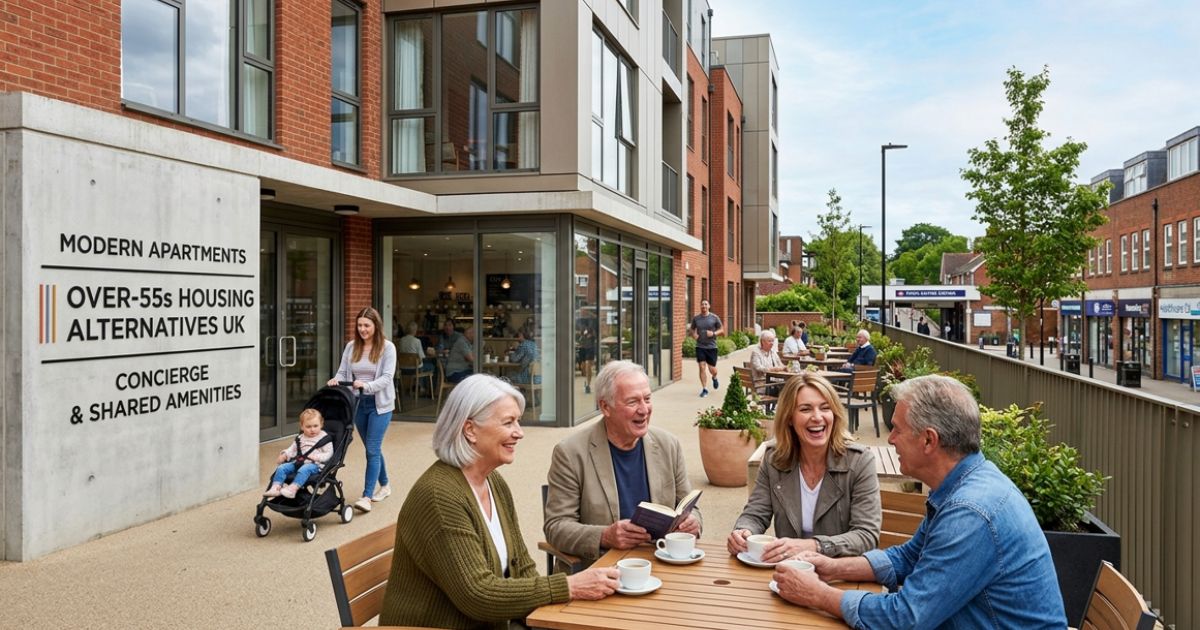
Birmingham keeps coming up in these conversations for good reason. Strong public transport, real cultural attractions, and a still-affordable property market give it a genuine head start over pricier cities. Most investment so far has chased young professionals, yet the same qualities that draw them in, walkability, good transport links, and solid leisure facilities, appeal just as strongly to the over-55s demographic.
Developments built around multi-generational living, with high-spec housing, shared spaces, and real community elements woven through, stand the best chance of succeeding here, and Birmingham has the bones to make that happen if developers choose to broaden their focus.
A call to action for developers and investors
The clearest takeaway from every one of these discussions is that high-quality over-55s housing is not some niche opportunity to dabble in, it is a genuine growth area tied to one of the biggest demographic shift patterns the UK housing market will see for decades. Investors and developers who move now, through flexible rental models, high-spec downsizer developments, or fully integrated multi-generational communities, stand to benefit the most from that shift.
Why Developers Must Drive Over-55s Housing Alternatives UK
Getting there needs real developer engagement alongside sensible planning reforms and financial incentives that actually work on paper. Birmingham, in particular, could lead this transformation if the right people commit early to expanding Over-55s Housing Alternatives UK projects. The demand already exists; what is missing is simply who moves first.
FAQs
1. What types of Over-55s Housing Alternatives UK are available?
Key options include sheltered housing (independent flats with emergency alarms), retirement villages (amenities and active social life), extra care housing (on-site support and medical care), and Older People’s Shared Ownership (OPSO).
2. How does the Older People’s Shared Ownership (OPSO) scheme work?
You buy a share of a home (25% to 75%) and pay rent on the rest. If you purchase the maximum 75% share, you pay no rent on the remaining 25%.
3. What is the difference between sheltered housing and extra care housing?
Sheltered housing offers independent living with basic emergency support. Extra care housing provides flexible on-site personal care teams for assistance with daily tasks.
4. Are there hidden ongoing costs in age-restricted housing?
Yes. You should account for monthly service charges for shared facilities and potential leasehold exit fees when selling the property.
5. How do I choose between Over-55s Housing Alternatives UK based on budget?
Consider council-run sheltered rentals or almshouses if on a low income, OPSO if you have partial equity, or private retirement villages if funding the move from a full home sale.