

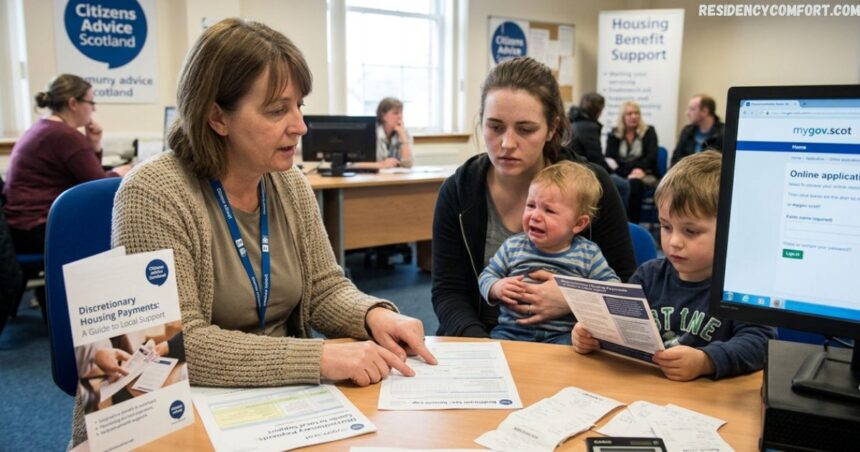
Discretionary Housing Payment, often called DHPs, give extra support to people who struggle with their rent. Every local authority in the UK, including councils across Scotland, has the discretion to decide who gets this financial assistance and how much they receive. Families are not automatically entitled to this help; instead, local authorities look closely at each household’s situation before agreeing to pay. Having spoken to several tenants who went through this process, I’ve seen how much a small top-up payment can change someone’s week.
A Simple Guide to Discretionary Housing Payments
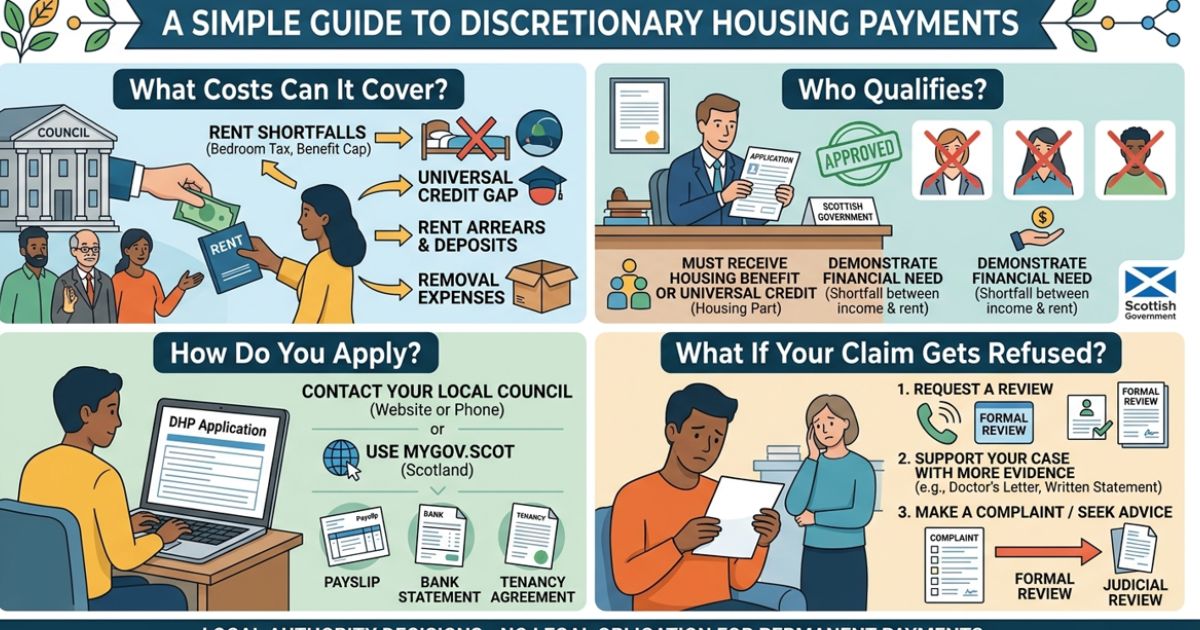
This kind of support covers many different money problems linked to housing. It can help cover rent shortfalls caused by the bedroom tax, the benefit cap, or a lower level of earnings than expected. Some households also get help through the crisis and resilience fund (CRF), which works alongside housing payments to give short-term costs cover during difficult months. Many people who receive universal credit find that the housing costs element does not fully match their rent costs, so discretionary housing payments step in to close that gap.
The level of awards and the length of awards depend on personal circumstances, and every case is reviewed on its own. Housing payments can also help with the rent itself, a rent deposit, rent in advance, or removal expenses when moving home, and they can reduce the effect of non-dependant deductions or problems linked to local housing allowance. Councils have no legal obligation to keep paying forever, but they try to give extra help to households facing other housing costs and issues connected to housing benefit and other benefits.
What Costs Can It Cover, and Who Qualifies?
Local councils use funding from central government to run a scheme that helps with many kinds of housing cost. A council can decide to pay money to households facing rent arrears, sudden rent increases, or a drop in their level of earnings. This kind of discretionary help aims to mitigate the effects of welfare changes, such as the bedroom tax, the benefit cap, and cuts linked to local housing allowance rates.
Not everyone gets the same support, because a discretionary housing payment is not a right that comes automatically with other benefits. To be entitled, a person usually needs to already claim housing benefit or the housing part of universal credit, and then show that these payments do not cover their housing costs in full. Missed payments, non-dependant deductions, and general rent not covered by the amount for rent costs are common reasons councils step in.
Each local authority, including bodies working with the Scottish government, decides how long support should last and how much the full rent gap should be closed. Money from this scheme can also go towards a rent deposit, rent in advance, or removal expenses for a household that needs to move because their current home costs too much.
How Do You Apply?
To apply for this kind of support, a person usually needs to contact their council directly, either by looking up the contact details on the council’s website or by using the official mygov.scot page if they live in Scotland. Many councils let people fill in an online form, while others ask residents to phone the housing team using a listed phone number. Before you claim, it helps to gather proof of your income and spending, since councils use these rules to work out if you qualify.
The application usually joins up with an existing housing benefit or universal credit claim, and some councils run separate schemes for a crisis payment when money is needed fast. If you already receive council tax support, this can strengthen your case. Staff will look at the forms you send and then decide whether to approve a discretionary housing payment.
If the decision does not go your way and you disagree, you have the right to challenge it by requesting a review. You can call the council to ask for help with this process, since housing payments teams often guide people step by step through their local authority’s appeal process.
What Happens If Your Claim Gets Refused?
If your application is refused, the council will normally send you a decision notice explaining why. This notice should confirm whether staff followed policy correctly and looked fairly at your income, spending, and household size, including how many people share each bedroom. If you feel the outcome is wrong, you can ask for a review or formally request a review within a set time limit, which is usually listed on the council’s website or on mygov.scot.
To support your case, send in supporting information, such as a written statement about your situation or a letter from a doctor if health issues affect your need for housing help. The local authority must review the original decision again, checking it against its own policy and rules. If you remain unhappy after this review, you can raise a formal complaint through the council’s complaints procedure.
For serious or unresolved cases, getting legal advice may help you understand your options, including asking a court for a judicial review if you believe the appeal process itself was unfair.
Extra Help, Timing, Funding, and How Rules Differ Across the UK
Moving to a cheaper home or a smaller home can help a family reduce ongoing rent problems, and a housing payment can support this move by covering a tenancy deposit, hiring a removal company, or paying for a bus or other travel, including taxis in urgent cases. Being on a waiting list for social housing can slow things down, so getting extra money makes the whole process quicker.
When someone is unable to pay rent, a notice from landlord can quickly turn into a court eviction, so councils try to step in before the risk of eviction becomes real. Falling behind can also lead to debt repayments, forcing families to cut back on essentials just to keep up. Problems such as a benefit overpayment, benefit sanctions, or a sudden shortfall after a rent increase often push a household towards rent arrears. The under-occupation deduction, also known as the spare room subsidy or bedroom tax, adds pressure for tenants who rent from a private landlord in private tenancies, and every rent payment matters when the landlord expects payment on time.
Support for Household Adaptations and Extra Costs
Households relying on disability or carer benefits often require home adaptations, making housing payments essential to meet ongoing needs without added financial strain. Because every situation is unique, councils evaluate cases individually to protect family wellbeing. This financial support is especially crucial for families in temporary housing who face extra costs such as service charges for shared spaces or kitchens that standard benefits do not cover.
Application Timeline and Delays
Completing and submitting the application requires time, and processing delays of several weeks are common. While some councils expedite funds for urgent cases, reviews can take up to 3 months. As a result, applicants frequently report that the process moves too slowly relative to the immediate pressure of incoming bills.
Payment Changes, Appeals, and Local Accountability
A payment can stop once a household’s situation changed, for example if income rises or the family moves. If payments stopped and you still need help, you can apply again, but always check the policy first to see if you still qualify. You have the right to a review if you think a decision not fair, and staff should offer help challenge the decision properly. To raise concerns, contact council staff by phone, email, or write a letter, and if things still go wrong, you can raise a complaint. Councils must decide each new request fairly, without assuming the council did not help before or that they did not tell you about your options.
If a case feels stuck, asking a local councillor for help can push things along, since local councillors sometimes have more influence with council departments. Councils publish spending information on GOV.UK, and local budgets often face public scrutiny before elected members vote on how much money to set aside each year.
Funding for this support changed a lot over the years. In 2013/14, near the start of the 2010s, the Conservative Government introduced major welfare reforms through new legislation and stricter means-tests, alongside a freeze on some benefit rates that began around 2015 and continued from April each year. Since 1 April 2017, budgets shifted again, and by 2021/22, 2022/23, 2023/24, and 2024/25, total spending moved between roughly £83.7 million, £100 million, £6.4 million, and £5.9 million depending on the year and nation. Additional funding, annual funding, and new funds — sometimes called welfare supplementary payments aim to support longer-term use of this help, reflecting its discretionary nature, though councils must prioritise people most in need when money runs low.
Regional Discretionary Housing Support and Economic Factors
Research shows a positive impact for many recipients, but the overall impact is uneven, since higher costs in some areas mean the same budget covers fewer households on a per capita basis. This can affect employment prospects and create unequal access to support depending on where someone lives. Some research points to broader economic pressures, such as rising income needs, growing pressure on the school run budget, and general housing costs, as reasons why people apply.
The department for work and pensions (DWP) sets national rules, including the benefit cap and Local Housing Allowance, while local authorities decide how LHA rates and the LHA rate apply locally. Many councils run free advice sessions and share information to help people understand crisis payments and how a direct payment works, even though overall funding levels have sometimes been criticised as reduced levels of support.
Housing support works differently across the UK . In England, the system stays largely centralised, while Scotland operates under partly devolved powers over social security, letting the Scottish Government adjust some rules to mitigate local pressures. Wales also holds some devolved control, with the Welsh Government managing certain elements, though core rules remain not devolved and stay with Westminster overall.
Discretionary Housing Payment Options Across Nations
Northern Ireland takes a distinct path through the Fresh Start Agreement, which introduced welfare supplementary payments to soften the effect of UK-wide changes; this arrangement is closer to fully devolved control in some areas than the rest of the UK. Across all four nations, the underlying benefit rules are around 75% similar, though local top-up schemes cause the biggest increase or difference in what a household actually receives.
If there’s one thing worth remembering, it’s this: a discretionary housing payment is never guaranteed, but it’s always worth asking about. A short conversation with your council about applying for a discretionary housing payment could be the difference between a manageable month and a stressful one.
FAQs
What is a Discretionary Housing Payment?
It is a temporary extra payment from your local council to help pay your rent if your Housing Benefit or Universal Credit does not cover the full amount.
Who is eligible to apply?
You must currently receive Housing Benefit or the housing element of Universal Credit and be able to demonstrate financial hardship.
How much money can you get?
The amount varies based on your council’s assessment of your income and expenses, but it cannot exceed your total rent cost.
How do you apply?
You apply directly through your local council’s website by submitting details of your income, expenses, and current financial situation.
Can you appeal if your discretionary housing payment is rejected?
There is no formal right of legal appeal, but you can request an internal review by asking your council to look at the decision again with updated evidence of your hardship.