

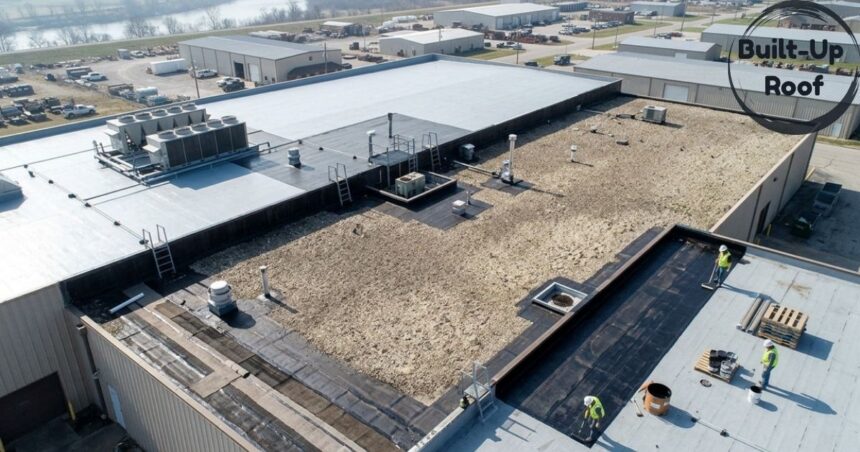
When you look at a commercial flat roof system from an aerial view, you see gravel and crushed stone spread across a surface that has protected buildings for more than a century. A Built-Up Roof, often called a BUR system roof, is a multi-layered roofing system built layer by layer using fiberglass materials, mats, roofing felts, and organic materials soaked in petroleum-derived bitumen.
Overview of Commercial Built-Up Roof Systems
This guide works like a table of contents for anyone who wants to understand this roof system and other roofing systems used on warehouses, industrial buildings, schools, retail centers, and other commercial buildings. Property owners choose this tar and gravel roof for its durability, stability, and weight, which keeps it firmly in place on low slope roofs.
The materials used, from hot-applied bitumen to cold bitumen layers, work together with insulation and a surfacing layer to form a protective barrier against sunlight. Reflective coatings, energy efficiency, and design requirements are key factors when comparing a Built-Up Roof membrane to newer single-ply membranes or modified bitumen membranes, and this article breaks down every layer of construction and waterproofing that has kept BUR trusted for decades.
History of BUR Roof Systems
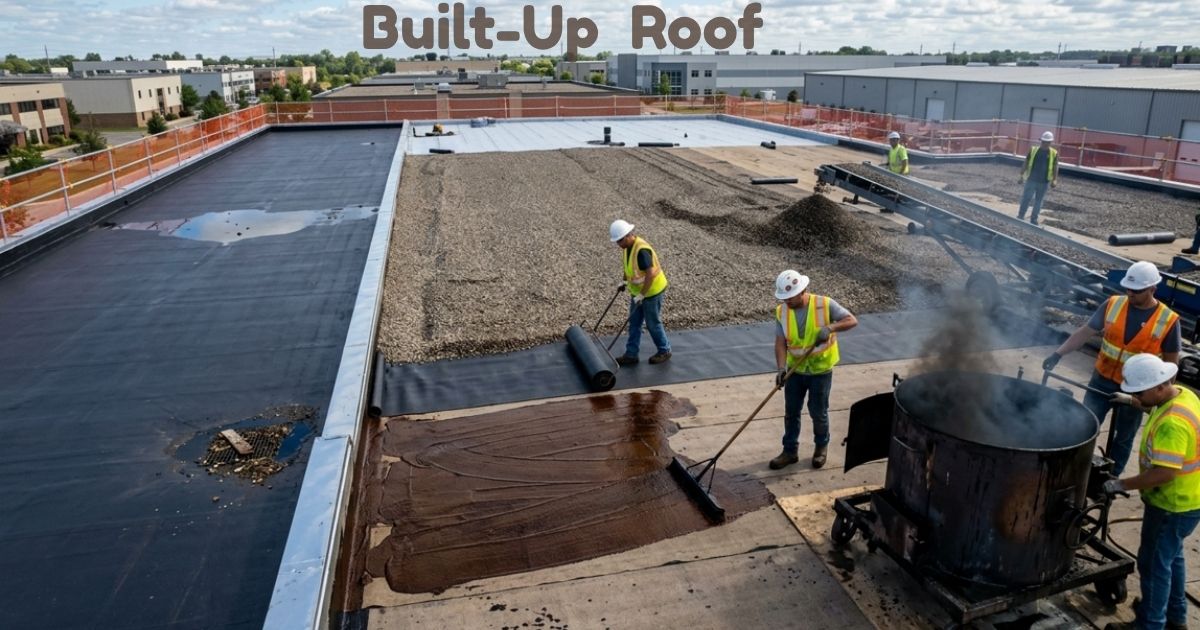
Built up roofing traces its roots back to the mid 1800s, making it one of the oldest commercial roofing systems still used today. Workers once used a mop to spread black tar and fluid tar over a roof deck, laying felts, ply sheets, and mats one by one to create a thick seamless membrane that acted like a continuous barrier against water.
Early builders in places like Springfield and across Missouri relied on this method because it gave standing water resistance even on a flat surface, and the roofing community trusted its performance through spring rains, summer heat, and severe storms.
How a Built-Up Roof Is Constructed
Unlike a sloping surface that lets gravity pull water away, flat roofs need waterproofing protection built from layer after layer, so construction crews used paper, asphalt, and petroleum-derived bitumen to build redundancy into the design. Technology has changed the roofing felts and organic materials used today, and modern hot-applied bitumen and cold bitumen layers offer better puncture protection than older methods, while fiberglass materials now reinforce much of the plain bitumen used in newer sheets. Building owners across many geographic areas and climates hire commercial roofing services for this multi layered roofing system because it still competes with newer single-ply systems, giving insulation and refined asphalts a place in high-value assets that need a Built-Up Roof membrane built to last.
The Role of Bitumen in a Built-Up Roof System
Bitumen acts as the waterproofing agent that holds a Built-Up Roof together, working as both an adhesive and a bonding layer between each sheet. The traditional method heats this asphalt bitumen over an open flame until it reaches a hot form, though some crews now prefer cold form or cold applied adhesive systems that skip the smell and fumes of melting coal tar.
A flood coat of hot applied asphalt spreads over the reinforcing felt to create a monolithic membrane, sealing every seam into one finished roof that resists weathering and physical damage.
Surfacing Layer Options for a Built-Up Roof
On top of this, the top surface gets a surfacing layer made from gravel, crushed stone, or slag, which adds weight and stability while blocking harmful UV exposure and sunlight. Property owners who want durable choices for high-traffic roofs on commercial buildings often pick reflective coatings, reflective cap sheets, smooth cap sheets, or modified bitumen membranes instead of loose stone, since these alternative surfacing options meet modern design requirements for energy efficiency while still forming a strong protective barrier against the elements, unlike older roofing materials that relied only on gravel to stay in place.
Challenges and Disadvantages of a Built-Up Roof System
A gravel Built-Up Roof brings real challenges that skilled contractors and architects must plan around from day one. Poor drainage on a flat roof surface can create a vicious cycle: water sits in a ponding area, adds weight, and starts a slow potential for leaks that turns into water leakage, water infiltration, and eventually leaking through joints and penetrations.
Building codes often say a roof should not hold more than 1 inch of ponding water within 48 hours, yet on a low slope or flat slope of even 10 feet, quarter inch evaporation per day is not always fast enough to stop the depression from growing deeper, and this depress in the surface can lead to premature roof failure if regular inspections and maintenance are skipped. Faster evaporation on hot days can help dry out small pools of water before they turn into permanent ponding areas.
Structural and Environmental Factors
The structural capacity of the building matters too, since gravel and other surfacing loads act as a point load of roughly 520 lbs per section, and a metal deck was never designed to carry that much extra weight without added structural support. Temperatures swings bring their own trouble: expansion and contraction from hot summer heat to cold rain and snow cause asphalt layers to crack through temperature cracking, splitting, and flaking, which leads to surface breakdown and a rougher tar and gravel appearance over time.
Ventilation problems inside attic spaces and climatized buildings raise condensation vapor near a condensation pipe, add dew and moisture, and force air conditioning equipment and HVAC equipment to work harder, raising energy consumption. Rooms like bathrooms and kitchens generate extra humidity that a storm drain cannot always clear fast enough, especially when dirt, contaminants, and debris block a drain or vent pipes.
Application Hazards and Design Limitations
Hot bitumen application also brings fumes, odor, and a tar-boil risk during installation complexity, along with respiratory issues for workers if waste management and disposal of old asphalt roof material is not handled with care; the non-renewable nature of asphalt adds to the environmental impact and carbon footprint, though recycling programs are reducing greenhouse gas emissions and infiltration of old material into landfills.
On the design side, limited design flexibility and fewer design options make it harder to match aesthetic preferences, and modified bitumen membranes used for repairs can stretch or show blistering and premature breakdown near a seal if building owners do not act quickly to removal and replace damaged sections.
Moisture absorption into old felts adds more weight, and over years a roof can sag under that load, turning small leaks into a bigger problem for any building that lacks enough insulation across the whole roof surface, even where reflective coatings are used to help.
Maintenance Strategies to Protect Your Built-Up Roof
Protecting a Built-Up Roof membrane starts with scheduled maintenance and periodic inspections that catch small trouble before it grows. A good roof coating acts like a shield against ultraviolet radiation, giving UV protection and better cooling efficiency, while an American WeatherStar Approved Contractor can apply KarnaFlex SEBS Mastic, 502 SEBS mastics, or 229 SBS rubber reinforced asphalt over cracking, punctures, and soft spots.
Regular cleaning removes dirt, humidity, and contaminants from drains and vents, keeping drainage issues, moisture damage, and moisture movement under control, and stopping gravel displacement or loose gravel from exposing the roof deck underneath.
When a section needs work, crews use surface preparation, resealed seams, and fluid-applied forms or sheet forms to restore bitumen adhesion, and this simple maintenance item keeps roofing material manufacturers warranties valid instead of forcing drastic measures like a full tear-off.
5 Key Layers of a Built-Up Roof Assembly
Every Built-Up Roof relies on a strong building assembly and structural foundation, starting with a base over wood decks, metal decks, or concrete decks that gives structural soundness to the whole structure. Reinforcing materials and construction materials form the next layer, followed by asphalt bonded through expansion and contraction cycles caused by hot cold temperatures. A vapor retarder, or vapor retarders in colder climates, blocks interior humidity and moisture content from below, while insulation controls heat absorption and cooling load above the deck. Rooftop equipment, connection points, and roof penetrations need careful flashing so weathering and physical damage do not cause surface breakdown, blistering, or splitting near pipes, and a retrofitted layer can be added later if the building owner maintenance issue calls for it.
Comparing Types of Built-Up Roof Systems: Gravel BUR vs. Smooth BUR
A gravel BUR uses dark-colored gravel spread over hot bitumen, giving a textured rugged appearance that stands up well to foot traffic near commercial kitchens, pools, and other areas with heavy rooftop equipment, though this surface appearance holds heat in warmer climates. Smooth BUR skips the stone for a sleek even surface, often finished with 670 silicone coating or 19 Ultra rubberized asphalt cement to boost reflective surface options and improve moisture control around ponding areas and condensation.
Both types face similar durability tests, since 48 hours of standing water, drying, and repeated cleaning affect how well each roof deck handles weight and leaking HVAC equipment nearby, and Karnak materials are built with structural considerations in mind so either choice keeps its surface strong for years.
Conclusion: The Enduring Value of Built-Up Roofing Systems
When you weigh every option on your short list, it still stands out for durability, ease of application, and quality across flat roofs and low-sloped roofs in both industrial settings and commercial settings.
This durable Built-Up Roof system has earned widespread adoption since 1933, when companies like the Karnak Team began working with roofers, contractors, and architects who needed real building solutions for structural considerations, building envelopes, and roof substrates of every kind. Insulation, waterproofing, aesthetics, and fire resistance all play a part, and today the Q Applicator Program helps train contractors on multi-layered construction, repair products, and liquid-applied roofing systems that support sustainable roofing and reduce environmental impact.
As a woman-owned business and family-owned business, this kind of company keeps documentation clear and works within budget constraints for building owners looking to install a reliable Built-Up Roof, while a friendly customer service representative and strong customer service, guided by leaders like John Doan, help match protective surfacing to any project.
FAQs
What makes a Built-Up Roof ideal for flat buildings?
A Built-Up Roof uses multiple plies of reinforcing fabric and waterproofing bitumen to form a durable weatherproofing shield against standing water and harsh weather.
How long does this multi-ply system last?
A traditional tar and gravel roof lasts 20 to 30 years thanks to its thick layer construction.
What materials are needed for installation?
Installation requires rigid insulation, an underlayment base sheet, alternating asphalt bitumen coats, and a protective gravel aggregate or top coating.
Is a smooth-surfaced option easier to maintain?
Yes. Replacing gravel with a reflective protective coat creates a lighter surface that simplifies leak detection and boosts energy efficiency.
How often should a Built-Up Roof be inspected?
Inspect a Built-Up Roof twice annually and after major storms to check roof flashing and prevent leaks.