

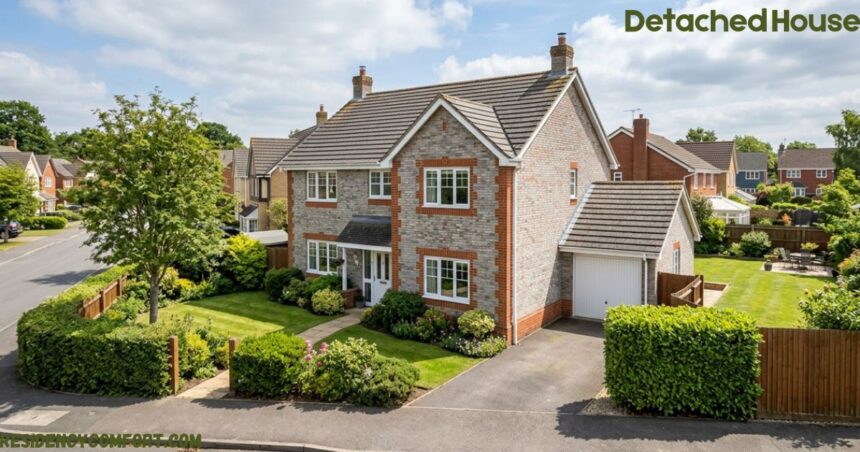
A detached house sits on its own, with no shared wall on any side. This simple fact makes it one of the most wanted home types in the country. My own family moved from a terraced house into a detached house two years ago, and the change in daily life was bigger than I expected less noise, more room to breathe, and a garden that felt truly ours. Buyers chase this kind of home for good reason, and this guide breaks down every angle of it, from the link detached option to full independence, in plain, everyday language.
Core Features of a Detached House
A true detached house stands completely alone on its plot, without touching any neighbouring building. This gives owners full privacy, since no living space wall connects to another home. It also brings strong kerb appeal, because the house has clean lines on every side and often looks larger than a semi-detached house of the same size. Many owners also enjoy freedom to add an extension later, since there is no shared structure to worry about when planning changes.
Defining the Link Detached House Option
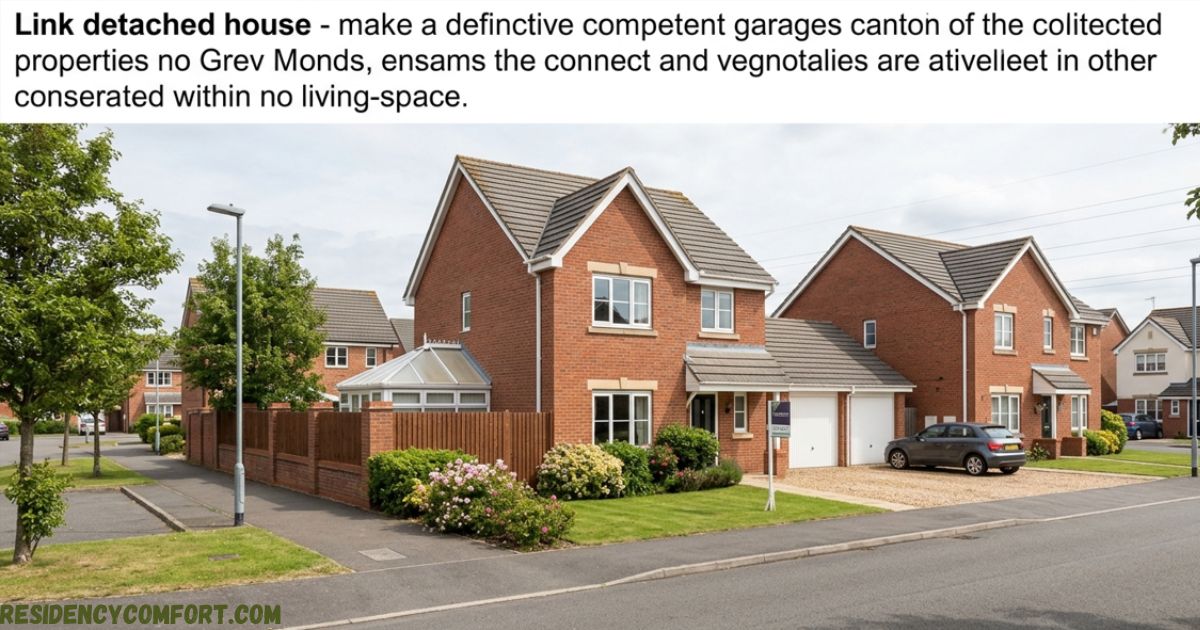
A link detached home sits between a full detached house and a semi-detached house. It does not share any living space wall with the house next door, but a smaller structure usually a garage or a conservatory connects the two properties. This setup gives buyers most of the privacy and independence of a stand-alone home, while often costing less than a fully detached house. From my experience helping friends house-hunt, this middle-ground option surprises a lot of first-time buyers who assumed “link” meant less private.
Link Detached vs Semi-Detached Differences
The gap between these two comes down to one thing: what actually joins the homes together. A semi-detached house shares a real living space wall, so sound and warmth can pass between the two homes fairly easily. A link detached home, on the other hand, only connects through a garage or similar non-living space, which cuts down on noise transfer. Because of this, many buyers treat the link detached option as a step up in comfort, even though the price often sits close to a standard semi-detached property.
Comparing Detached vs Attached Properties
An attached home whether semi-detached or terraced shares at least one wall with a neighbour, which naturally affects sound and energy efficiency. A fully stand-alone home avoids this entirely, standing free on all sides with its own boundary and garden. This full separation is why buyers who value quiet living prioritize this property style. Estate agents often note that this single feature, more than size or design, drives the price gap between attached and stand-alone properties.
Core Advantages of Detached House Living
Cost is often the first thing buyers notice about a link detached option. It usually costs less than a full stand-alone home, yet still offers strong privacy and generous room sizes. In some local markets, a link detached option even undercuts a semi-detached house, which surprises buyers who expect independent properties to always carry a higher price tag. This blend of lower cost and independent-style living makes it a smart pick for buyers watching their budget closely.
Privacy and Daily Life
Because a link detached property joins its neighbour only through a garage or conservatory, everyday noise stays much lower than in a semi-detached house. Separate entrances and distinct garden spaces add to the sense of independence, so families rarely feel like they are sharing a home. Many owners also mention a stronger feeling of ownership over their own boundary and outdoor space, something that matters a lot after living in flats or terraced houses.
Space, Layout, and Room to Expand
Independent and link detached properties tend to offer wider room layouts than terraced houses, with space for growing families or home offices. Garden size is usually more generous too, giving room for children, pets, or simply relaxing outside. Subject to local planning permission, many owners later add an extension or renovation, turning a starter home into a long-term family base without needing to move house.
Community Atmosphere and Personal Space
A link detached property often sits close enough to neighbours to build a friendly street atmosphere, yet far enough apart to protect daily privacy. Shared driveways or nearby garages can actually create small chances to chat with neighbours, something fully isolated homes sometimes lack. This balance social contact plus personal space is one reason young families often prefer this layout over a terraced house.
Investment Value in the Detached House Market
Stand-alone homes and link detached properties both attract a wide pool of buyers, from first-time owners to downsizers, which helps at resale time. Demand for this type of property value growth has stayed strong in recent years, often outpacing smaller home types. Good maintenance and thoughtful renovation work over time can also boost appreciation, making these homes a solid long-term investment for many owners.
Potential Drawbacks and Considerations
No home type is perfect, and a link detached property carries its own set of challenges worth weighing carefully. Shared driveways can lead to disputes over parking or access, while the connecting garage wall often raises questions about shared maintenance and who pays for repairs. Insurance and liability can also get more complicated when part of the structure touches a neighbour’s property, so it pays to read the deeds closely before buying.
Soundproofing and Extension Constraints
Even with strong privacy, some noise can still travel through a shared garage or conservatory if soundproofing was never properly installed. Homeowners hoping to add an extension may also need the neighbour’s consent, especially if the change touches the shared structure or affects planning permission rights. On top of this, older shared walls with poor insulation can quietly raise heating bills, so checking the build quality before buying really matters.
Value Retention in Link Detached vs Full Detached House Options
Property value for a link detached property usually sits just under a fully stand-alone home, though the gap can shrink in popular areas. Location plays a huge role here, since a well-kept link detached home in a sought-after ward can match nearby stand-alone properties in price. Condition, finish quality, and strong soundproofing all push value upward too, while market demand in a busy selling season can narrow the price gap even further.
Design, Upgrades, and Ownership Costs
British builders keep pushing new ideas into residential design, from textured facing brick on new builds to smart renovation work on older cottages. A well-planned extension can add real living space without losing the character of an original home, while a fresh roof or updated brickwork lifts both looks and energy efficiency. These design choices matter just as much for a link detached layout, where clever building envelope work also helps reduce noise from the shared garage link.
Cost Trends for the Detached House Buyer
Recent housing data shows demand for stand-alone properties has kept climbing since the pandemic, pushing prices up faster than for semi-detached or terraced homes. Several hundred wards across the country now show average prices well above what buyers paid just a few years back. Southern regions tend to carry the steepest premiums, though pockets of relative value still exist for buyers willing to look slightly outside the most fashionable postcodes.
Concluding Advice for the Detached House Buyer
Choosing between a full detached house, a link detached property, and a semi-detached house really comes down to budget, tolerance for shared structures, and how much privacy matters day to day. Choosing a link detached house gives a smart middle path real independence, solid investment potential, and lower cost than going fully independent. Whichever path a buyer chooses, understanding maintenance duties, insurance needs, and planning permission rules ahead of time makes the whole process far smoother.
FAQs
1. What is a detached house and how does it differ from other property types?
A detached house is a standalone home that shares no walls with adjacent properties, offering full physical separation and private land surrounding all four sides.
2. What is the main benefit of a semi-detached property?
Semi-detached homes share only one wall with a neighbor, making them more affordable to buy and heat than standalone homes while still providing private garden access.
3. How does a bungalow differ from a standard house?
A bungalow is a single-storey property with all living areas on the ground floor, eliminating stairs for easier accessibility.
4. Why are standalone properties more expensive to maintain?
With four exposed exterior walls, standalone homes lose heat faster and require the owner to cover 100% of roof, wall, and land maintenance costs.
5. Do you own the land when buying a detached house?
Yes, buying a detached house in the UK usually includes the freehold, giving you full ownership of both the structure and the surrounding plot of land.