


Foreclosure homes can look like a quick path to a cheaper house, but the path has real bumps. This foreclosure buying guide shows how buying foreclosures in Austin works, from the first search to closing day. You will also see how Texas foreclosure law shapes your risk and your price.
What does it mean when a house goes into Foreclosure Homes?
Foreclosure Homes are houses that a lender takes back after the owner stops paying the loan. These foreclosure properties often sell for less because banks want a fast exit. They belong to the wider group of distressed properties, where the seller feels pressure to move.
A mortgage default usually starts with missed mortgage payments that pile up for months. Then lender repossession begins, and the distressed seller loses control of the timing. The result is a distressed home sale, which sometimes brings a discount below market, though the price depends on the home’s condition and the sale type.
How big is the foreclosure scene in Austin today?
The Austin foreclosure market is small but growing. The foreclosure rate stays low compared with national averages, yet it is rising from the near-zero levels of 2020 to 2023. Owners who bought at the 2021 to 2022 peak now supply most new listings.
Texas logged 3,458 foreclosure filings in August 2025, about one for every 3,439 homes. The Austin real estate market still shows low inventory and a median home price near $565,000 in 2026, according to LRG. An underwater mortgage and lost equity push some owners toward trouble, even in a high-demand market, because buyers who paid peak prices can owe more than the home is worth.
What kinds of foreclosure sales can I buy?
You can buy at three points: pre-foreclosure, at a foreclosure auction, or after the sale as an REO (real estate owned) home. A short sale also counts as a pre-sale route, where the lender accepts less than the owed amount. Most everyday buyers pick the REO path because it feels closest to a normal purchase.
A courthouse auction and an online auction both demand cash and leave little time to think. Bank-owned homes and bank-owned properties sit on the open market, and agents also call them REO properties. Other routes include a tax foreclosure sale, an HOA foreclosure, an assessment lien foreclosure, government-owned homes, and HUD homes.
How does the foreclosure process work in Texas?
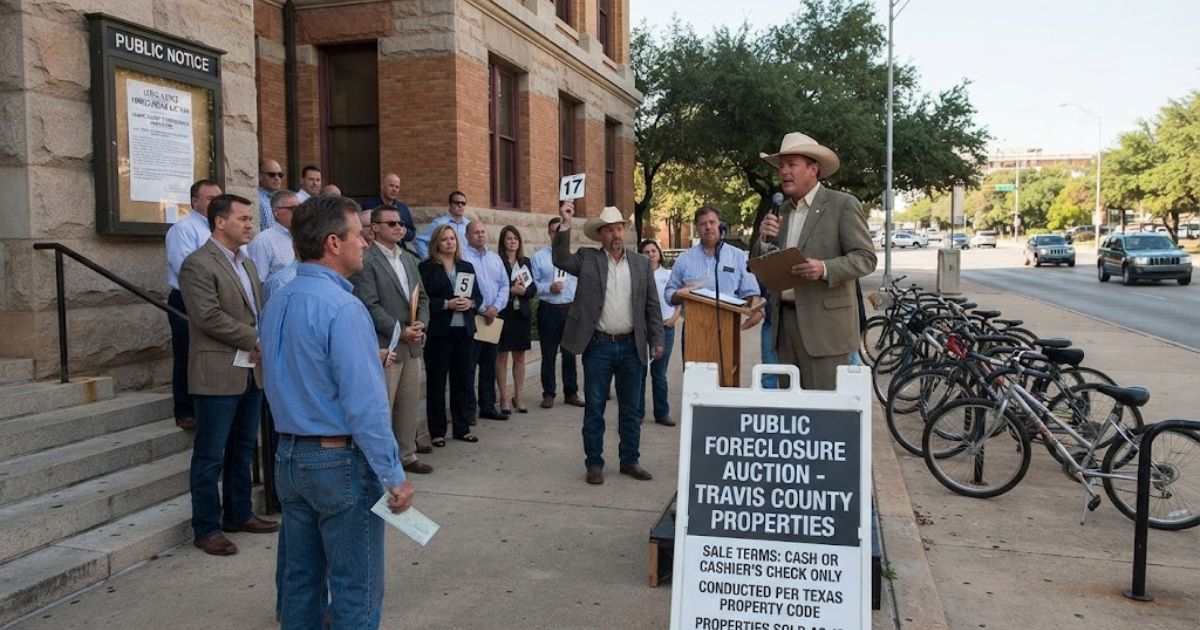
Texas uses non-judicial foreclosure for most home loans, so the lender sells the house without going to court. The lender relies on a power of sale clause in the loan papers, which lets a trustee sell without asking a judge. Sales happen on the first Tuesday of the month at the local courthouse.
The lender first sends a notice of default, then posts a public auction notice that meets foreclosure notice requirements. A trustee’s sale ends with a trustee’s deed, while a tax sale may end with a sheriff’s deed. A judicial foreclosure goes through a judge and takes longer, and the completed foreclosure process moves the home to its next owner.
Can an old owner or a tenant cause trouble after I buy?
Sometimes, yes. Texas gives the old owner no right of redemption after most mortgage foreclosures, but a tax sale of a homestead property carries a two-year redemption period under the Texas Tax Code. A deficiency judgment only hits the former owner, not you.
Tenants add a second layer of risk, because federal rules let a tenant holdover last up to 90 days under a tenant 90-day notice to vacate. An occupied property may need an eviction, while a vacant property skips that step, and the Servicemembers Civil Relief Act protects active-duty owners from wrongful sales. An HOA attorney can also explain the Residential Property Owners Protection Act when an HOA forecloses.
Is a bank-sold home safer than an auction buy?
Yes, for most people. A bank-sold home usually allows a home inspection, accepts a mortgage, and comes with insurable title, while an auction demands cash on the spot with no look inside. A cash buyer carries the full risk at auction because the sale is final.
At courthouse sales in Austin, winners bring a cashier’s check for the full bid and face deposit forfeiture if they walk away. Some auctions include an upset period, which lets another bidder top your price soon after. After a tax sale, deed recording within 30 days starts the redemption clock, so file it quickly.
What should I prepare before I start looking?
Get your money ready first, because banks often ignore buyers who skipped underwriting and have no proof they can close. A pre-approval letter from a mortgage lender makes you a pre-approved buyer in the bank’s eyes. If you pay cash, show proof of funds instead.
A first-time homebuyer can buy foreclosures, and Texas offers down payment assistance that may work with some of these sales. HUD sales sometimes include first-time buyer incentives, and some government-backed loans allow a low down payment as small as 3.5 percent. Keep earnest money ready too, since banks like a firm deposit.
Which loans work for these homes?
Most bank-sold homes accept a conventional loan, an FHA loan, or a VA loan when the house is livable. A USDA loan can cover eligible rural homes with no down payment. Auction buyers rarely get a financing contingency, so cash rules there, and a failed loan costs you the deposit.
A house that fails minimum property standards may need an FHA 203(k) rehabilitation loan, which rolls repairs into one mortgage. Any renovation loan depends on the appraisal, and a low appraisal can change your loan-to-value ratio. Some investors choose hard money financing for speed, though it usually costs more than a standard mortgage.
Who should be on my buying team?
Hire a buyer’s agent who closes bank deals often. Look for an SFR certification (Short Sales and Foreclosure Resource) or a CDPE (Certified Distressed Property Expert) badge on their card. A real estate attorney then adds legal cover where contracts get technical, such as liens and deadlines.
The bank’s listing agent works for the seller, while an asset manager or the REO department makes the final call. Large lenders often hand sales to an asset management company, which then reports up a chain of approvals. A Board-Certified real estate attorney and a title company with distressed experience round out your team.
Where can I find listings in Austin?
Start with the Multiple Listing Service, where an agent can pull every MLS listing tagged REO through the Austin Board of REALTORS. Public sites like Redfin and Homes.com also show bank sales, and federal homes appear on the HUD Home Store and Fannie Mae HomePath. Check foreclosure listings on several sites, since no single list covers everything.
Foreclosure.com and RealtyTrac track pre-sale homes, and the Zillow foreclosure filter helps, though its pre-sale data can lag. Auction fans watch Auction.com, Xome, and Hubzu, and they scan each monthly foreclosure list that local law firms publish. The county courthouse hosts live sales, while the Travis County Tax Office and the county sheriff’s website post notices.
How do I make an offer a bank will take?
Send a clean, competitive offer near list price with strong proof of money or financing. A lowball offer rarely works because banks hold firm on fairly priced homes. Expect a counteroffer after a few business days, because bank staff reply slowly.
Good homes draw multiple offers, and every step needs bank approval, so replies take time. Banks run each deal as an as-is sale, so ask for an inspection contingency that lets you cancel after you find damage. Plan your closing timeline around the bank’s closing deadline, budget closing costs, and finish with a walk-through before escrow ends, because banks rarely extend dates.
Which liens should worry me most?
Liens decide whether a bargain turns sour, so hunt for them before you bid. Hidden liens from a tax lien, a mechanic’s lien, IRS tax liens, or a judgment lien can follow the house to you. Some surviving liens also stay attached after an auction, so read the records before you raise your paddle.
An auction bidder usually pays at least the outstanding loan balance and often inherits delinquent property taxes and back taxes. Other encumbrances include unpaid HOA dues and municipal code violations from a neglected property. Check each one early, because these costs can shrink or erase your discount.
How do I protect my title before closing?
Order a title search the day your offer wins, because old claims, unpaid taxes, and lawsuits hide in county records. Your goal is clear title and marketable title at closing. A solid title insurance policy then covers many surprises that searches miss.
Your due diligence should confirm lien release and lien clearance before the bank gets paid. Fix title clouds and title defects, and file a quiet title action when a cloud stays. Ask for a property disclosure or seller’s disclosure, watch for undisclosed damage, and read the closing documents line by line.
How much can I really save?
Most bank sales price below market value by roughly 10 to 20 percent, according to Texas Horizons Law Group. That gap gives you instant equity on paper, and smart repairs can help you build equity fast. Austin’s tight supply shrinks the gap, though, because more buyers chase each good house.
Run a break-even analysis before you bid, adding the price, repairs, and fees. Set a repair budget and a contingency budget of 15 to 20 percent of the price for surprises, as LRG advises. If the total gets close to the finished value, walk away.
What damage should I expect inside the house?
Expect deferred maintenance in most bank sales, because the owner stopped caring for the house long before the sale. LRG says most Austin REO homes need $15,000 to $40,000 in fixes. That makes repair costs a bigger factor than the list price.
Vacant houses suffer property damage, from vandalism to mold and plumbing leaks, especially after months without air conditioning. Austin’s clay soil causes foundation issues, summer heat can bring HVAC failure, and roof damage shows up often. Add renovation costs, holding costs, carrying costs, and delinquent utility balances to your list.
Who makes money from these deals?
A real estate investor or house flipper often wins, since they know repair prices. A fix and flip plan works when the resale value beats every cost. Casual buyers can win too, but they need patience, a tight budget, and a clear exit plan.
Smart real estate investing starts with comparable sales (comps) and the fair market value of nearby homes. Westbank Realty warns that a foreclosure is not automatically a deal, so check market value before you bid. Some buyers fix the house until it turns rent-ready and keep it as a rental.
Which parts of Austin have the most listings?
Foreclosures in Austin TX show up across the Austin metro, not only in the city core. LRG says suburbs such as Round Rock, Pflugerville, and Kyle carry steady stock. Central spots like Mueller and North Austin see rare premium listings.
Around Travis County, buyers also scan Buda, Georgetown, Cedar Park, Leander, and Bastrop. Values in East Austin and Del Valle have climbed sharply, so former owners fight harder to keep their homes or redeem them after a tax sale. Across Central Texas, the Texas real estate picture changes block by block, and a house with many days on market may hide problems.
Is it worth it to buy a foreclosure in Austin?
It can be, if you accept repairs and slow banks. People who ask how to buy a foreclosed home in Texas hear one honest answer: patient, well-funded buyers do best. Austin’s discounts run smaller than in weak markets, so savings come from careful bidding and smart repairs rather than the list price alone.
Treat a foreclosure as one part of your buying plan, not the whole plan. Set a hard maximum bid based on nearby sales, and walk away when the math fails. A good deal is the one you can fund, fix, and finish.
Can a first-time buyer really do this?
Yes, nothing bars first-time buyers from buying foreclosures, even in a tight market like Austin. The Seely Group confirms that FHA, VA, and conventional financing all work for bank-sold homes in good shape. Pick a bank-sold home first, since auctions often block inspections.
Start small and choose a house that needs paint, not a new foundation. Cosmetic fixes cost far less than structural ones, so they protect new buyers. Ask your agent to run every number twice, and keep a cash cushion for surprises, because repair bills often land after closing.
How long does the whole purchase take?
Plan for 45 to 90 days from accepted offer to closing on a bank-owned house, according to LRG. Auction buyers close faster, often in under 30 days, but they carry more risk. Banks may take several business days to answer each offer.
Eleven Oaks Realty says closings run 30 to 45 days after acceptance, while bank replies take 5 to 15 business days. Add time for your loan, the value check, and repairs, since each step can slip. Build a two-month cushion into your moving plans.
Can I buy a Foreclosure Homes for $1?
No, not in any practical way. HUD’s $1 program sells severely distressed homes only to governments and nonprofits. Tax sale bids in the Austin area start at the taxes owed, which usually run $10,000 to $50,000 or more, according to LRG.
Good Neighbor Next Door offers 50 percent off for teachers, firefighters, EMTs, and law enforcement, but the buyer must live there three years. The program rarely lists Austin homes, so do not plan around it. Anyone who advertises a “$1 home” to individual buyers probably sells a lead, not a house.
What is the biggest mistake to avoid?
Skipping the title check causes the biggest losses in foreclosure deals. Buyers who skip it can inherit hidden claims, unpaid dues, and tax debts that wipe out the discount. Run that check before you bid, and repeat it before you sign anything.
Underestimating repairs ranks second, and emotional bidding ranks third. Set a maximum price from comps minus fixes, and never go past it. Treat every walk-away as a saved cost, not a lost deal, because a skipped bad deal protects your savings.
What is the smartest first step today?
Talk to a lender and an agent this week, and set your top price before you fall in love with a house. Eleven Oaks Realty notes that a well-priced bank-sold home often draws several offers within days. Then track new bank-sold listings daily so you can tour them early.
Write down your repair limit, your cash cushion, and your walk-away rule. Share them with your agent so every search matches your plan. Calm, prepared buyers win more deals than rushed ones, and they sleep better.