

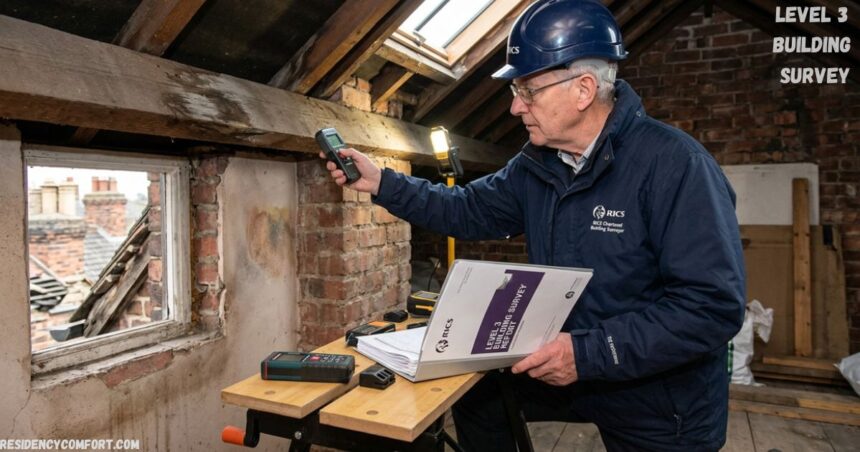
Buying a home is one of the biggest money decisions most people ever make, and getting the right survey done before purchasing property protects both your wallet and your peace of mind. Whether you’re eyeing a cottage built in the 1950s or a brand-new flat, important decisions about which survey to choose can shape how smooth your move turns out to be. Across the UK, properties vary hugely in age and condition, and the surveying profession has developed different levels of inspection from a basic Level 2 survey to the far more thorough Level 3 Building Survey so that every buyer gets the right level of protection.
Why a Level 3 Building Survey Matters and What It Covers
This guide walks through why a Level 3 building survey matters, what it covers, and how it can save property buyers from costly surprises down the line. Following RICS guidance, this type of structural survey goes into far greater depth than a standard report, uncovering structural risk factors that a lighter inspection might miss entirely. At RES Property Surveyors, we believe every buyer deserves clarity and a full understanding of a property before signing anything, because a critical defect spotted early can be the difference between a smart purchase and years of stress.
This article offers clear guidance and detailed guidance on choosing the correct survey for your situation, whether you’re looking at an altered property, an older property, or one of the many new-build homes now appearing across the country. We’ll also explore comprehensive options available to buyers, the benefits of paying a little more upfront, and why treating it as a genuine investment pays off. Given the growing complexity of modern property transactions, having extra insight into a home’s true condition before buying, and understanding the level 3 building survey cost, is simply worth the investment.
What is a Level 3 Building Survey?
A Level 3 building survey is a detailed inspection carried out by a RICS-qualified surveyor, designed to give buyers a full understanding of a residential property before they commit. Unlike a Level 2 HomeBuyer Report, which offers a traffic-light condition rating with limited explanation, a Level 3 report follows a structured format and includes an element-by-element assessment of building construction, materials, and overall property structure. This comprehensive inspection is especially valuable for listed buildings, homes with historic alterations, and older properties across regions such as Nottinghamshire and Lincolnshire.
Because it goes further than a standard property inspection, this type of report offers a comprehensive assessment of building performance, flagging any additional risk or hidden defects before they become expensive problems. Every surveyor carrying out the work applies genuine professional reasoning rather than ticking boxes, providing an in-depth analysis and a clear narrative explanation of the property’s condition, age, and focus areas needing future attention. Where a home is in poor condition, the report sets out the risks clearly and recommends any remedial works required.
Our surveying services follow the official RICS framework, also outlined on the RICS Level 3 building survey page, so every detailed analysis meets professional standards from start to finish. Every stage of construction gets proper scrutiny, giving older homes the attention they deserve, since a Structural Survey carried out at this level considers the building as a whole rather than in isolated parts, offering the kind of clarity and depth a lighter inspection simply cannot match.
Level 3 vs Level 2 Why Level 3 Is the Stronger Choice
Choosing between the two comes down to suitability. A Level 2 survey works well for straightforward, newer properties in sound condition, but it can fall short for anything more complex. Standard Level 2 surveys rely on a simplified condition rating system, giving only a general overview of the structure, materials, and general building elements, rather than a genuine detailed assessment. For unaltered properties and lower-risk transactions, this HomeBuyer format may be enough, but its procedural limitations mean it wasn’t built to catch every issue.
The trouble is that a Level 2 Report can leave ambiguity around differing condition across a building, sometimes leading to misleading conclusions or a poor level of explanation of the actual causes behind cracks, movement, or damp. For complex homes, older buildings, or anything with structural limitations, this generalisation can hide concealed risks that only surface after the sale, bringing unwanted consequences and higher cost implications later on. Our RES Property Surveyors team always gives honest advice on which report fits your situation, and we happily point clients toward the RICS Level 2 survey page if a lighter option genuinely suits their needs.
Level 3 Building Surveys, by contrast, offer real surveyor reasoning behind every finding, with a far greater depth of inspection into defects, issues, and long-term maintenance needs. A Level 3 survey looks at wider performance across the whole building rather than a handful of building elements, and gives clear repair options for older homes instead of leaving buyers guessing. That deeper guidance is exactly why we recommend it whenever a property’s condition isn’t perfectly clear-cut.
Who Should Get a Level 3 Survey / Typical Situations Where It’s Recommended
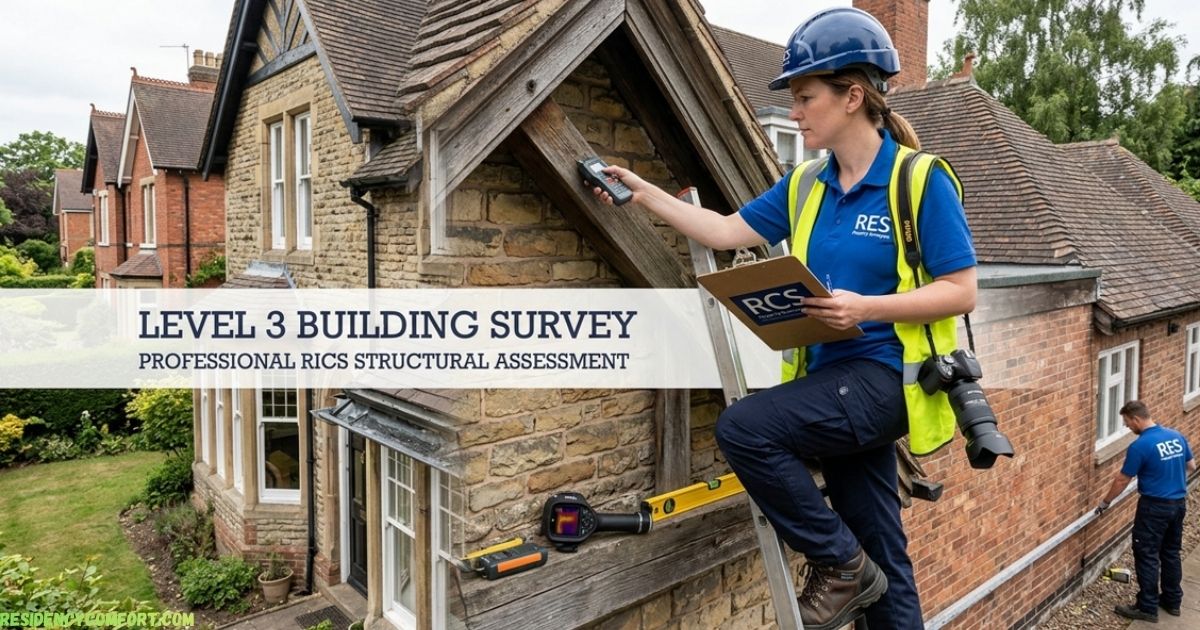
A Level 3 inspection is especially recommended for older or historic buildings think Georgian townhouses, Victorian terraces, or properties built before 1900 with thick masonry walls, original beams, and solid walls that have settled and shifted over the centuries. Rural cottages, older cottages, and farmhouses in rural areas often hide unusual materials behind their walls, and homes in historic areas may also feature prefabricated systems or non-standard construction that a basic Level 2 survey simply isn’t equipped to assess. A home with large timber frames, steel frames, or a mix of building methods across different eras needs its wider structure examined with additional depth, calling for a proper deeper investigation.
Property buyers should also consider a Level 3 report for any home showing visible defects such as cracks, bulging walls, sloping floors, soft floorboards, or dipping rooflines, since these can point to serious underlying risks and early decay. Properties showing signs of movement, visible damp, staining, or mould need detailed information about the causes, not just a passing mention, and a standard Level 1 reports or ordinary Level 2 reports rarely dig deep enough into damp-prone environments to explain what’s really going on. Timber problems like woodworm and timber decay in timber floors, doors, and windows are easy to miss without a trained eye, and older roof structures can conceal issues that only a deeper insight will reveal.
Homes that have been through extension work, loft conversions, major refurbishments, or other significant alterations also benefit hugely from a Level 3 report, since altered homes and extended homes carry hidden complexity that good condition houses with no history of renovation usually don’t. Whether you’re weighing up renovation projects in Nottinghamshire or Lincolnshire, or simply want to rule out ventilation issues and hidden problems before buying extensions-heavy properties, a full survey brings peace of mind that a lighter check cannot match.
When a Level 3 Survey Is Worth It
In short, a Level 3 report earns its keep whenever a property carries hidden risks that a general overview won’t uncover. If you’re buying a rural cottage, a stone property, a Victorian terrace, or any older property with visible signs of cracking, sagging, or decay, a Level 3 survey gives you clear explanations rather than vague guesswork. The same goes for a converted home, an extended home, an altered home, or a non-standard construction home, since these all carry a higher chance of hidden faults tucked behind fresh paint and plaster.
Even a home that looks fully refurbished can hide problems from earlier renovation work, so an in-depth structural analysis and thorough fabric analysis are worth paying for whenever damp or cost implications are a concern. A good report doesn’t just flag problems — it gives practical repair advice, so buyers know exactly what to budget for and when.
Inspection Time and Depth of Assessment
Inspection duration varies a lot depending on property size and complexity. A standard HomeBuyer inspection might take around 60 minutes to 90 minutes, while a full Level 3 Building Survey inspection often runs to three hours or more, because a thorough inspection at this level needs real time on site. At RES, our Chartered Building Surveyors rarely rush a job — a smaller flat might be assessed in around 45 minutes, but we would never squeeze a full Level 3 inspection into that window.
We generally stick to one survey per day for Level 3 work, because producing detailed reports and accurate reports takes real care once we’re back at the desk reviewing our findings. This unhurried pace protects the quality of reporting you receive, and it’s a big part of why our reports read clearly rather than feeling rushed or generic.
The Problem with Simplified Condition Ratings
One of the biggest weaknesses of a Level 2 Report is its use of single condition ratings, which lump multiple building elements together under one overall rating instead of scoring each element individually. Take roof structures as an example: a property might have a main pitched roof in decent shape alongside a rear addition roof or a flat bay roof that’s genuinely a defective roof. Averaging these into one averaged rating risks misrepresenting condition entirely — a sound roof gets dragged down, or worse, a real problem gets buried.
This kind of compromise isn’t good enough when someone is purchasing a home worth hundreds of thousands of pounds. A Level 3 Survey never scores each component this way; instead, our clients get a separate, honest rating for every part of the building, so nothing gets lost in a vague blended score.
Why You Need a Level 3 Building Survey
There’s a common misconception that new-build properties don’t need checking, since they come with a Building Regulation sign-off and some form of warranty provision. In reality, that documentation doesn’t act as fail-safe protections against every possible fault, and workmanship issues or design shortcomings can easily go unnoticed behind shiny cosmetic finishes. An experienced surveyor carrying out a Level 3 Building Survey knows how to look past the surface and check the execution quality of the actual build against the original design intent. Getting a comprehensive Level 3 survey for new-build properties ensures that hidden structural defects, poor installation, or unfinished work are identified and rectified before you complete your purchase.
FAQs
1. What is a Level 3 building survey?
The most thorough inspection available, giving an in-depth analysis of structural integrity and defects for homes that are old, listed, run-down, or undergoing major work.
2. How does it differ from Level 2?
Level 2 suits modern homes in good condition. Level 3 inspects hidden spaces like lofts or cellars and includes targeted repair advice and cost estimates.
3. What is inspected?
Roof voids, cellars, walls, chimneys, joinery, visible utilities, damp, rot, and subsidence risks.
4. How long does it take?
3–5 hours on-site, with the report delivered in 3–7 working days.
5. How much does a Level 3 building survey cost?
Typically £500 to £1,500+, depending on the property’s size, value, and location.