

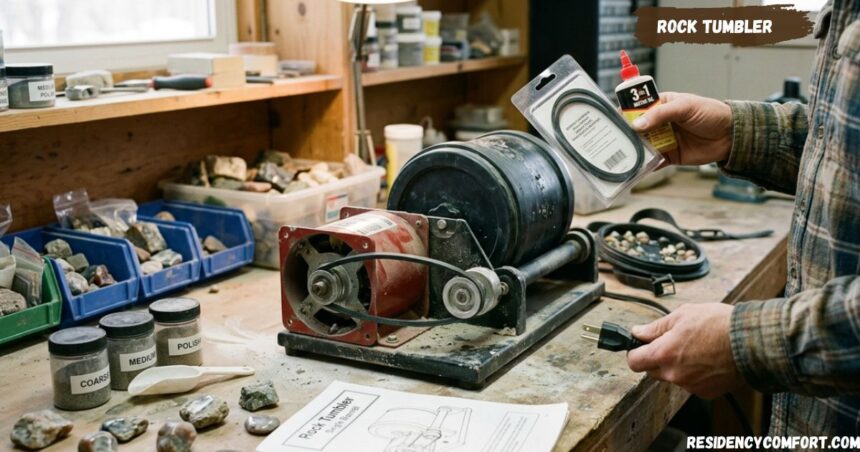
A sluggish rock tumbler feels like a mystery the first time you notice it, but most of the time the fix is simple. Opening up a machine to chase down a loss of power usually reveals a common, fixable issue. Here is how to diagnose and resolve the problem step-by-step.
Check Whether the Rock Tumbler Barrel Is Overloaded
Filling a barrel right to the brim in hopes of processing more stones is a common mistake. The best rule of thumb for any rock tumbler is to fill the barrel about two-thirds with stones, grit, and water, then consult your manual. An overpacked barrel throws off weight distribution, slows rotation speed, makes the motor work harder, and stretches the belt past its load rating. Removing excess material usually stops the motor strain immediately.
Inspect the Drive Belt
Before diagnosing any other mechanical issue, always unplug your rock tumbler first and inspect the drive belt inside the housing. Regular use causes rubber belts to stretch, fray, crack, or slip off-center. When the drive belt cannot transfer full power to the barrel, it creates an uneven or sluggish turn. Swapping in a fresh belt from your spare parts kit usually restores normal operation fast.
Confirm You Are on the Right Speed Setting
Many modern machines come with multiple speed options. Some models default to a lower speed setting, which is often the intended speed for specific polishing stages rather than a defect. Experienced hobbyists routinely select lower speeds because higher speeds cause stones to collide with excessive force, leading to chipping and fracturing rather than a smooth shine.
Mechanical and Material Factors Affecting Speed
An unevenly loaded barrel can wobble or bog down mid-cycle, especially when tumbling rocks of vastly different sizes and densities. If the load shifts to one side, pause the machine, open the barrel, and redistribute the material evenly. Additionally, avoid mixing hard and soft stones together in a single batch, as this ruins polish quality and impacts the smooth rotation of the barrel.
Check for Slurry and Grit Buildup
Grit and slurry can accumulate in the corners of the barrel over time, creating extra internal drag that slows down rotation. This is especially common if a batch has been sitting still. Perform a thorough cleaning between polishing stages and verify that the barrel seals hold tight, as a leaky seal allows contents to shift unevenly during operation.
Consider the Barrel Material
Rubber and plastic barrels perform differently under a heavy load. Rubber barrels absorb impact, run quieter, and provide excellent traction, while rigid plastic barrels flex less and may seem to spin faster. If your setup seems slightly slower than a friend’s plastic-barrel model, remember that this performance variance is completely normal for different barrel materials.
Rule Out Motor Overheating and Thermal Shutoff
Certain models feature built-in thermal safeguards designed to slow down or temporarily shut off the motor if the load is too heavy. This safety response protects the internal motor from burning out under excessive strain. If your machine slows down automatically, check your manual to see if a thermal shutoff feature is actively protecting your unit.
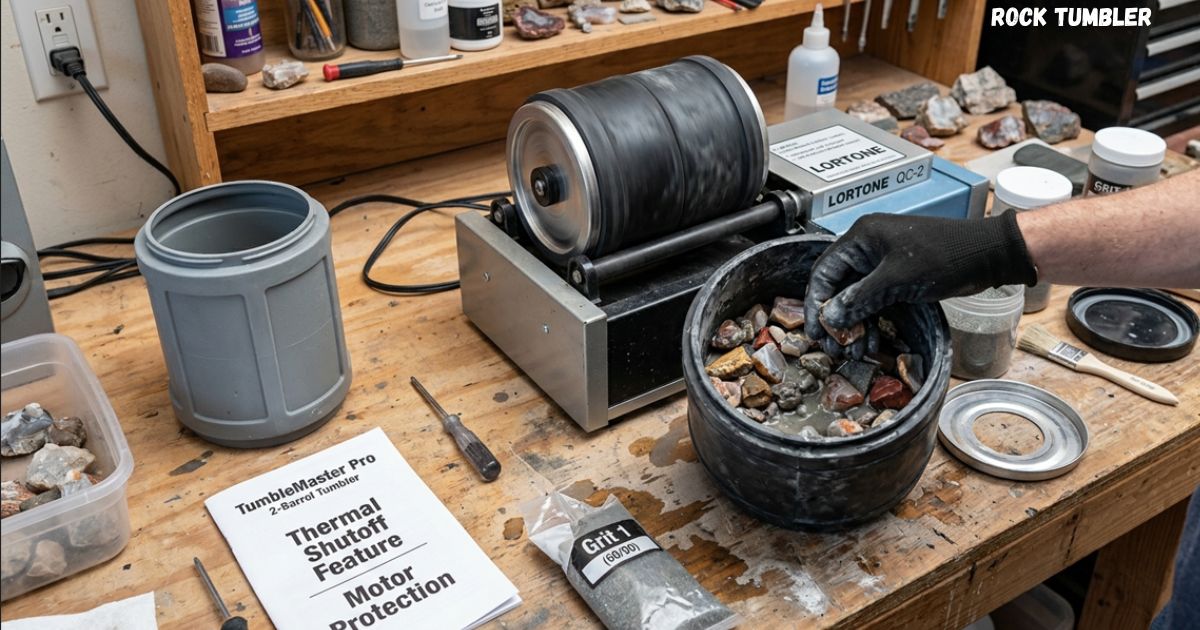
Replacing Worn Motors or Belts
If you have checked for overfilling, slurry drag, and correct speed settings, but the machine is still turning slowly, the motor itself may be wearing out. This is typical for older units that have logged hundreds of runtime hours. Fortunately, swapping out a worn motor or drive belt on a rock tumbler is an affordable, straightforward repair that is far cheaper than buying a brand-new machine.
Understanding Motor Noise and Strain
A light hum or minor noise under a full load is completely normal during operation. However, a persistent grinding, stalling, or intense straining sound usually indicates an overfilled barrel or a slipping belt rather than standard operation. Address these sounds promptly to avoid damaging internal components.
Choosing the Ideal Speed vs. Saving Time
Running your rock tumbler at maximum speed might seem like a shortcut, but higher speeds dramatically increase the force of impacts inside the barrel. This extra impact force easily chips or fractures delicate stones. Sticking to lower, steady speeds delivers a superior, mirror-like finish without risking your raw stones.
Proper Rock Tumbler Barrel Fill Levels
Keeping your barrel consistently filled to the two-thirds mark provides the ideal balance for effective tumbling. Filling it too little causes stones to bang around loosely and chip, while overfilling creates excessive weight that bogs down the rock tumbler motor. Maintaining the proper fill level protects both your gems and your equipment over long tumbling cycles.
Preventing Slurry Drag and Buildup
Leftover slurry and dried grit from previous stages harden in the barrel’s seams and create drag as it spins. This old material adds resistance that slows down the whole cycle. Thoroughly washing every component between tumbling phases keeps the equipment running at peak efficiency.
Ambient Temperature and Rock Tumbler Lubrication
Operating your rock tumbler in very cold environments, such as an unheated garage during winter, can stiffen rubber belts and thicken bearing grease, causing the motor to run noticeably slower. Additionally, keeping the external roller bearings lightly lubricated with a drop of 3-in-1 oil prevents friction from sapping power away from your rock tumbler motor.
Expected Noise Levels Across Models
Every machine generates operational noise as stones continuously tumble against each other and the interior walls. While some rubber-barrel models run significantly quieter than rigid plastic ones, a completely silent unit does not exist.
When to Upgrade Your Rock Tumbler Setup
If your expanding hobby consistently demands larger batches than your current setup can handle, running your equipment continuously at max capacity will lead to premature wear. Upgrading to a heavier-duty rock tumbler designed for higher weight capacities ensures consistent rotation speeds and a longer equipment lifespan without risking frequent motor strain.
FAQs
What is the best Rock Tumbler for beginners looking to start gemstone polishing?
For beginners, a kit with simple controls, a durable rubber barrel to minimize noise, and included grit packs such as the National Geographic starter models is ideal for learning the basics.
How long does the entire tumbling process take from raw stone to final shine?
On average, the full transformation takes 3 to 4 weeks. The process is split into four distinct grinding and polishing stages, with each step running continuously for about 7 days.
What types of rocks are best suited for tumbling at home?
Harder, non-porous minerals with a Mohs hardness rating between 6 and 7 such as agates, jaspers, quartz, and chalcedony yield the highest shine and smoothest finish.
Can you run the machine indoors without too much noise?
Yes, provided the unit uses a quality leak-proof rubber barrel rather than hard plastic. Rubber absorbs the impact of rolling rocks, making the operation quiet enough for a garage, utility room, or basement.
What essential maintenance keeps a Rock Tumbler running smoothly for years?
Always avoid overloading the barrel beyond its recommended weight capacity, keep the motor bearings lightly oiled if required by the manufacturer, and ensure barrel rims are completely clean before sealing to prevent leaks.