

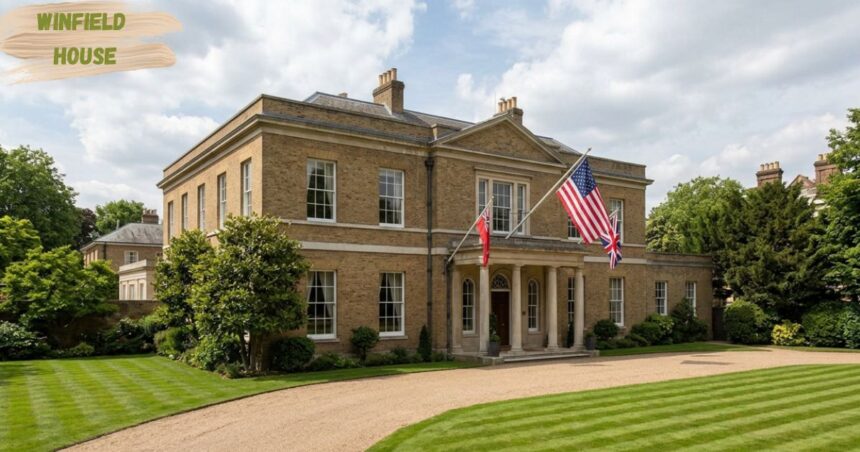
I still remember the first time I watched The Diplomat on Netflix and realized that the grand house on screen was not some studio set but a real address in London. The series leans into alternate history, yet the transformation of an old estate into the ambassador’s residence felt grounded in something true, sending me down a fascinating rabbit hole about Winfield House itself. Keri Russell plays the fictional ambassador, but the real building behind her character carries a history that easily rivals anything a screenwriter could invent.
The Modern Role of Winfield House in Diplomacy
Long before it became a filming inspiration, the residence was already doing quiet, serious work as one of the world’s most recognized diplomatic sites, tucked inside Regent’s Park. Its historic architecture supports a very modern function: hosting ceremonies, private negotiations, and the kind of cultural exchanges that keep the special relationship between the United States Ambassador to the United Kingdom and the British government running smoothly.
Balancing public visibility with private security is not easy, but this residence has managed that tightrope walk for decades, guided by strict protocol and practical diplomatic demands.
Hollywood Glamour Meets Royal Heritage
The house’s story also weaves through Hollywood glamour and royal history in ways I find genuinely delightful to research. Ambassador Walter Annenberg, together with his wife Lee, brought in a Hollywood decorator to reshape the interiors around 1969, giving the Green Room its now-famous character.
My friend His Grace once told me over dinner in Chicago that he had visited the estate with Louis Susman and his wife Marjorie during the Olympics in London, reminding me how many personal operations and quiet dinners have unfolded inside these walls over the years.
The Rich Historical Background of Winfield House
Every historic estate has an origin story, and this one begins with the third Marquess of Hertford, Frances Charles Seymour-Conway, who built the original villa in 1825 as a place for entertaining. Locals once called it St. Dunstan’s, and it was one of eight grand houses raised inside Regent’s Park during that era.
When the industrialist family behind Frank Winfield Woolworth entered the picture, everything changed, because Woolworth heiress Barbara Hutton wanted a private home for her son, and by 1936 she had reshaped the property into the Neo-Georgian estate we recognize today.
The Transformation of Winfield House into a US Diplomatic Asset
The architect L. Rome Guthrie handled the reconstruction work for Hutton, carefully focusing on period aesthetics during that ambitious project. World War II left the building damaged, and by 1945 it was handed over to the United States Government, becoming the official American Ambassador’s Residence to the Court of St. James’s just a year later.
Renovations kept happening after that, and none stand out more than the changes made under Mrs. Walter H. Annenberg, who added handpainted Chinese wallpaper to what became the Garden Room, once simply known as the Green Room.
Dignitaries, Royalty, and Architectural Significance
Walking through the halls today, you would be standing where Queen Elizabeth II, President Barack Obama, First Lady Michelle Obama, and Princess Diana once stood, as this Grade II National Heritage Listed Building has welcomed dignitaries from every generation.
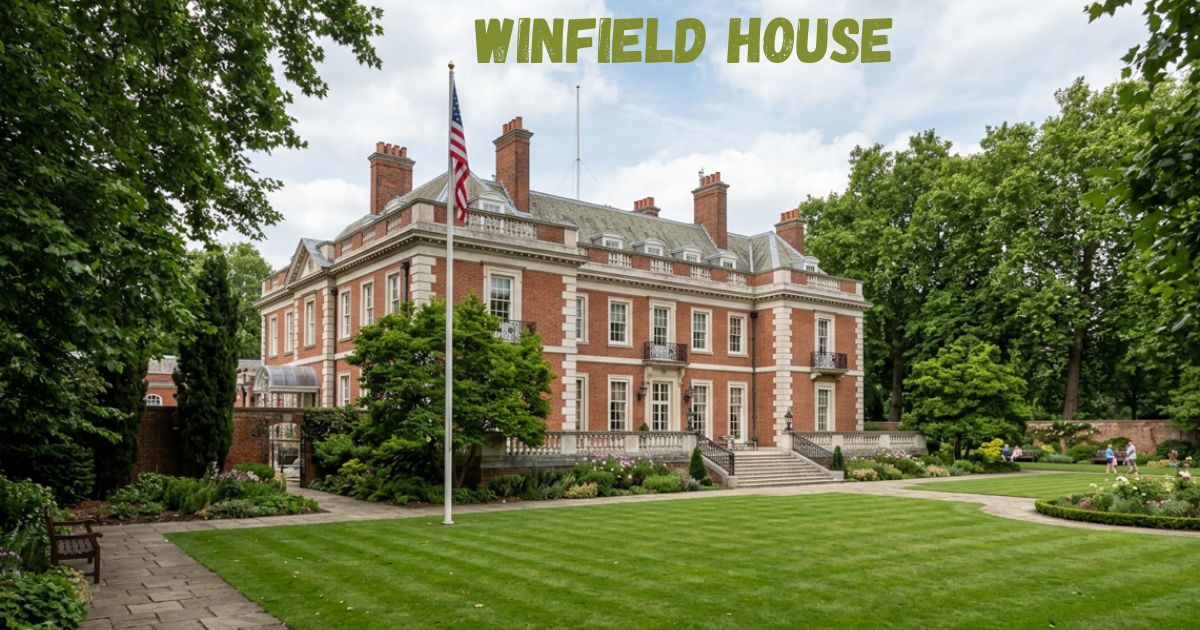
The entrance hall shows off its neo-Adam plasterwork, the dining room carries French Rococo overdoor reliefs, and the Neo-Georgian wrought iron stairs still impress visitors alongside antique furniture. Beyond its visible beauty, the estate has hosted decades of pivotal conversations on defense, trade, and intelligence, serving as a secure site that builds trust between the two governments.
Security Protocols and Diplomatic Operations
Nobody strolls through the estate unannounced, as the U.S. Department of State works alongside local authorities and London’s Metropolitan Police to manage access control and surveillance every single day. Routine visits, state functions, and working meetings all pass through threat assessments first, allowing high-level diplomacy to move forward without unnecessary risk. Protocol officers and security staff quietly manage the space between openness and caution.
Operational Strategic Value
Behind the scenes, the property supports continuous engagement through quiet briefings, ambassadorial receptions, and media-sensitive negotiations that never make headlines. Its location near government buildings and major transport links gives it real value for rapid response and discreet travel, ensuring staff can move people in and out efficiently when needed. Coordination between departments keeps the delicate balance between protection and public openness intact.
Community Impact and Public Access Near Regent’s Park
What surprised me most in my research is how ordinary life carries on right outside the gates, since local residents and tourists walk past the perimeter in Regent’s Park every day without a second thought. National security and everyday recreation share the same green space, and community liaison officers work hard on safety messaging and transparency so that neighbors never feel shut out of their park. The inner workings stay private, but the surrounding parkland never loses its welcoming feel.
Cultural and Economic Influence
Culturally, the residence does more than sit quietly behind hedges; receptions, exhibitions, and educational exchanges regularly bring the wider cultural landscape to life. Nearby businesses benefit from secure diplomatic activity, and some public-facing programs partner with local institutions to open small windows into the estate’s world. This blend of cultural and economic influence lifts the whole neighborhood while maintaining a professional diplomatic atmosphere.
Future Outlook for Winfield House Operations
Today, the residence continues to function as a central hub for real-time diplomacy, proving that a secure compound can share space with urban parkland without either side losing ground. The historical significance and steady architectural adaptations made over the years show a building that refuses to stand still, and its role in crisis coordination between the United States and the United Kingdom remains as important now as ever.
Priorities for the Next Generation
Looking ahead, future priorities include advanced communications infrastructure, tighter cybersecurity linkage between physical and digital operations, and continued architectural heritage work that respects the past. Digital capacity, sustainability, and public access all sit on that same list, alongside a broader commitment to policy, cultural exchange, and long-term partnership initiatives for the diplomats who will call this estate home for subsequent generations.
Designing The Green Room at Winfield House
Of every room inside the residence, the Green Room is the one people talk about long after they leave, especially when stepping through the Yellow Room to see the French doors opening onto the lawn. That same lawn hosts a 4th of July barbecue and Easter Egg hunts for embassy employees every year, and the room’s wallpaper grabs your attention immediately. It takes a minute to notice the window pelmets, gilding, and curtains, because the hand-painted, 18th-century Chinese wallpaper covered in birds, butterflies, and cherry trees simply demands your eyes first.
The Mystery of the Green Room’s Wallpaper
The paper’s journey traces back to Townley Hall in 1794, a house tied to architect Francis Johnson, back when Chinoiserie was at its peak. According to the Townley Hall story, the wallpaper was removed in 1950 and sent to Hong Kong for restoration before finding its home in the residence’s Green Room.
The book Winfield House, written by Maria Tuttle and Marcus Binney, notes that after Ambassador and Mrs. Annenberg bought the estate, the wallpaper went to New York for cleaning and then to Hong Kong for retouching, though the exact timeline of its removal from Irish walls remains a bit of a mystery.
Living History and Interior Masterpieces of Winfield House
Rather than one stiff formal salon, the Green Room at Winfield House offers three separate seating areas that create genuine livability. The broken pediment overdoors copy those found at Claydon House in Buckinghamshire, carved from pine and pickled for a rustic feel, while the pink silk trapunto canape has hosted countless important guests inside Winfield House.
The room’s history extends beyond furniture too; First Lady Michelle Obama once turned the nearby Reception Hall into a playground while leading Let’s Move! London during the Olympics. Meanwhile, designer Billy Haines completed his last major project here in this very room, leaving behind an extraordinary legacy that keeps design enthusiasts and historians returning to the story of Winfield House.
FAQs
What is Winfield House, and where is it located?
Winfield House is a magnificent Neo-Georgian estate set within a sprawling 12-acre private grounds in Regent’s Park, London. Behind its gated perimeter lies the second-largest private garden in central London, second only to Buckingham Palace.
Who currently lives in the estate?
The residence serves as the official home for the serving United States Ambassador to the Court of St James’s and their family. It acts as both a sanctuary of privacy and a premier hub for international diplomacy.
Who originally built the mansion, and how did it change hands?
The house was commissioned in 1936 by American heiress Barbara Woolworth Hutton. Driven by a desire for a secure loving home for her young son, she built the estate and named it after her grandfather, Frank Winfield Woolworth. Following World War II, she generously gifted the grand property to the U.S. government for a symbolic one dollar.
Is the real-life residence featured in the Netflix series The Diplomat?
While the estate inspires the diplomatic setting of the show, filming primarily takes place on carefully constructed studio sets and alternative historical locations to preserve the high-level security of the active residence.
How much is Winfield House worth today?
Given its unrivaled 12-acre location in central London and rich historic legacy, Winfield House is virtually priceless. Though held as a treasured asset by the United States government, property experts estimate its market valuation would easily exceed hundreds of millions of pounds.